Making, testing, imagining: where art and science meet
A child is carefully pouring a warm mixture of gelatin, starch and vinegar into a small mould. Just moments ago, the ingredients looked as though they belonged in a kitchen cupboard. Soon, they will become a sheet of biodegradable plastic.
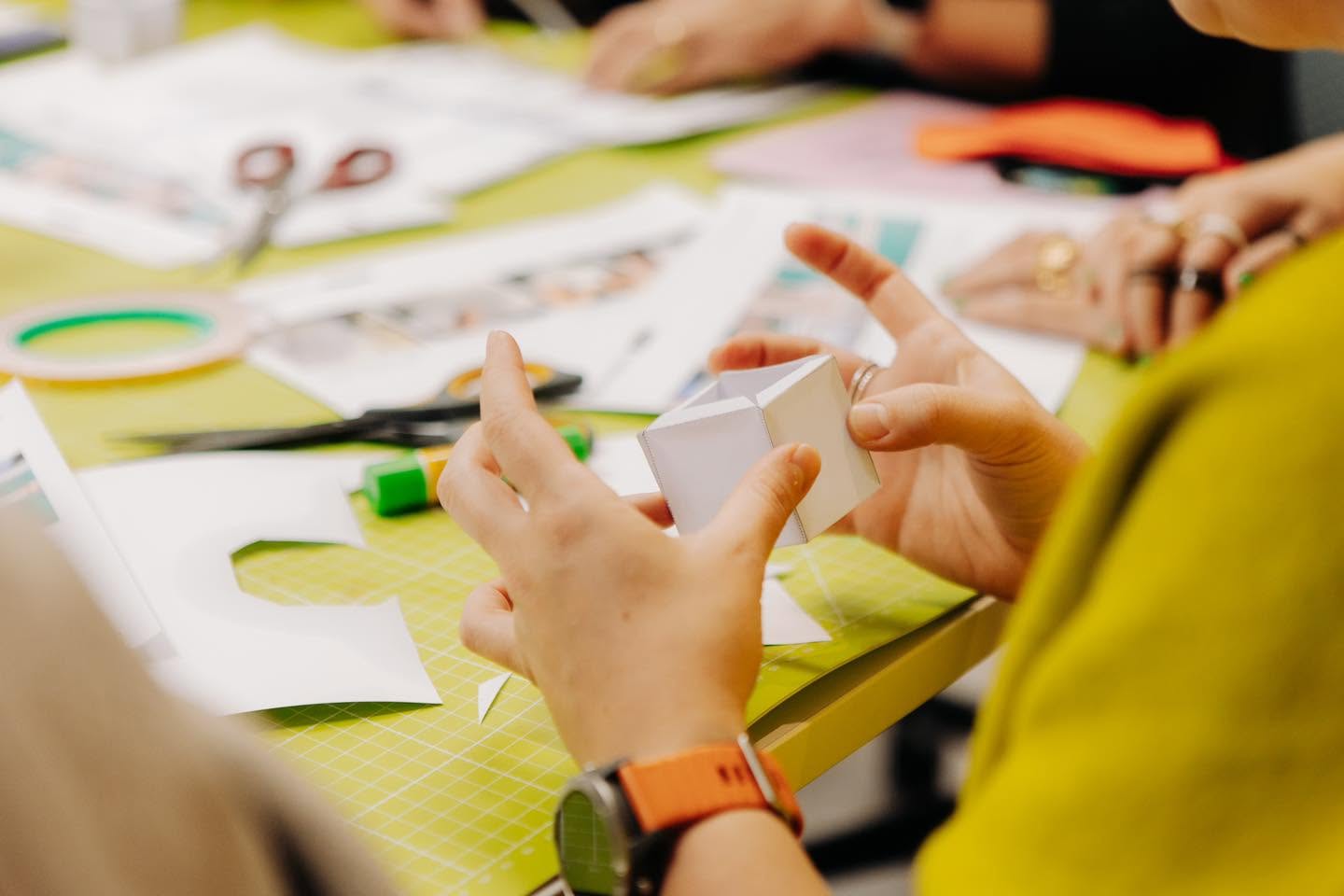
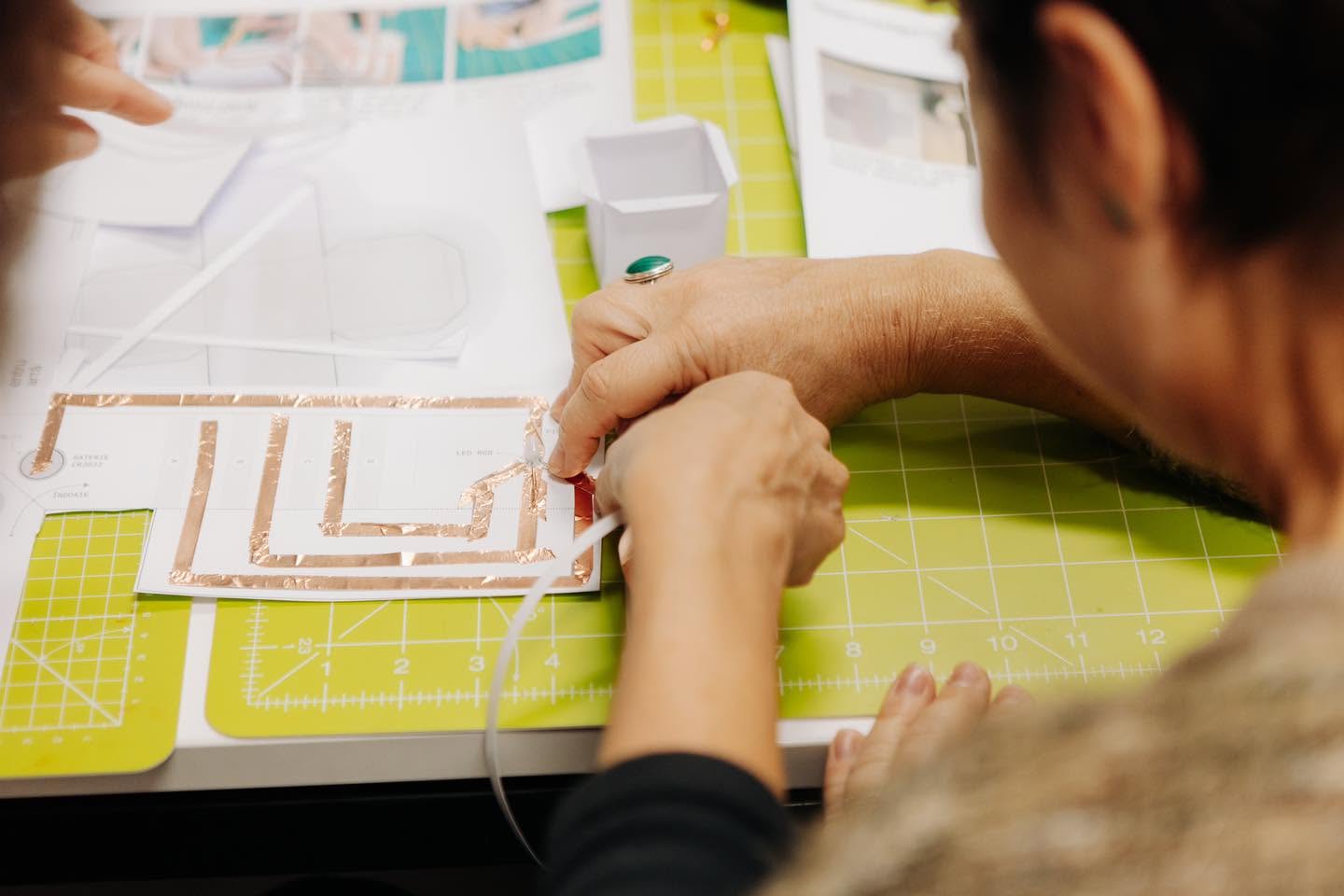
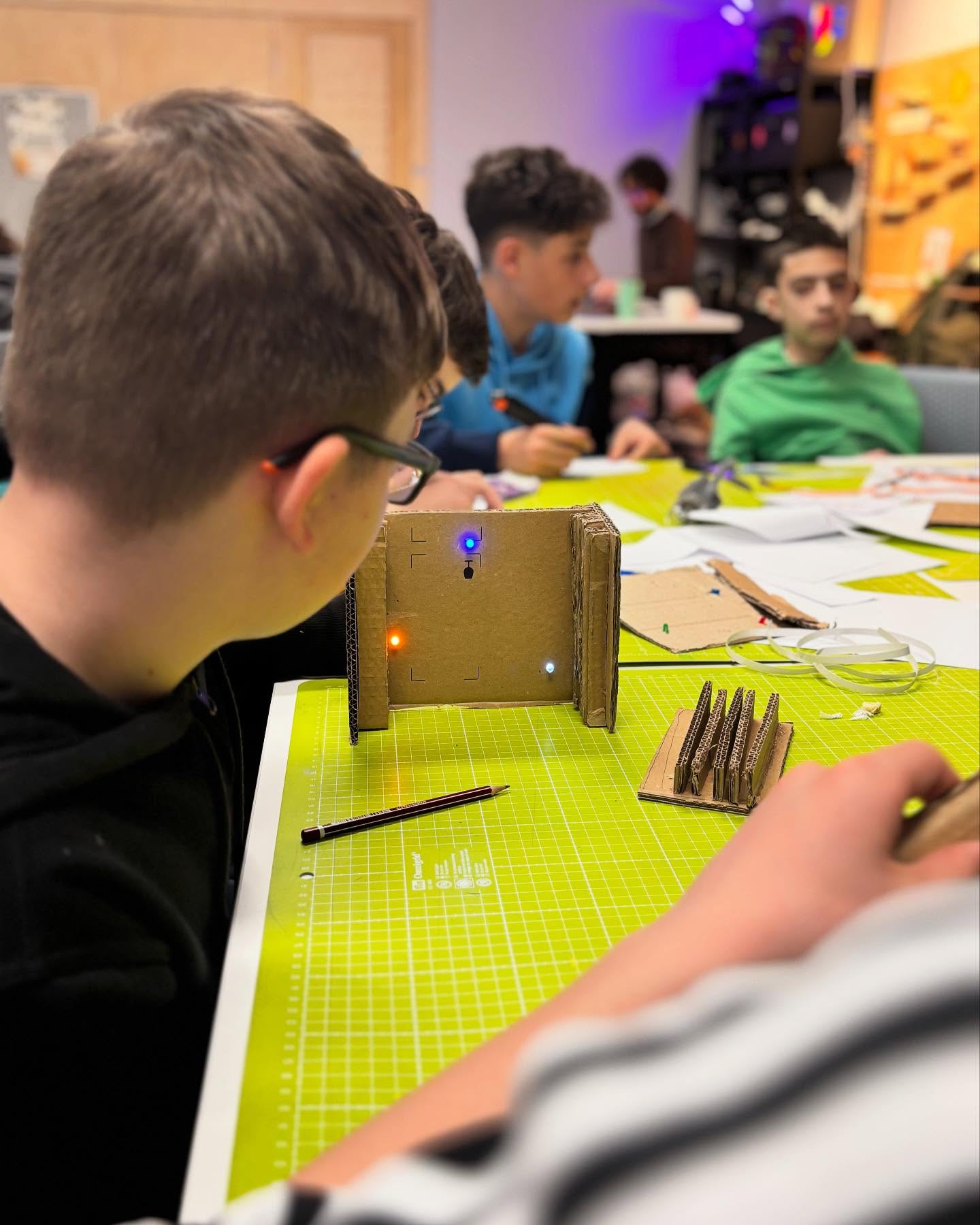
Small hands carefully press copper tape onto folded paper. A tiny LED flickers to life and an ordinary paper sculpture suddenly begins to glow. Electricity is no longer an invisible force hidden inside textbooks, it becomes something children can build, test and hold in their hands. Paper sculpting, pattern design and colour shift the focus from simply making the circuit work to exploring shape, composition and the way light moves through the object.
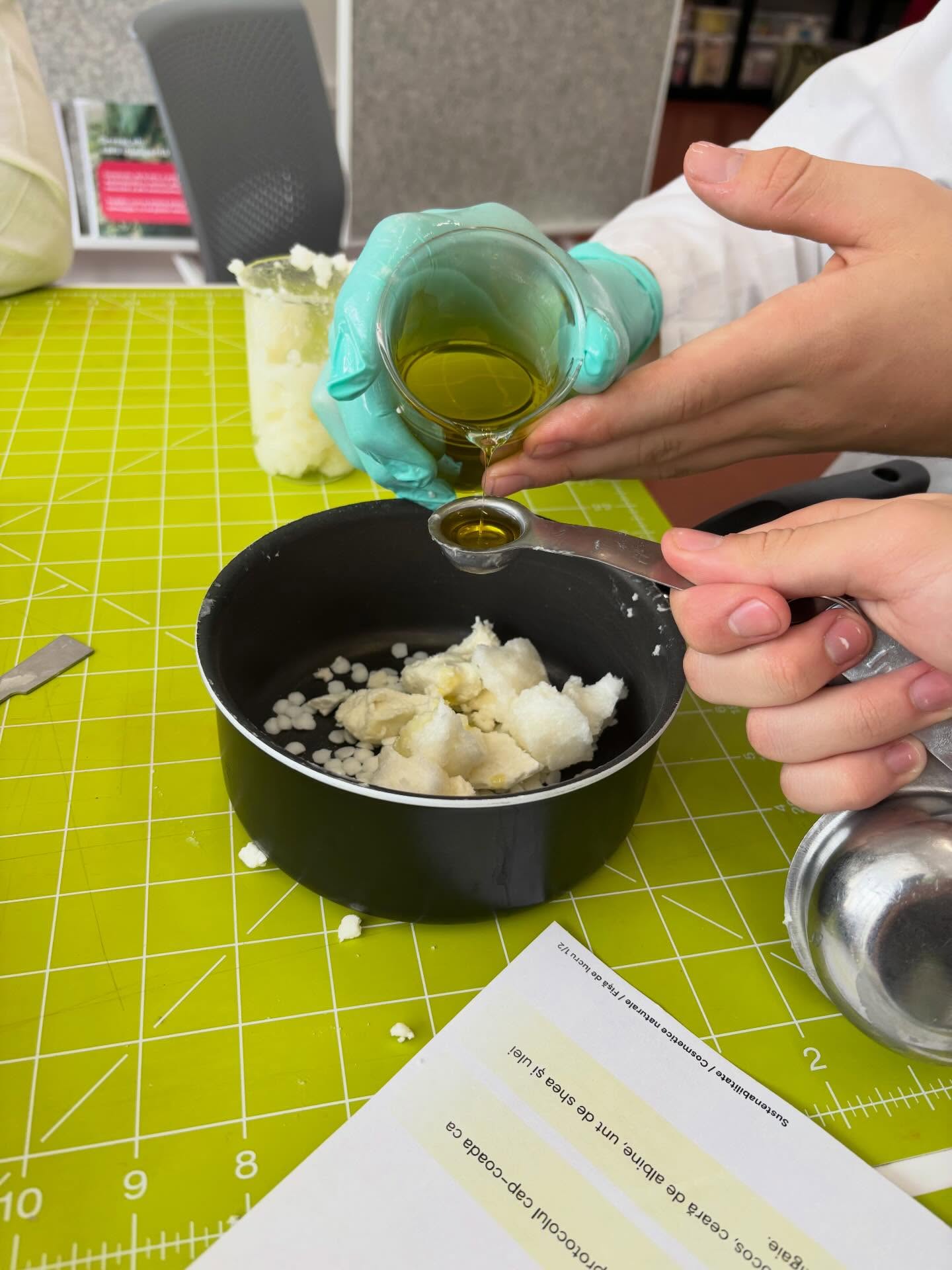
The room fills with the scent of lavender, rosemary and citrus as children blend natural oils, waxes and botanical extracts. They compare textures, observe how ingredients react to one another and discover that chemistry is present in every fragrance, colour and consistency they create.
None of the children would probably describe what they are doing as learning physics, chemistry or material science. Yet that is precisely what is happening, they are discovering that science is something you can touch, question, reshape and understand through making, not a collection of facts waiting to be memorised. This simple shift, from learning aboutscience to learning through making, was at the heart of the Studiotopia Pop-up Labs, organised by the Cluj Cultural Centre at Qub in Cluj-Napoca, Romania.
Two disciplines, one way of exploring the world
For decades, science and art have largely been taught as separate worlds. Science has often been associated with precision, formulas and correct answers, while art has been framed as a space for imagination and personal expression. Yet beyond the classroom, these disciplines have never truly existed in isolation. Both begin with curiosity, both ask questions before they offer answers, both invite us to observe the world more carefully, experiment with new possibilities and imagine realities that do not yet exist. This understanding shaped the educational approach behind the Pop-up Labs developed by the Cluj Cultural Centre. Rather than using artistic activities to make science more entertaining or scientific concepts to justify artistic creation, the workshops were designed around the premise that art and science are complementary ways of exploring the world. Paper sculpting, illustration, visual storytelling, pattern design and colour mixing were integrated into the process as ways of investigating scientific ideas and giving them a visible form.
When children are encouraged to move naturally between observation, experimentation and creation, learning becomes deeper, more intuitive and, perhaps most importantly, more meaningful. The workshops also responded to a challenge that extends far beyond education. As children spend more time engaging with nature through screens than through direct experience, understanding ecosystems, materials or natural phenomena requires opportunities to reconnect with the living world through exploration, making and sensory experience. Each Pop-up Lab invited participants to do exactly that, transforming scientific concepts into something tangible, personal and closely connected to everyday life.
When a material becomes a creative medium
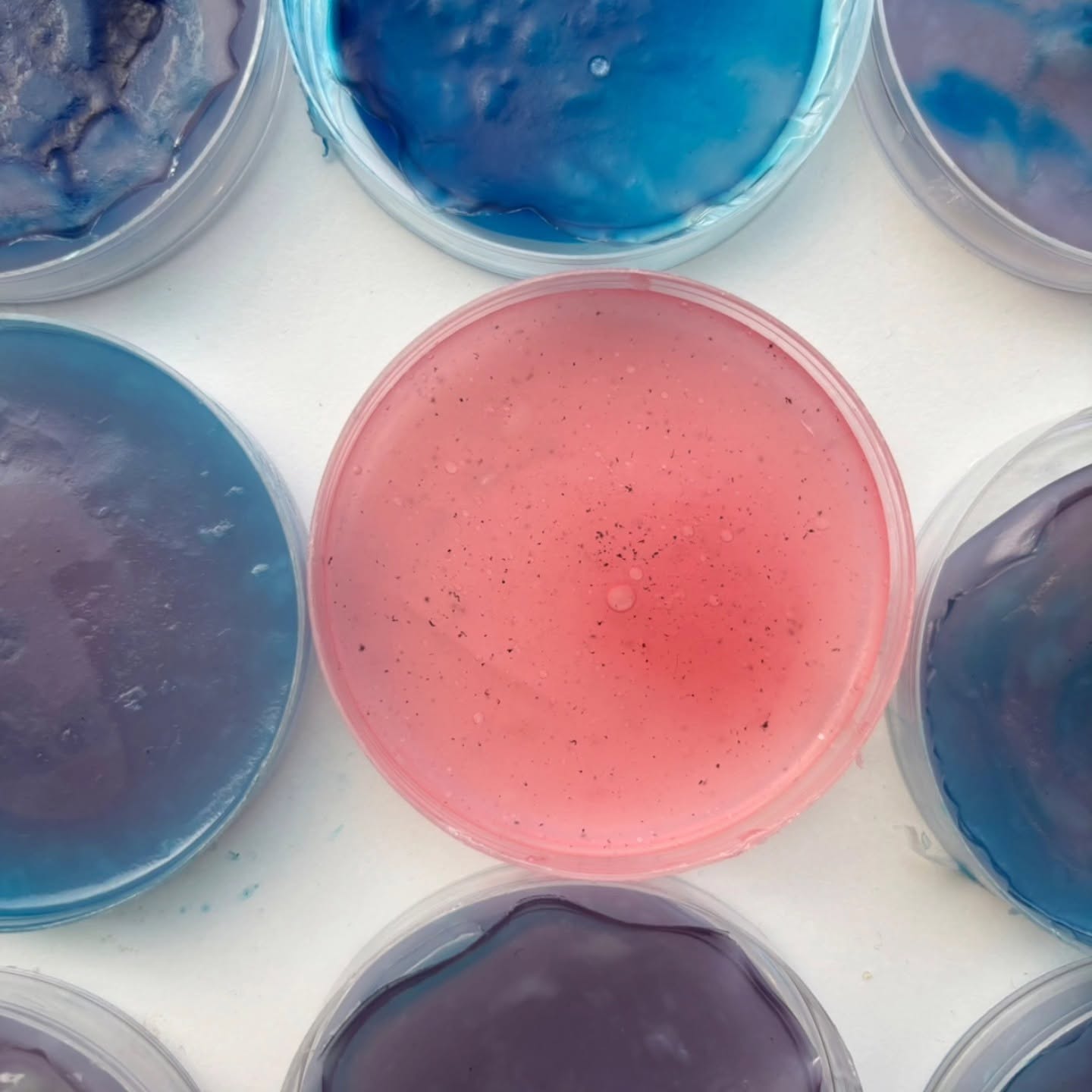
The Bioplastic workshop offered one of the clearest examples of this approach. Conversations about plastic pollution often begin with alarming statistics or images of overflowing landfills. Here, they began with a bowl of ingredients. Using gelatin, starch, glycerine and vinegar, children experimented with recipes for biodegradable materials, observing how different substances changed consistency, elasticity and texture. They adjusted proportions, compared results and discovered that materials are not fixed objects but outcomes of experimentation and design.
Without realising it, they were following the same process scientists use every day: making observations, testing hypotheses, learning from unexpected results and refining their ideas. Environmental education emerged naturally from this process: rather than being told that plastic is a problem, participants experienced how sustainable alternatives are created through imagination, experimentation and scientific thinking.
The experiment became even more engaging when the children took the process one step further, using the materials they had created to make jewellery and badges, which they could paint and personalise however they wished. At this point, the properties they had been observing as young scientists became creative choices: texture influenced the shape of an object, flexibility opened up different possibilities and colour and form gave each piece its own identity. While science helped them understand the material, art gave them a reason to explore what the material could become.
Chemistry through the senses
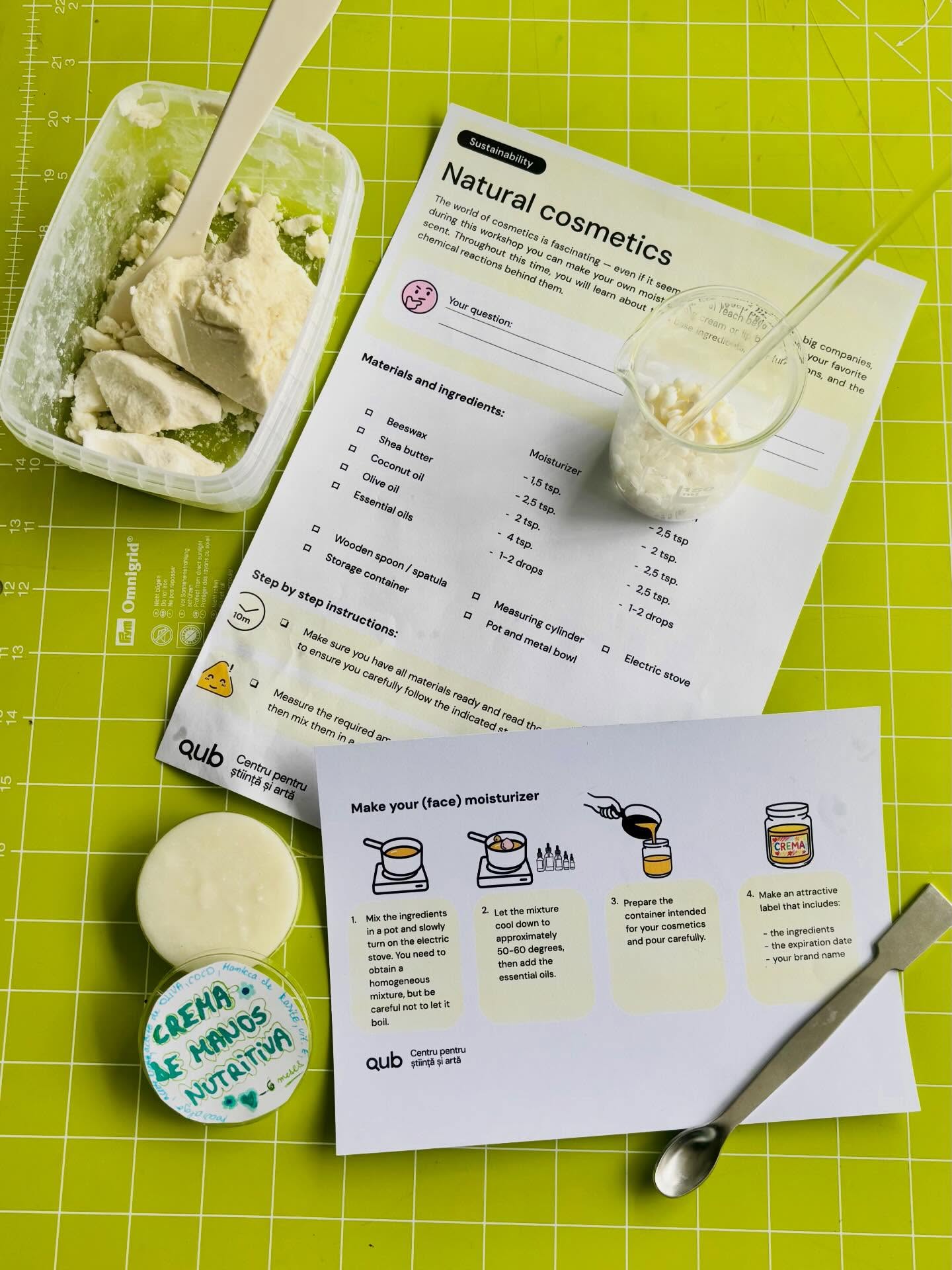
The Natural Cosmetics workshop approached chemistry from an equally unexpected angle. Instead of introducing chemical reactions through laboratory equipment, children explored them through plants, essential oils, botanical extracts and natural waxes. They learned how ingredients interact, how emulsions are formed, why certain combinations produce different textures and fragrances and how plants contain properties that have been understood and used for generations. Scientific knowledge unfolded through smell, touch and observation, making chemistry feel less like an abstract discipline and more like a language for understanding the natural world.
The workshop also encouraged participants to think critically about everyday consumption. Every cosmetic product tells a story, not only about chemistry, but also about biodiversity, natural resources, production processes and sustainability. By creating their own products, children discovered that even ordinary objects carry invisible scientific, environmental and cultural choices.
Electricity enters the story
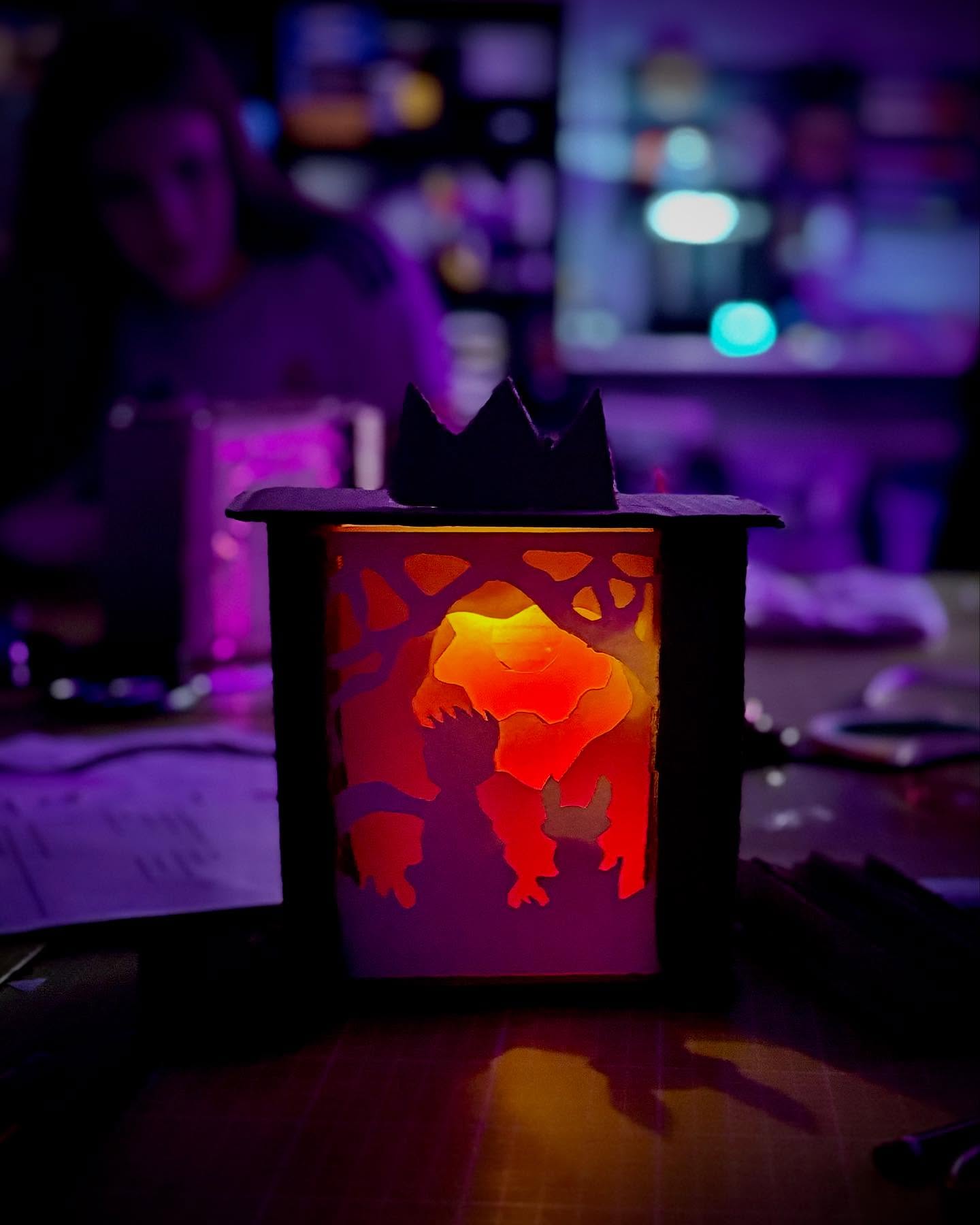
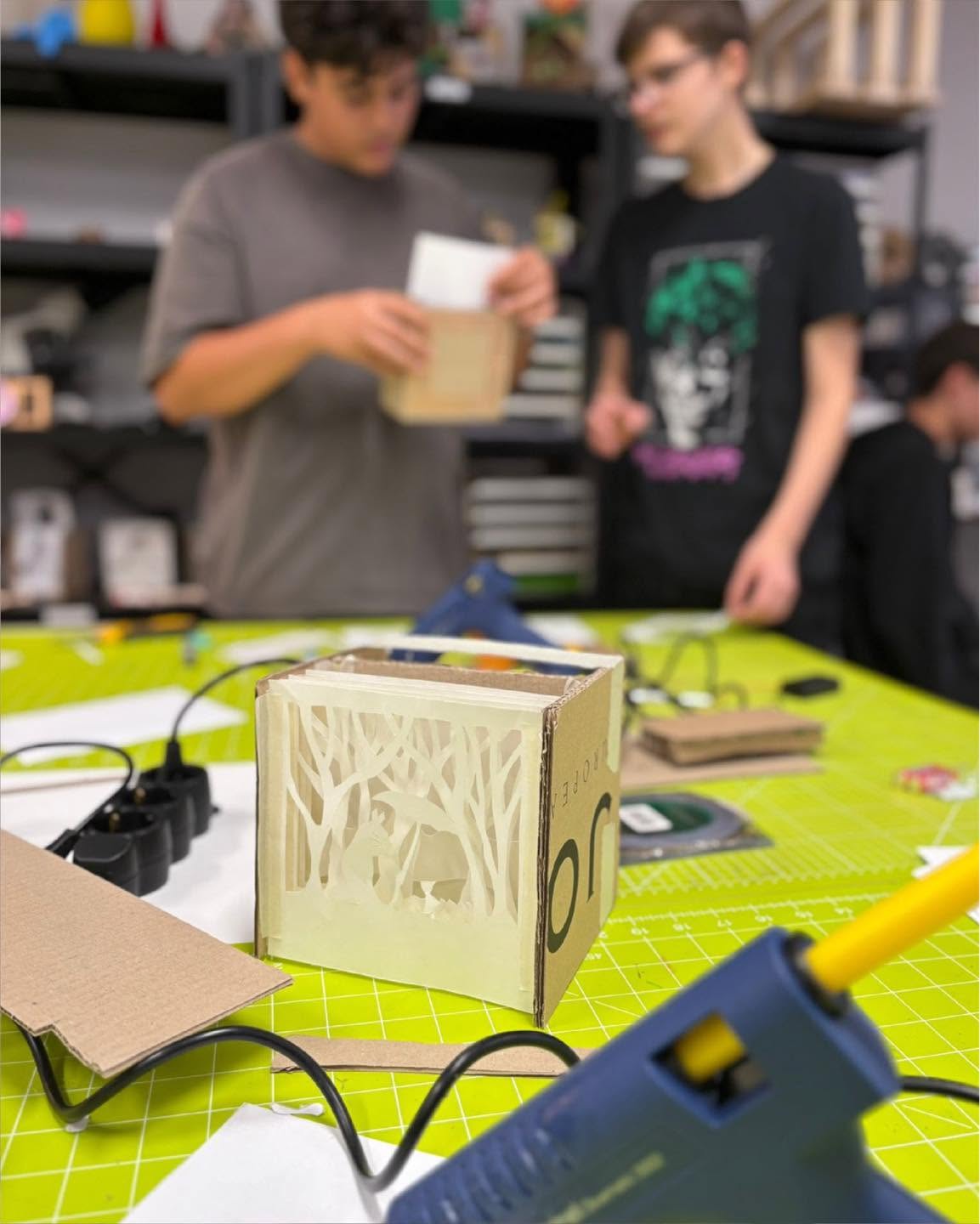
Perhaps the most poetic encounter between science and art happened during the Light Stories workshop. Here, electrical circuits became almost invisible, quietly supporting layered paper narratives that came alive through light. Inspired by The Little Prince, children transformed one of literature’s most beloved stories into illuminated paper scenes, using hidden LEDs to reveal characters, landscapes and carefully crafted details. Paper sculpting and illustration gave the scenes their physical form, while visual storytelling, pattern and colour helped establish mood and guide the eye through each composition. The placement of light itself became an artistic decision: what should remain in shadow, what should be revealed and which detail should the viewer notice first? In the process, they discovered that light could guide attention, shape atmosphere and become part of the narrative itself.
Electricity was no longer simply a physical phenomenon to be explained, it became emotion, storytelling and imagination. Understanding how a circuit works was only the beginning. What truly mattered was discovering how scientific principles could become creative tools for expressing ideas, emotions and stories. By combining paper engineering, illustration and simple electronics, children experienced science as a language capable of bringing an imaginary world to life.
Although each Pop-up Lab explored different scientific fields, from material science and chemistry to physics and electronics, they shared a remarkably consistent methodology. Children were invited to observe before receiving explanations, to experiment before reaching conclusions and to create before being evaluated. They behaved like scientists long before they realised they were learning science. At the same time, they worked through processes familiar to artists: choosing materials, experimenting with form and colour, building compositions, responding to unexpected results and refining an idea as it developed. This way of learning feels particularly relevant today. The environmental challenges facing younger generations cannot be addressed through scientific literacy alone, they also demand creativity, empathy and the ability to understand relationships between humans, materials and ecosystems. Education, therefore, needs spaces where knowledge is not divided into isolated disciplines but experienced as an interconnected process. At Qub, this happened through simple gestures: mixing ingredients, folding paper, painting, connecting circuits, testing ideas and asking questions.