Video Interview: Dr. Justyna Górowska on Art, Water Ecologies, and the Symbiocene
Video Interview: Dr. Justyna Górowska on Art, Water Ecologies, and the Symbiocene
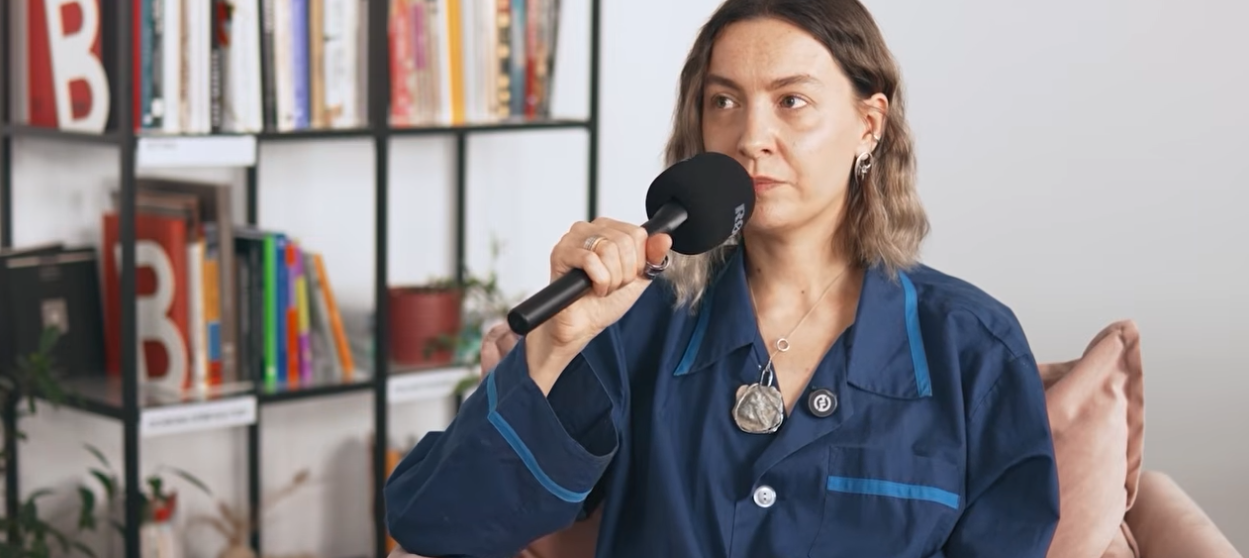
In this video interview, interdisciplinary artist Dr. Justyna Górowska offers an intimate look into her artistic practice developed within the international project Studiotopia 2. Commissioned by CSW ŁAŹNIA, the conversation traces the inspirations, research questions, and artistic strategies that shape her work at the intersection of performance, digital technology, and environmental thought.
Speaking from the experience of her residency, Górowska reflects on how contemporary art can illuminate the entanglements between human and non‑human bodies, particularly through the planetary water cycle.

Studiotopia International Pop-up Lab 2025 brought interdisciplinary creativity to Cluj-Napoca
Studiotopia International Pop-up Lab 2025 brought interdisciplinary creativity to Cluj-Napoca
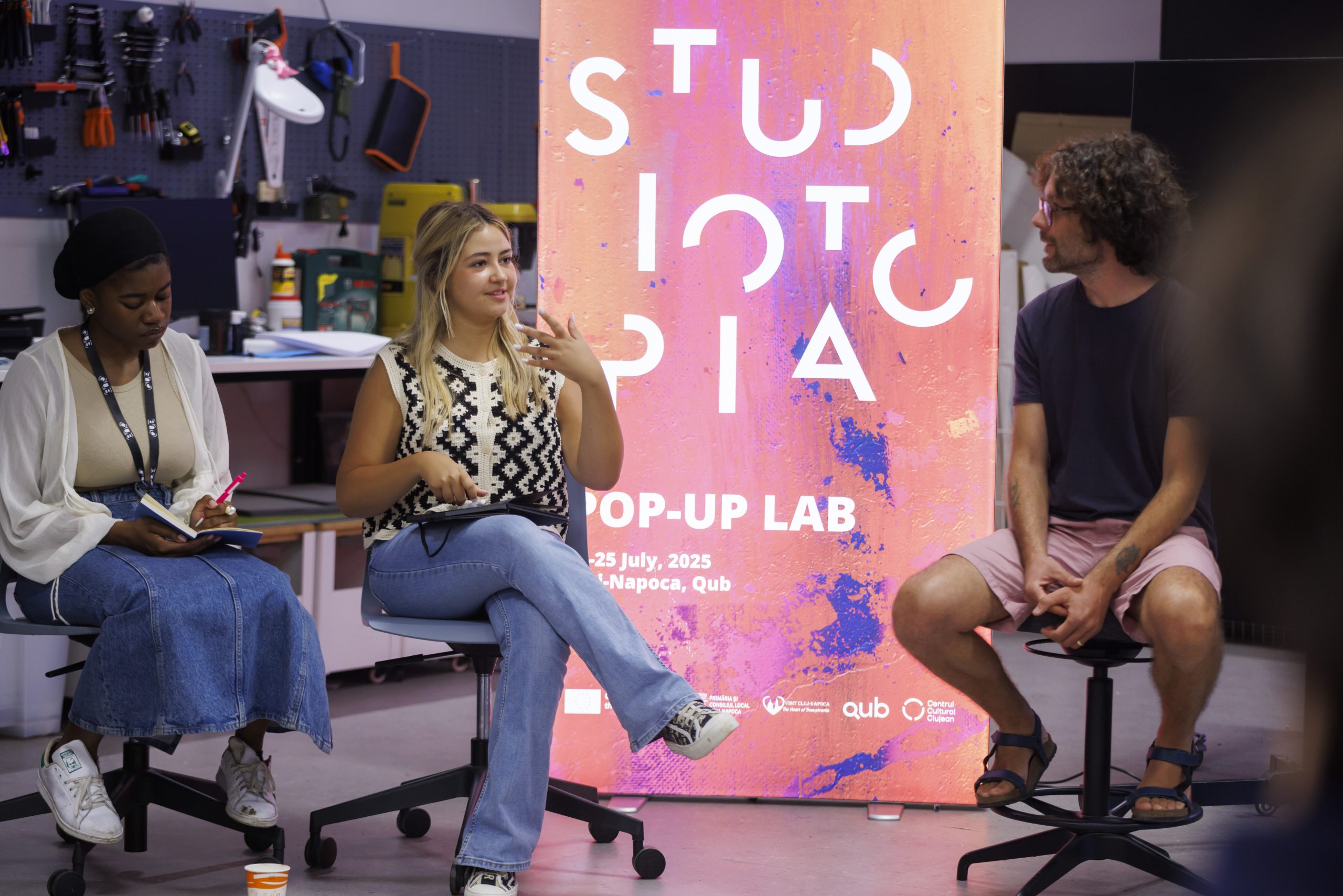
Between 21–25 July 2025, Cluj-Napoca became a hub for interdisciplinary exchange and experimentation, hosting the Studiotopia International Pop-up Lab, an intensive summer school that brought together art, science and education to explore sustainable urban futures.
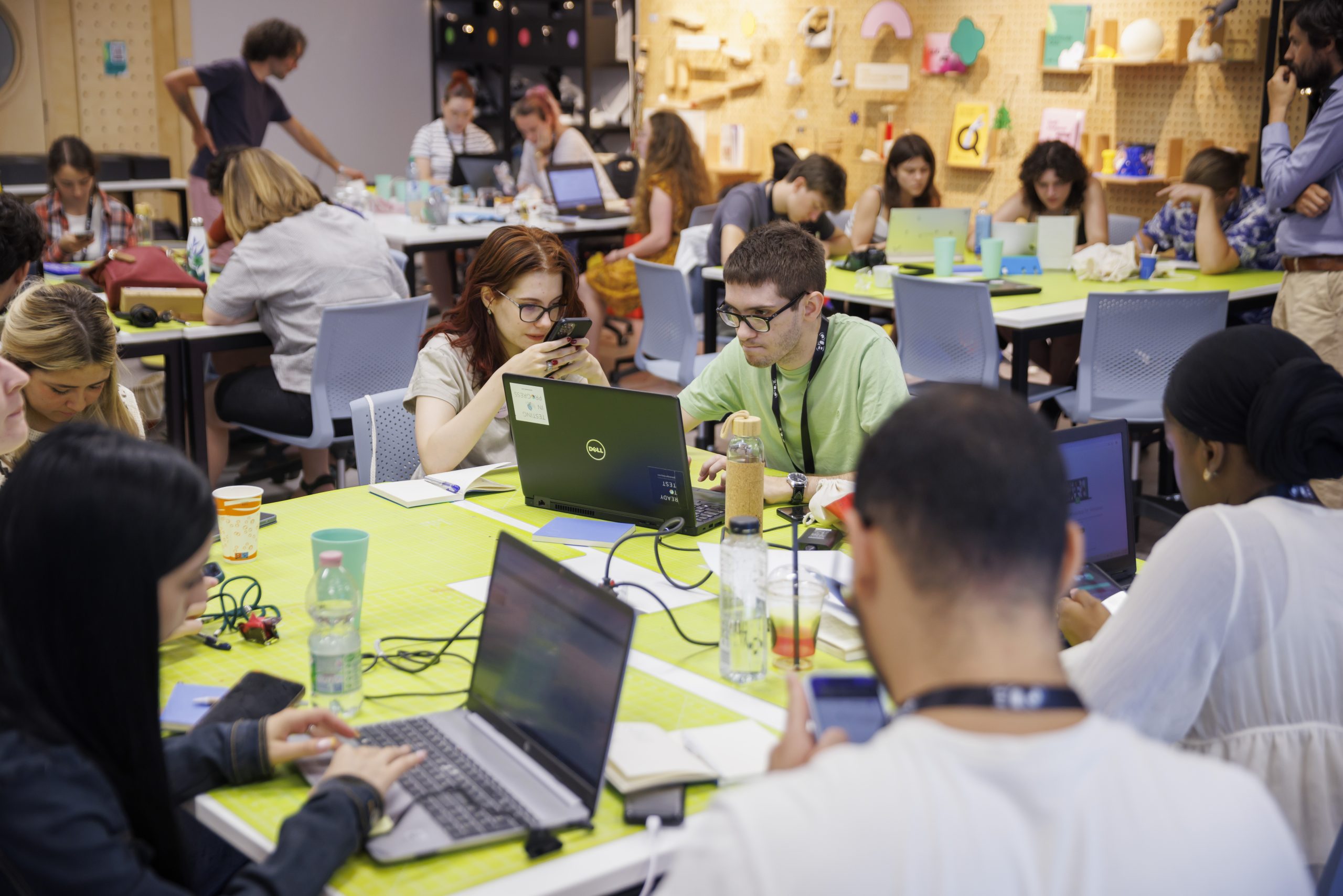
The program gathered 20 young participants from Romania and across Europe, who spent five days working collaboratively on creative and practical responses to pressing urban challenges. Designed as a dynamic learning environment, the lab combined Design Thinking methodologies, artistic exploration and field-based research, encouraging participants to rethink how cities function and whom they serve.
A week of exploration, collaboration, and creative inquiry
The Studiotopia International Pop-up Lab opened with a meet & greet session that quickly set the tone for a highly interactive week. One of the first exercises, Pop-Up Places, invited participants to translate personal memories into handcrafted pop-up cards, mapping emotional connections to their home cities through storytelling and visual expression.
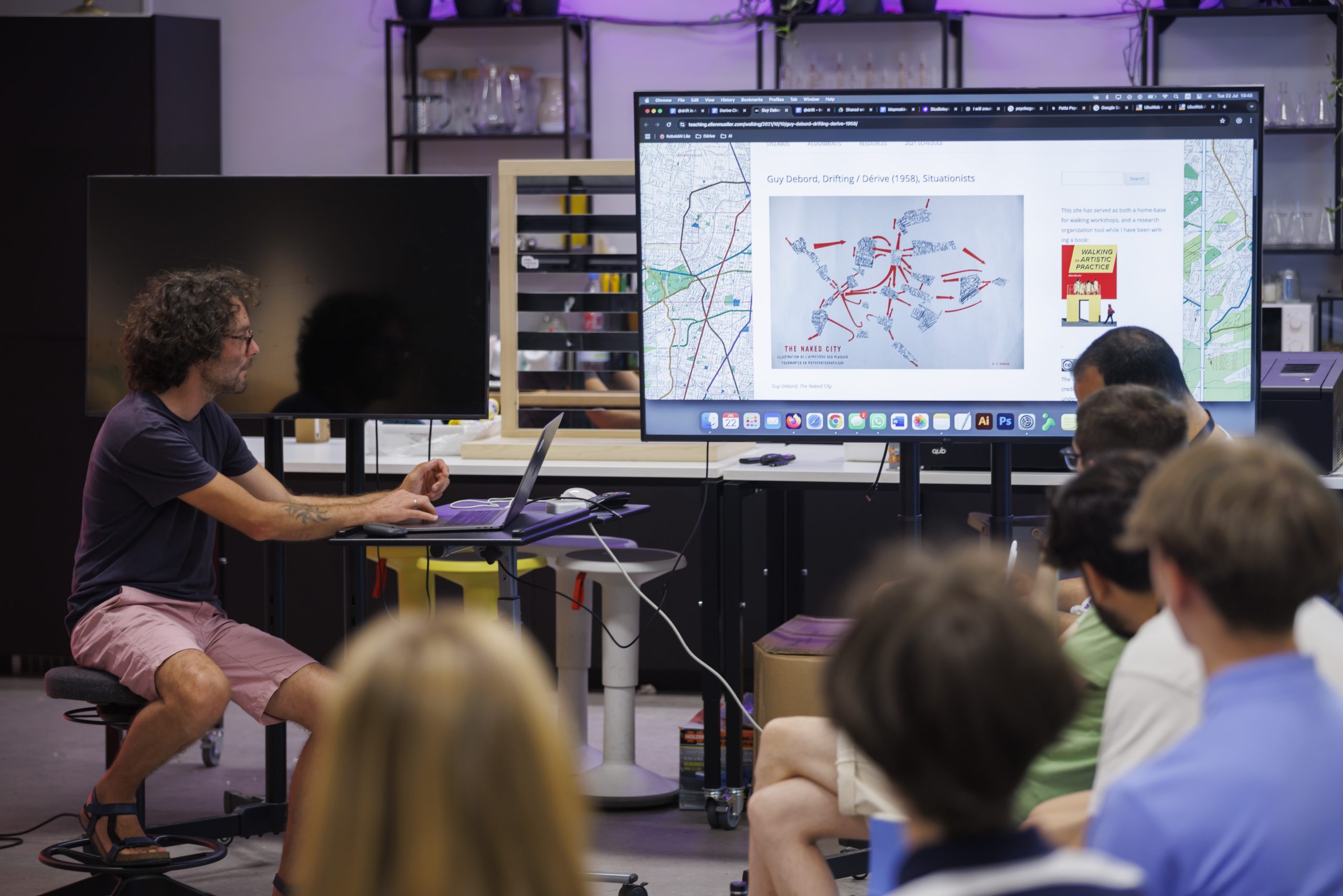
This was followed by a dérive experience, an unstructured urban exploration method that encouraged participants to navigate Cluj intuitively, without digital tools. By engaging directly with the city’s rhythms, textures and social dynamics, participants gathered insights that later informed their project work.
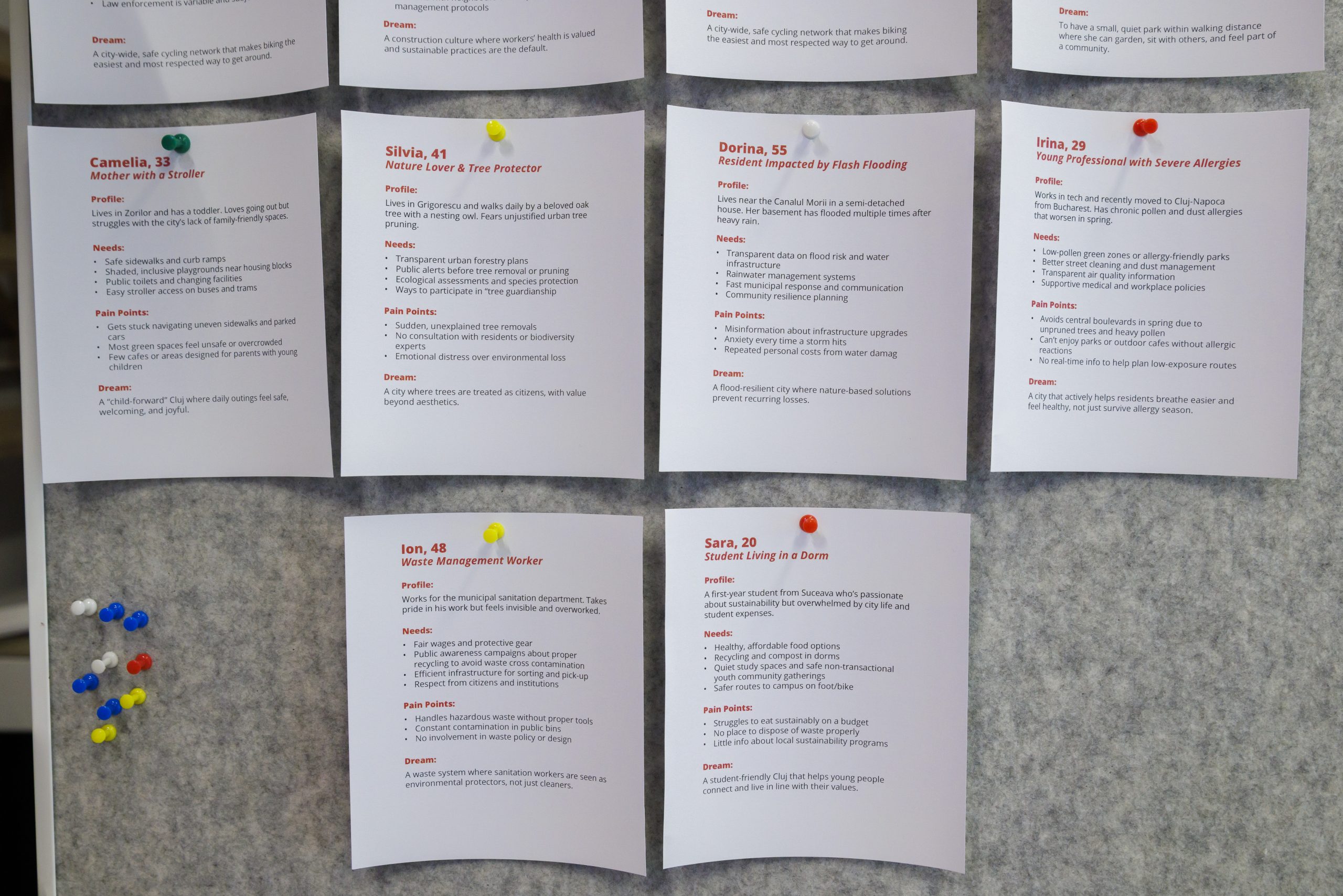
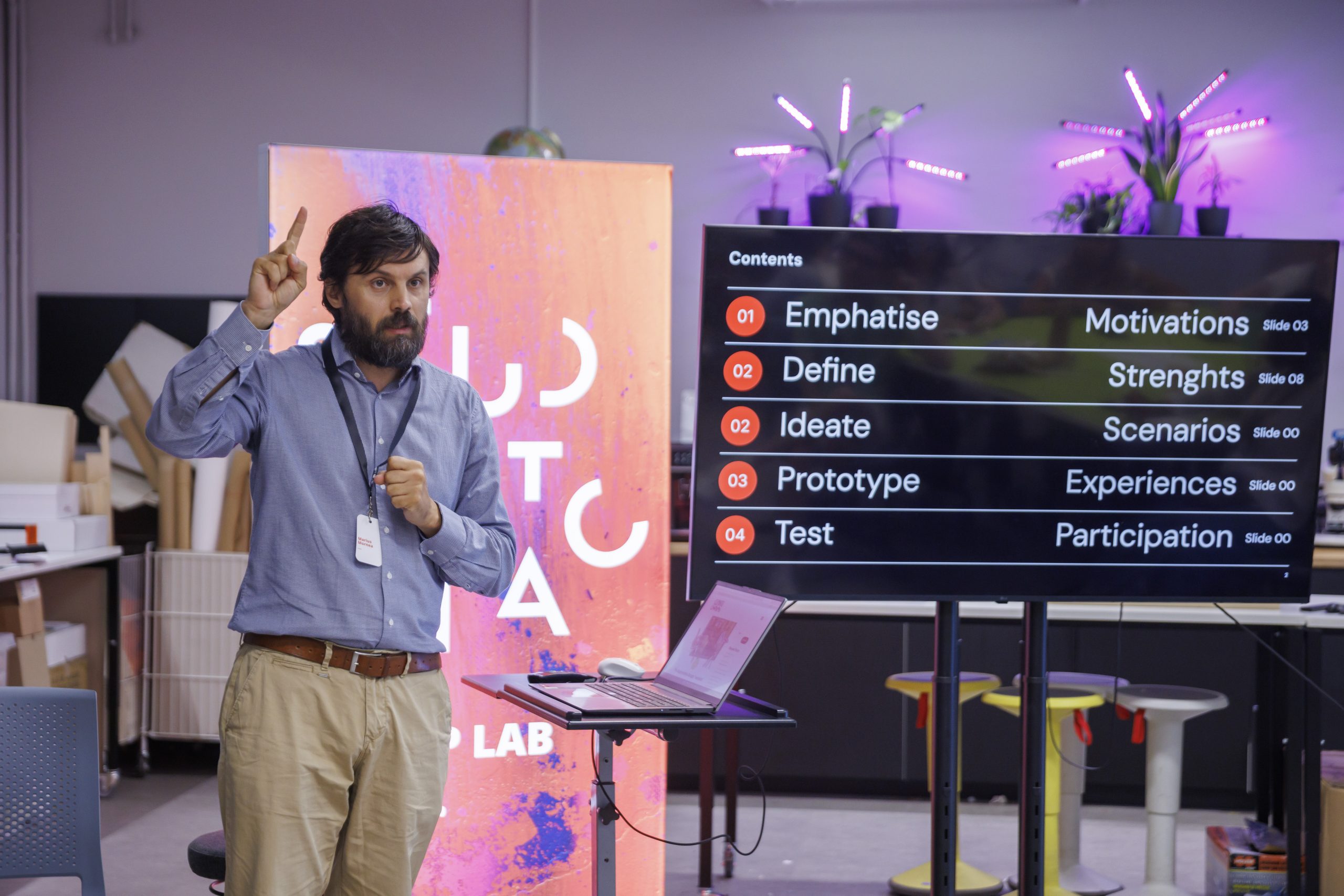
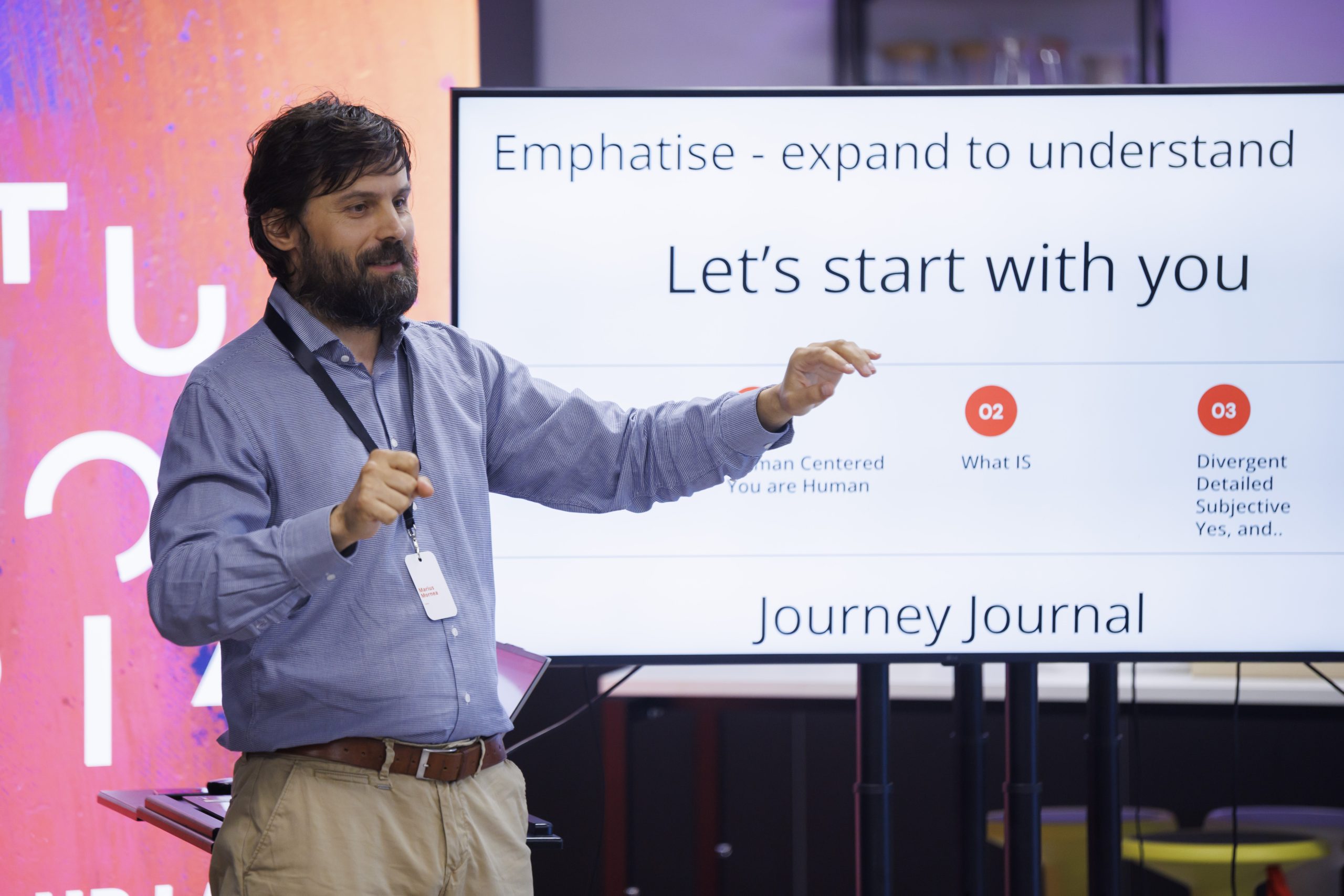
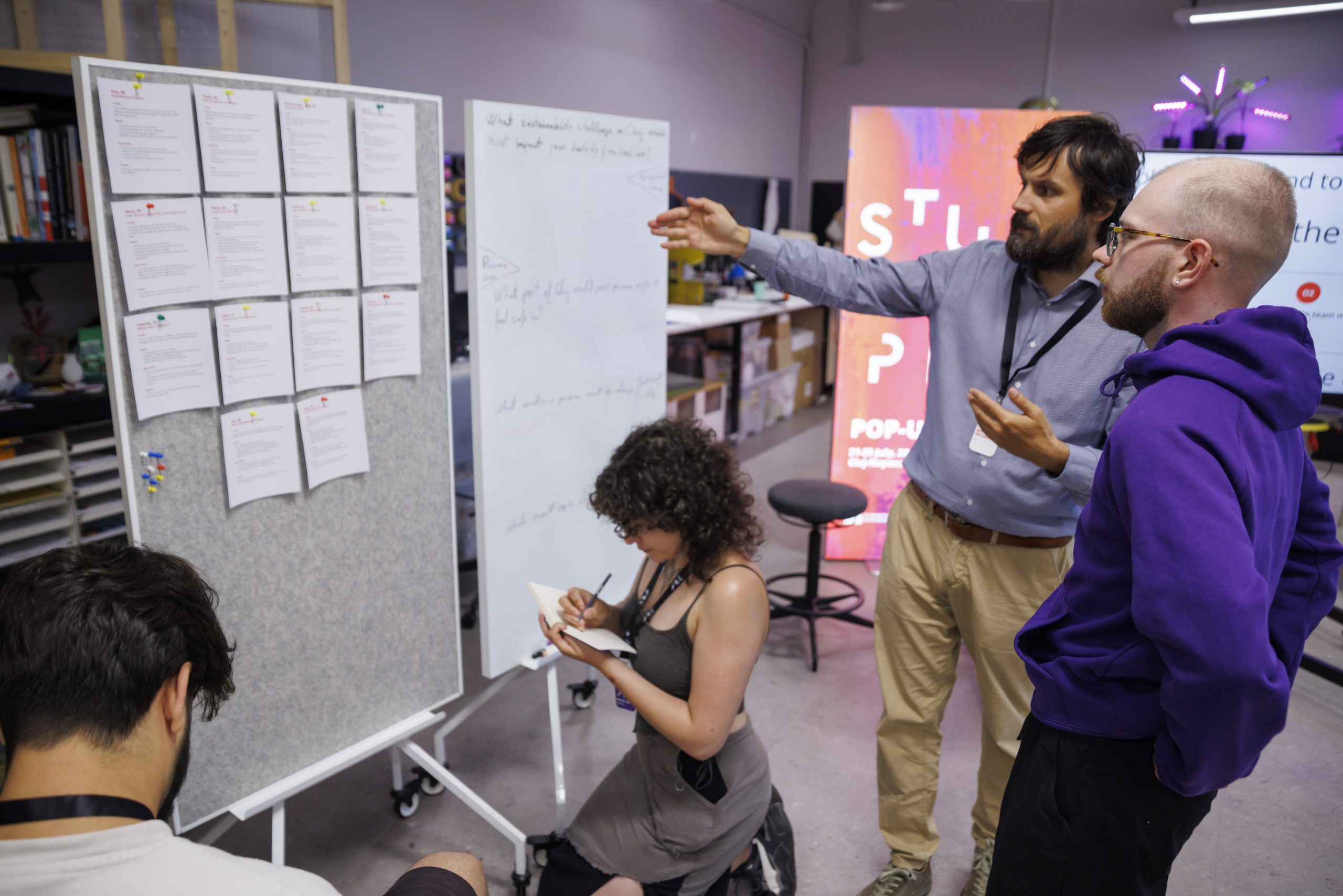
On the second day, these experiences were transformed into emotional maps, capturing not only routes, but also sensations, encounters and perceptions. Guided by facilitator Marius Mornea, participants were introduced to the Design Thinking framework, moving from empathy and problem definition to ideation, prototyping and iterative testing.
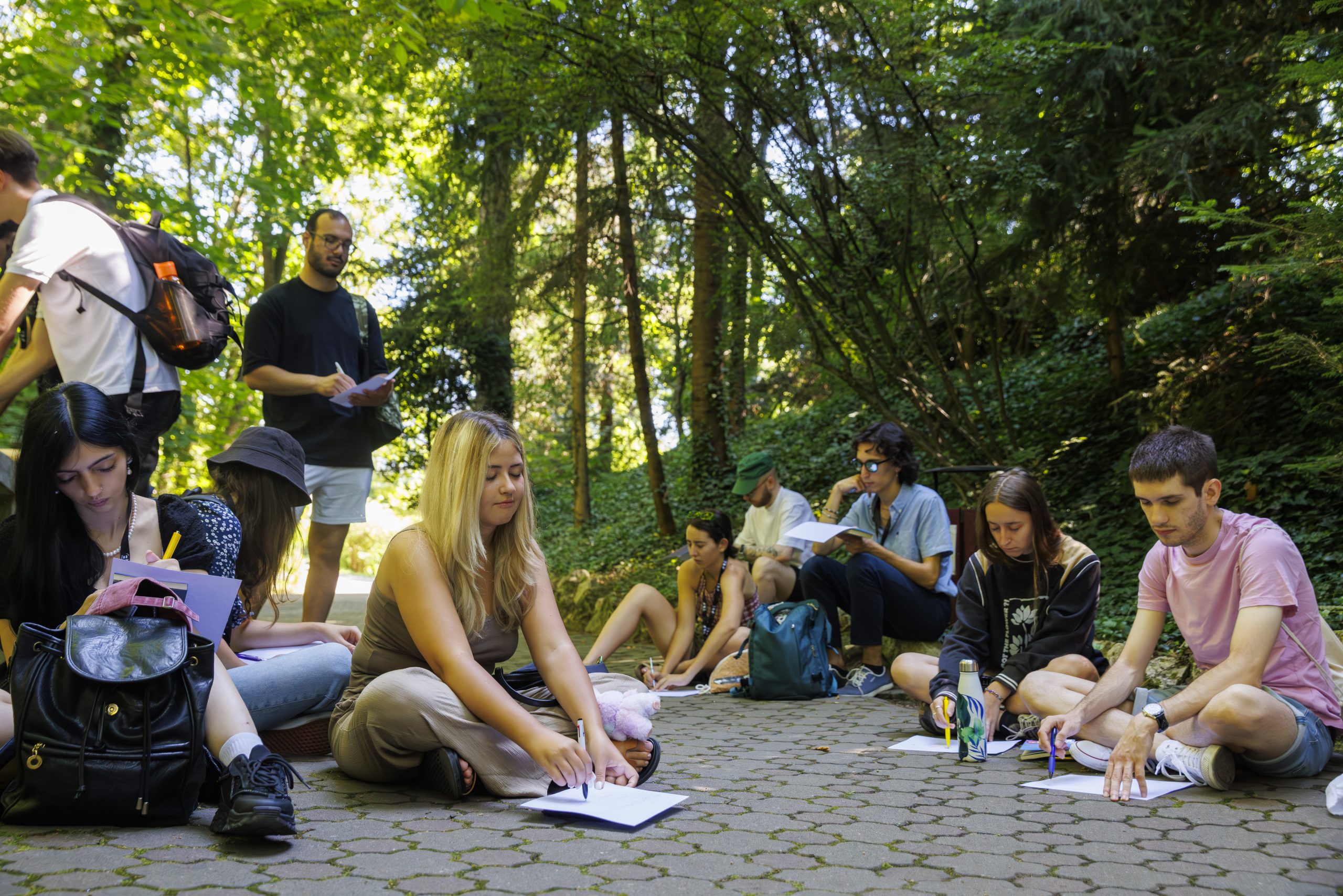
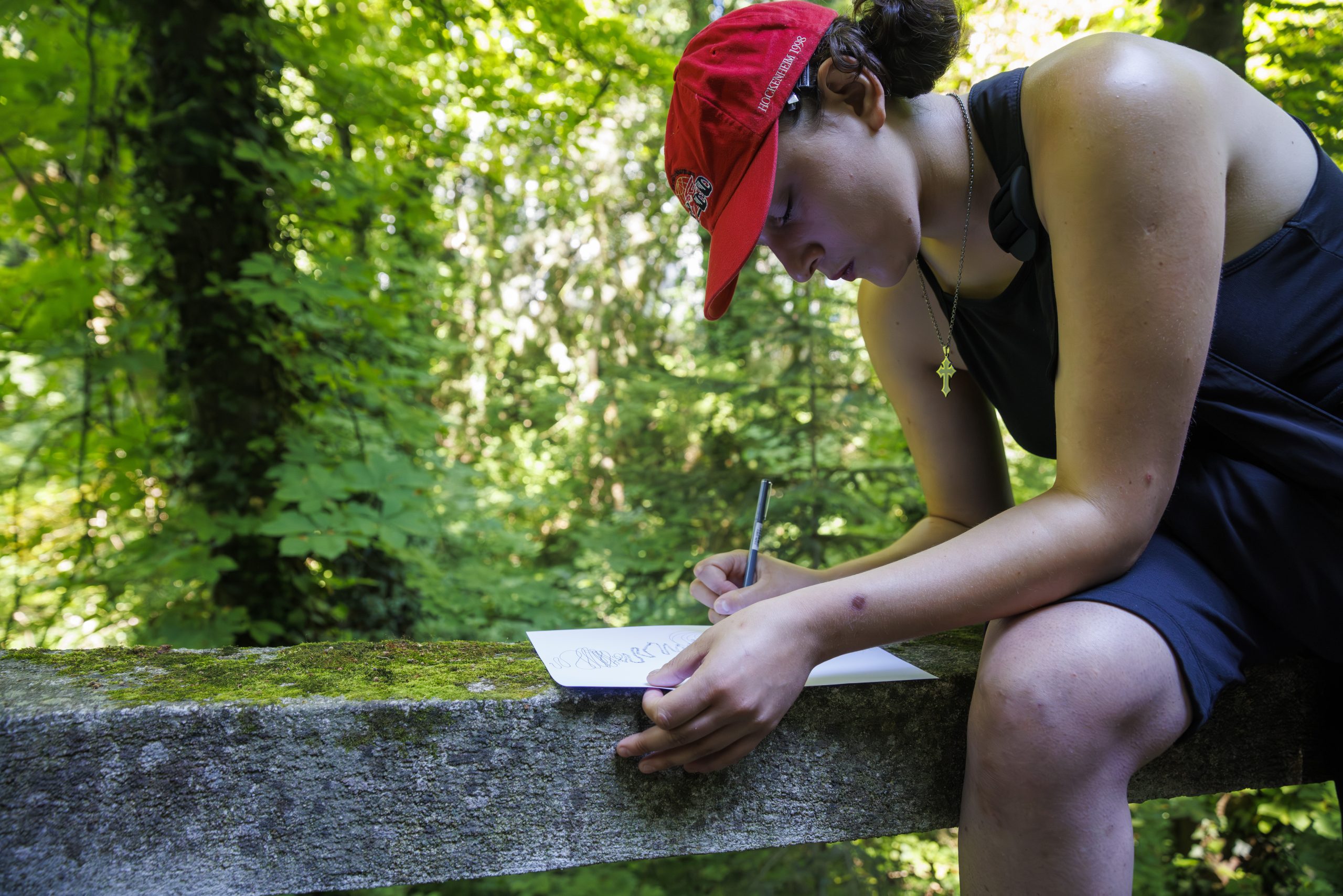
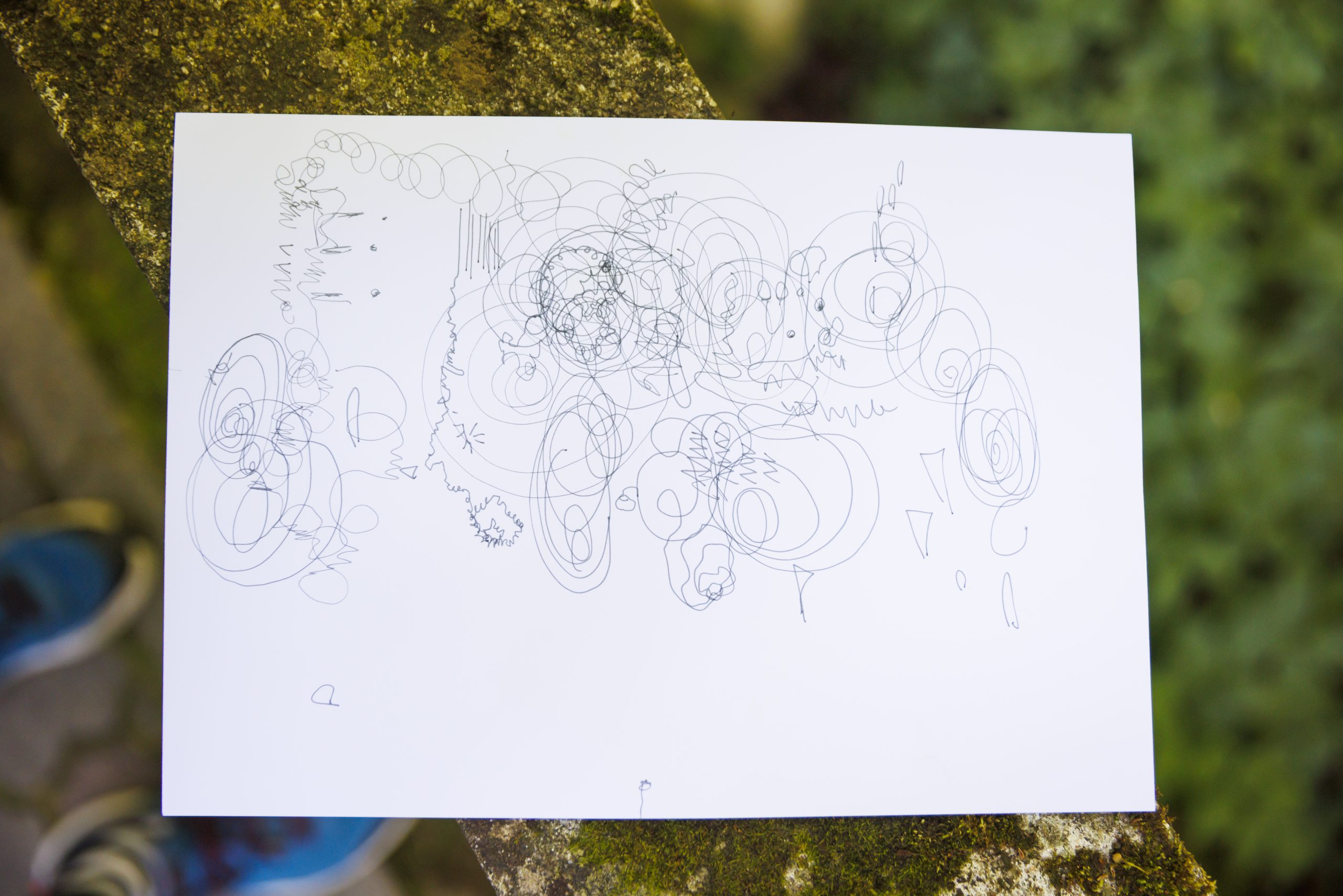
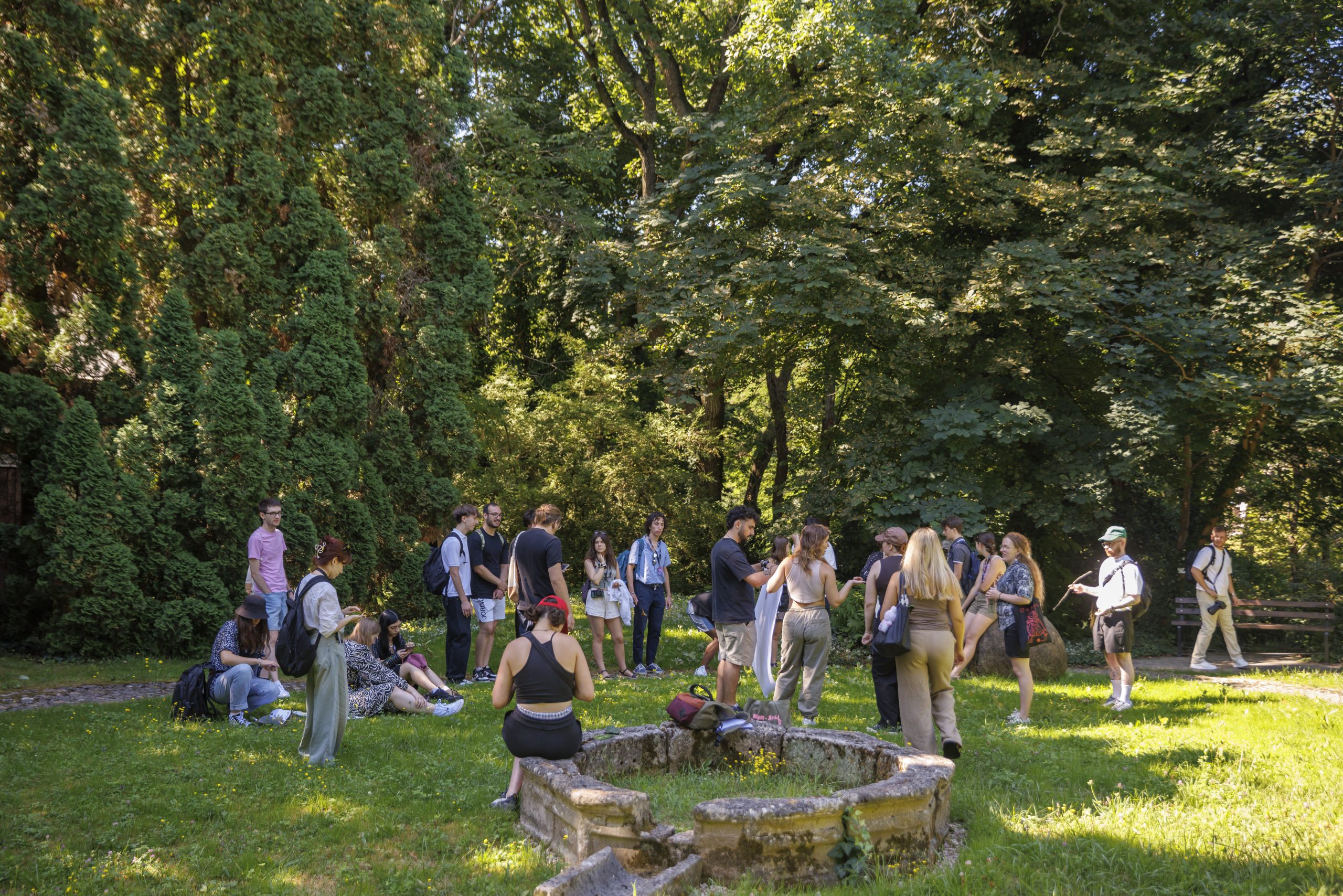
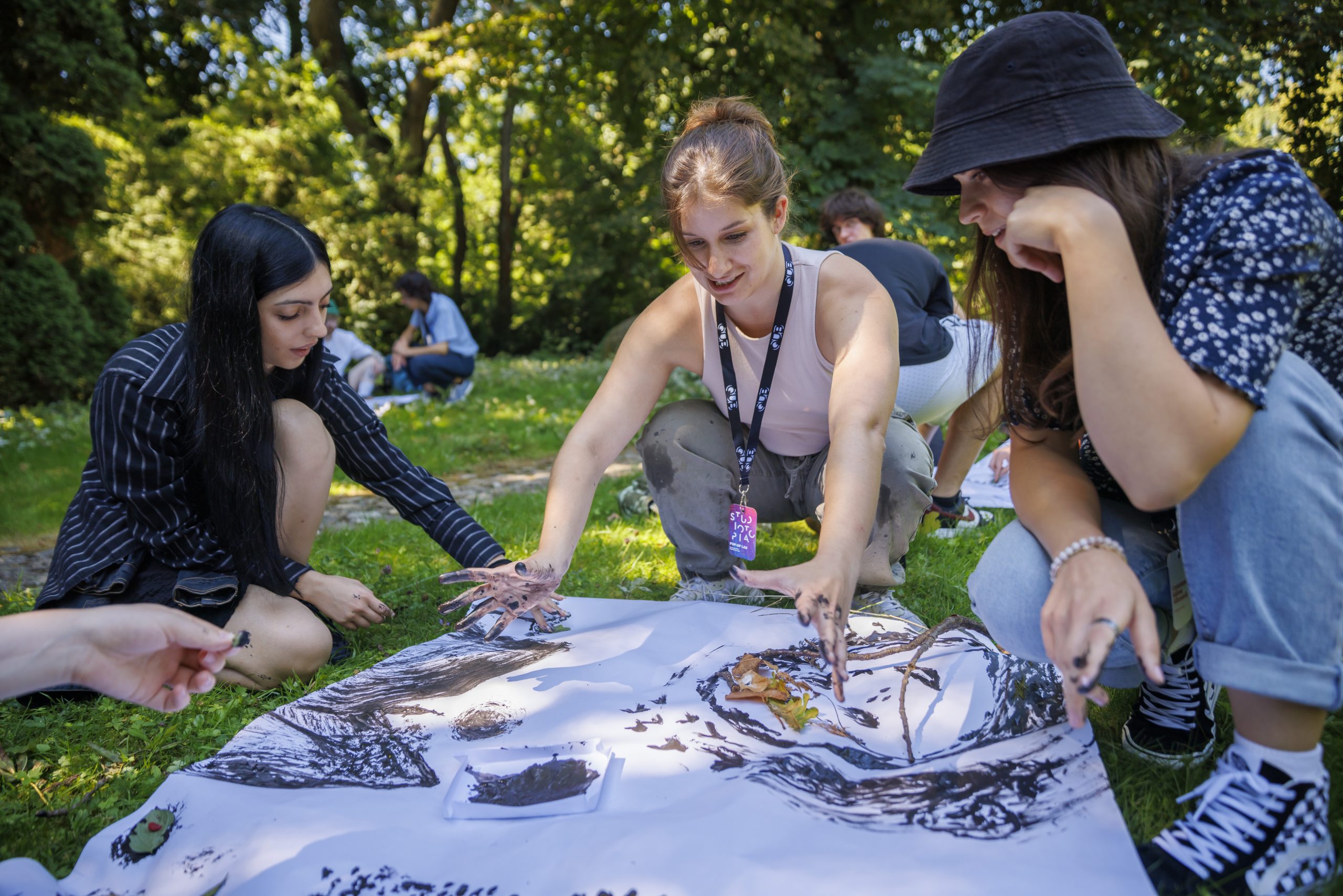
The program also featured artistic and sensory-based learning, including a workshop led by Portuguese artist Ânia Pais. Held in the Cluj Botanical Garden, the session encouraged participants to engage with nature beyond observation, drawing with their eyes closed, experimenting with natural materials, and collectively building visual narratives. The exercise emphasized intuition, collaboration and the role of art in understanding ecological systems.
Throughout the week, participants engaged in creative labs, discussions, and co-creation sessions, building a shared language across disciplines and cultural backgrounds.
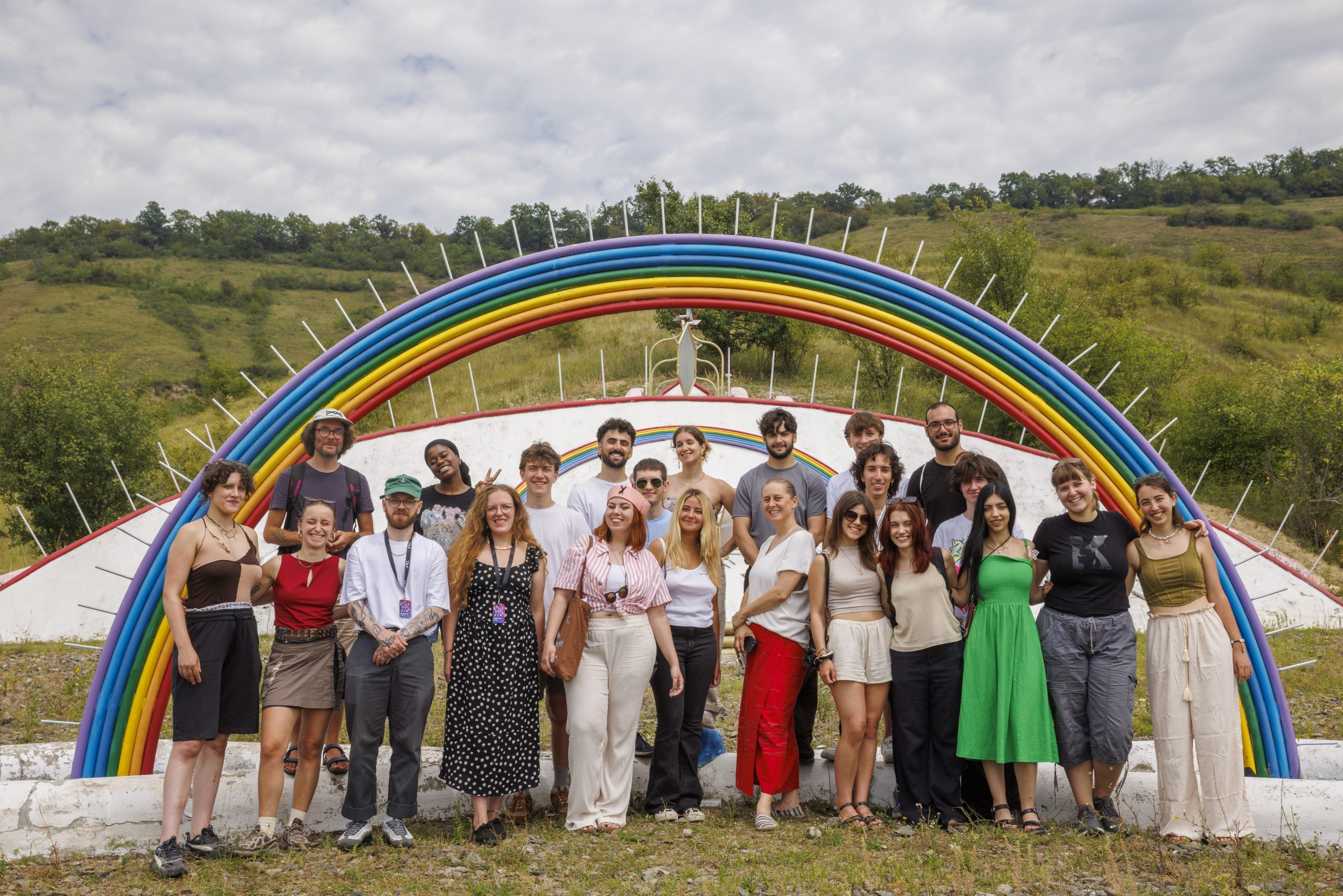
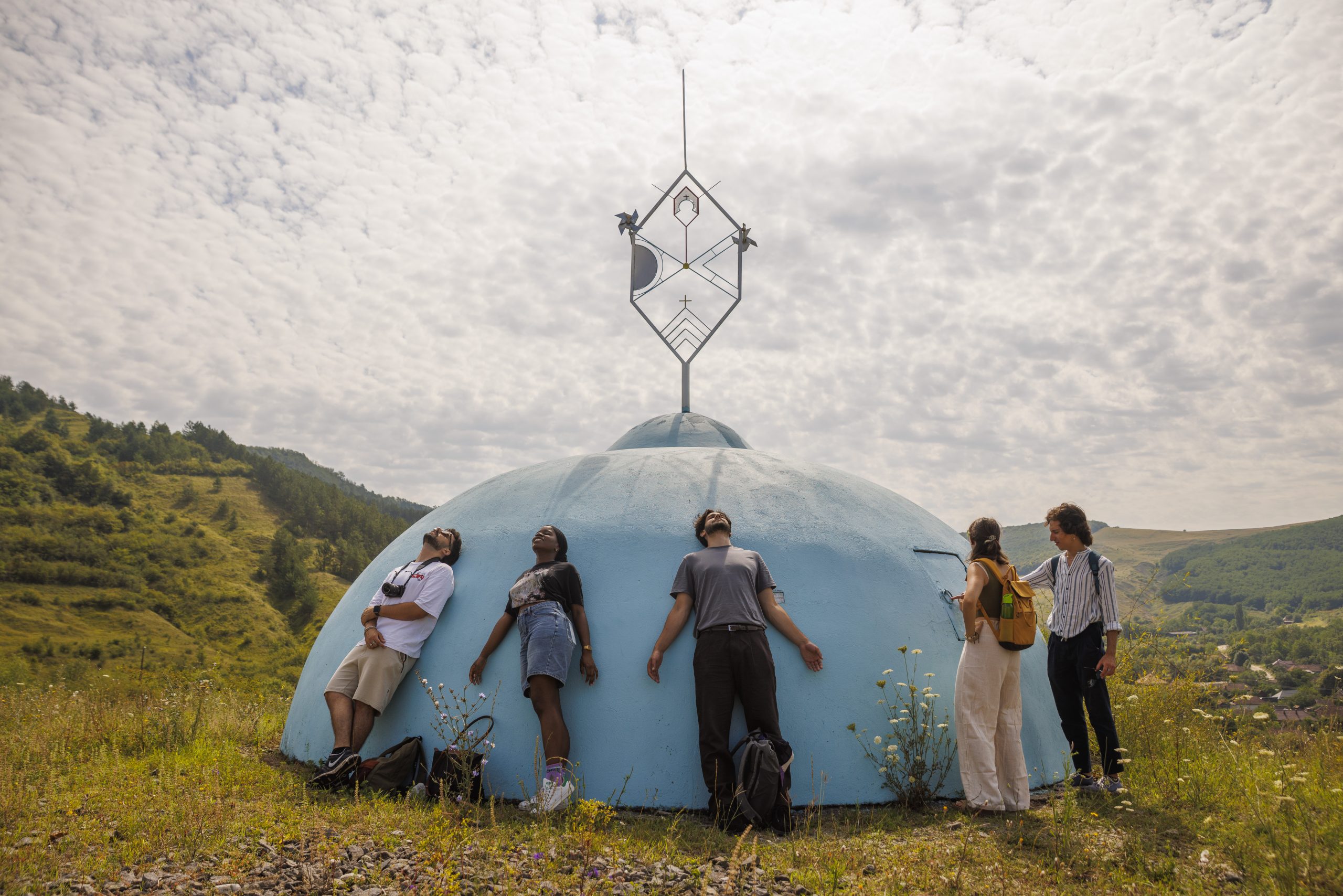
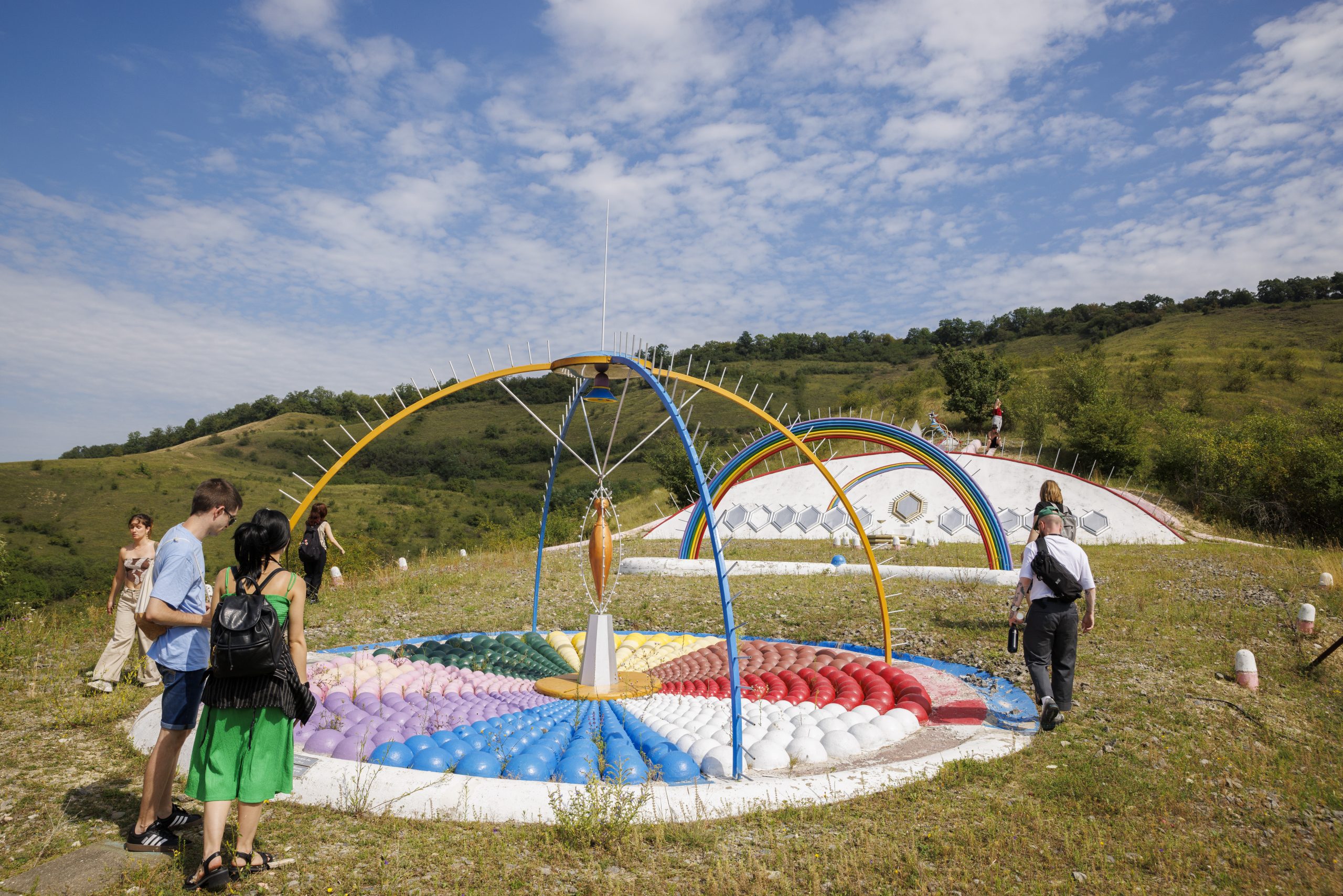
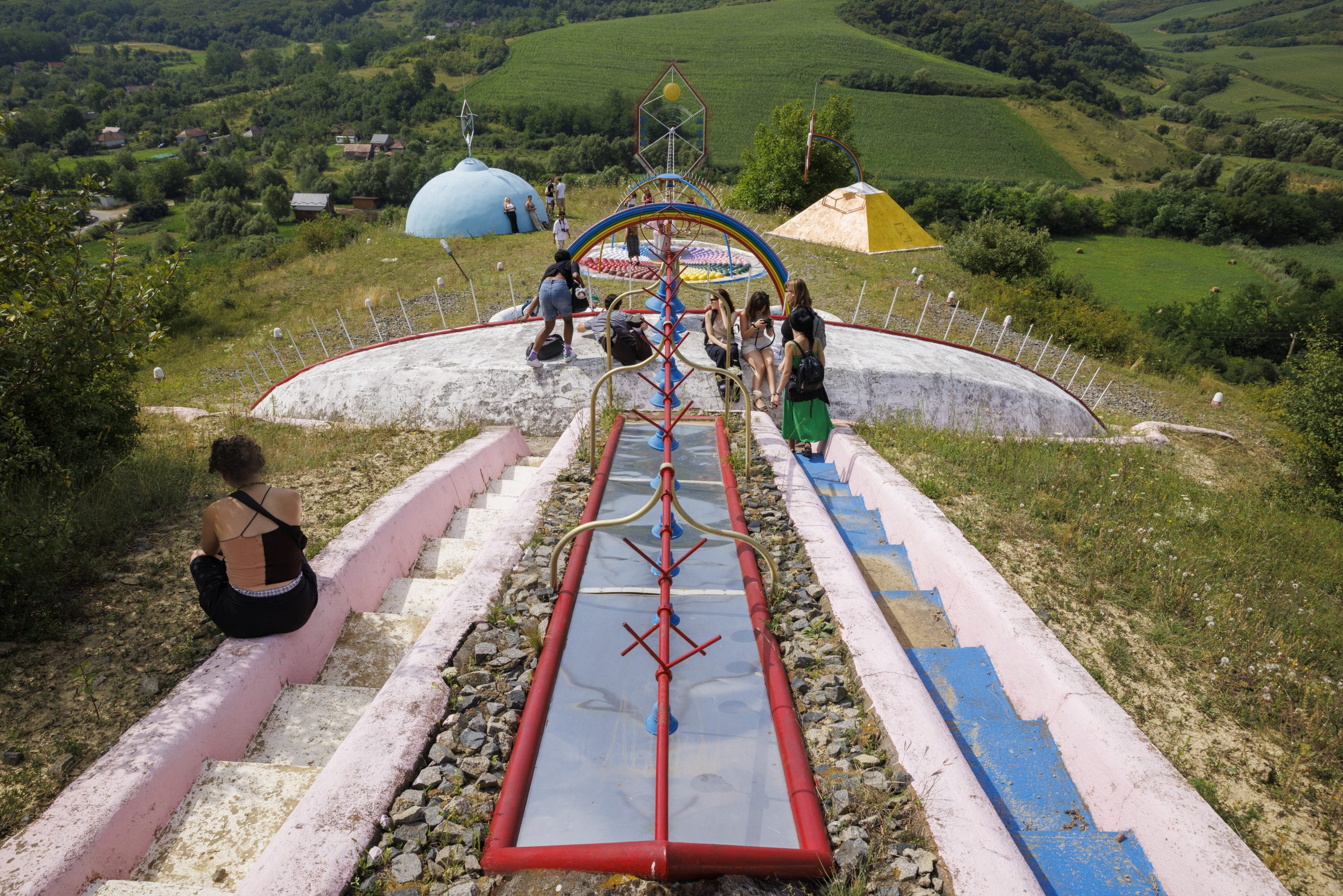
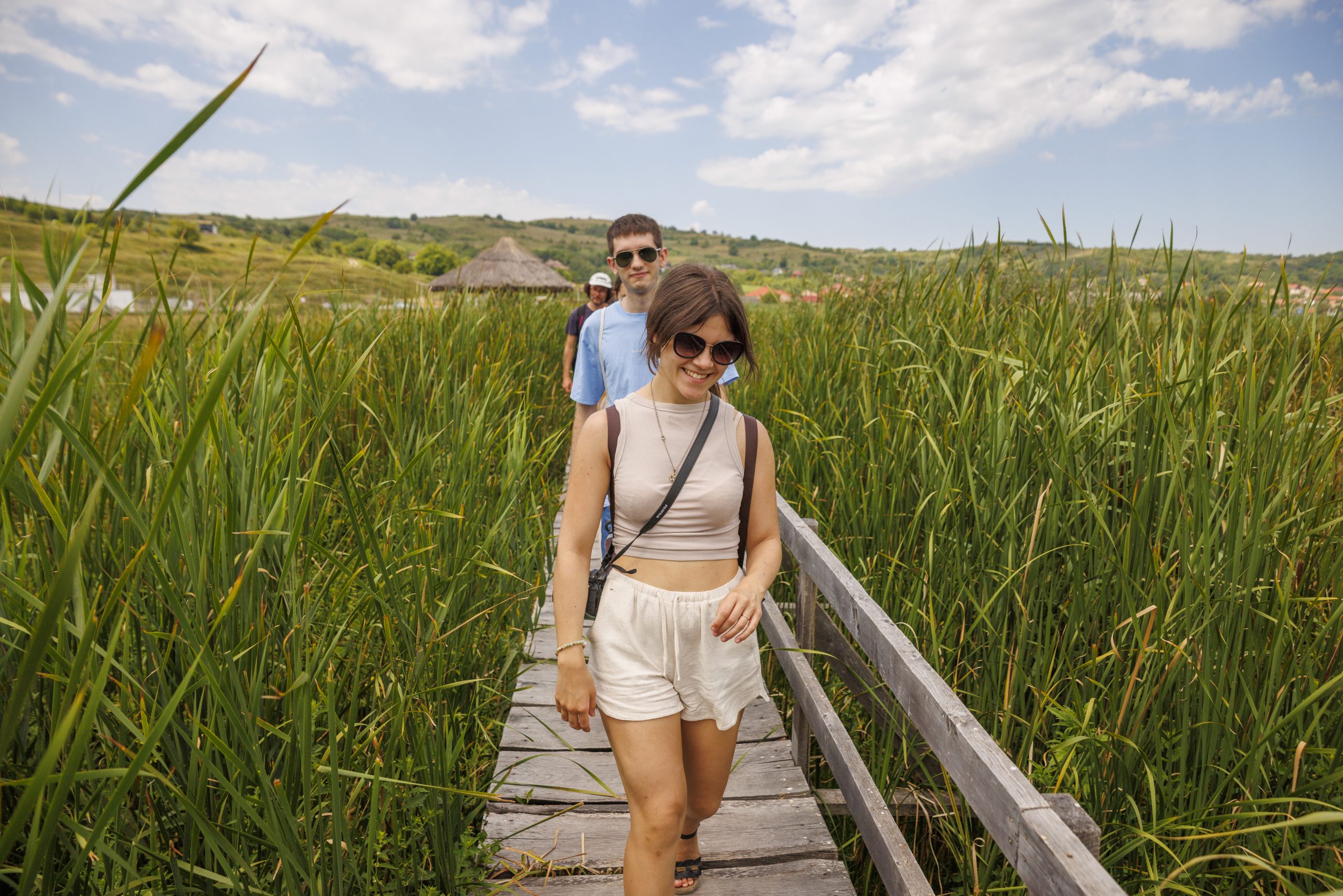
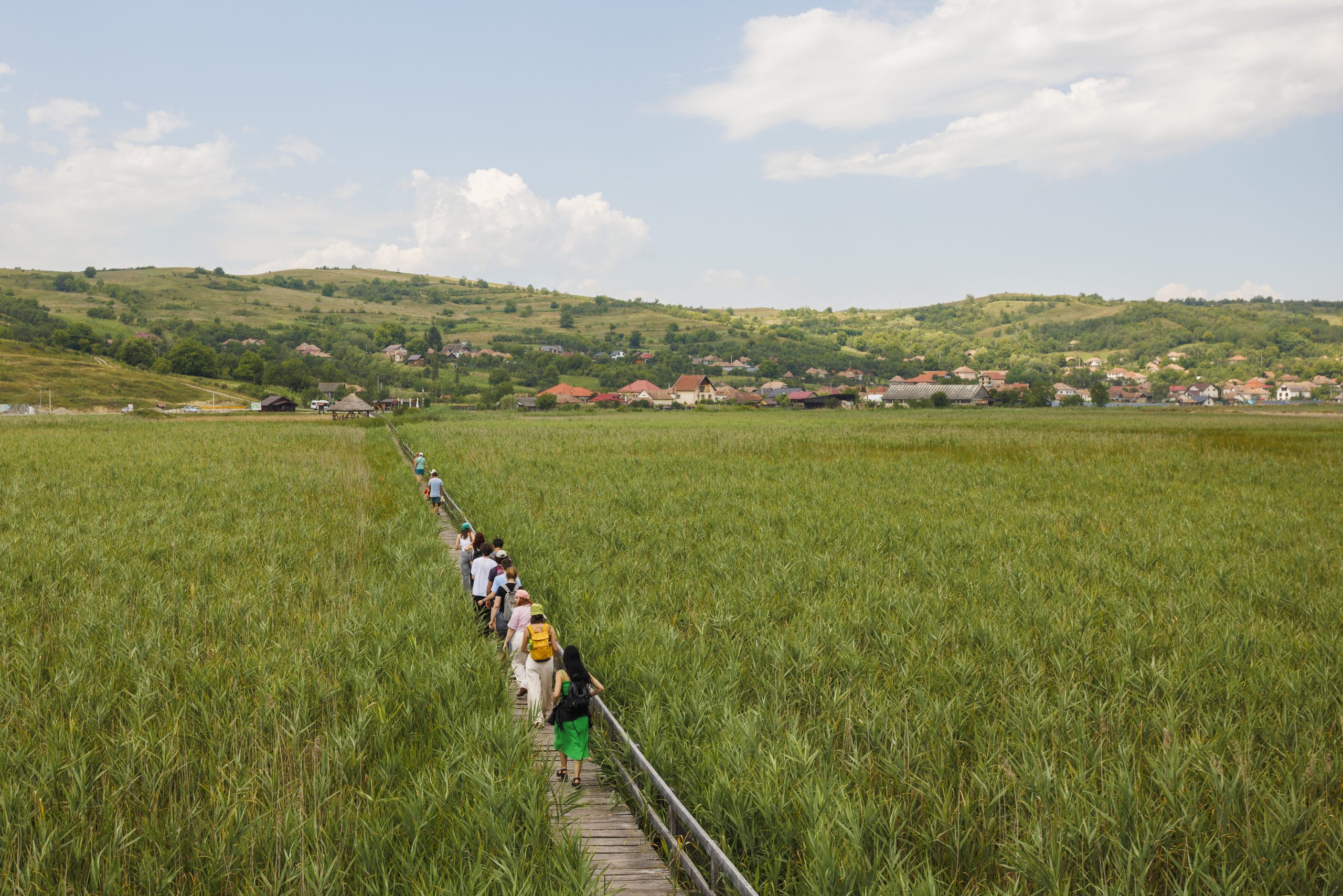
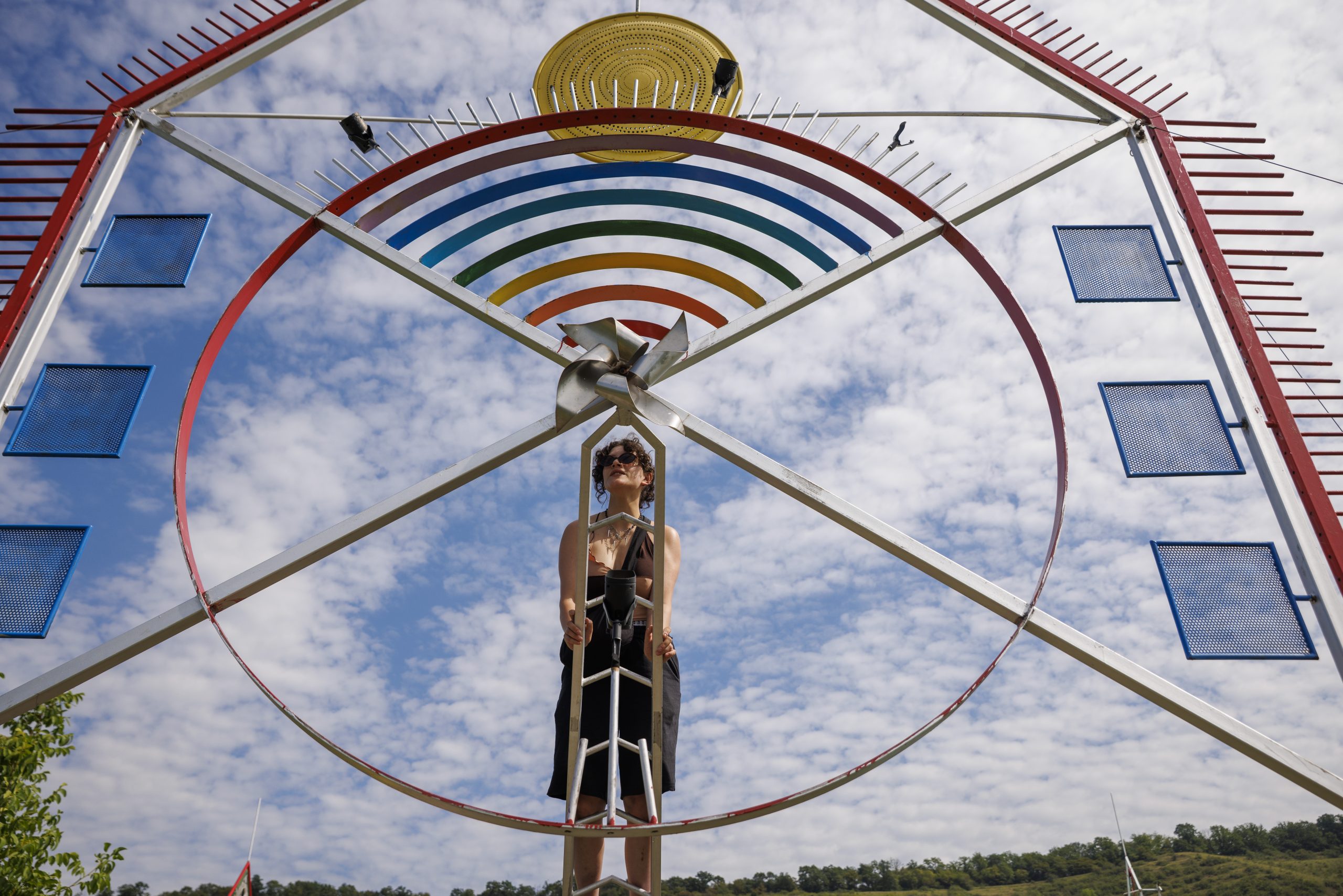
The final day extended learning beyond the city, with visits to the Tăușeni Monumental Ensemble by Alexandru Chira and the Sic reed beds, where artistic vision and environmental awareness connected.
Five teams, five visions for the city
The Studiotopia International Pop-up Lab concluded with a public presentation of projects developed by participants working in teams. Each proposal addressed urban challenges identified during the week, combining creativity, research and practical thinking.
Among the concepts presented:
Race Against Waste proposed a mobile app connecting students in Cluj through weekly ecological and social challenges, from cleaning green spaces and planting trees to cooking communal meals and exploring the city together. Real actions are rewarded with festival tickets, course credits, discounts and leadership roles, creating a growing incentive system that ties individual effort to collective impact. Built on local university networks, the project leverages Cluj’s student community to drive environmental action at scale.
Team: Carla Precup (RO), Andrei Lupea (RO), Maria Prunean (RO), Nina Serra (FR), Alessandro Mazzani (IT)
Cluj Cultural Pavilions started from a pointed question: who truly has the right to the city? The team’s answer was a series of modular structures made from recycled tarpaulins, transforming underused public spaces into shaded hubs for culture, activism, and collective exchange. More than shade structures, the pavilions are proposed as tools for reclaiming the urban commons — a demand, the team argued, for moving from individualistic to participatory access to public space.
Team: Rudi-lee McCarthy (IRE), Adina Gîlceavă (RO), Vlad Beu (RO), Joel Chebri (FR)
Arbor Echo invited the city to see trees not as decorative objects but as active, living infrastructure. The project imagines tree-like structures in Cluj’s public squares that draw people in with shaded seating and VR headsets transporting visitors into lush forest soundscapes. The goal is both immediate, offering moments of calm amid urban noise, and long-term, shifting the cultural perception of trees as essential civic partners in building resilient, liveable cities.
Team: Ariadna Gulic (RO), Michelle Medici (IT), Sarah Helen Mbambu Maswaku (BE), Stavros Kazakos (CY)
The Plantform reimagines overlooked urban corners — vacant lots, neglected squares, rooftops — as modular, living spaces that support gardening, gathering and community life simultaneously. Compact, adaptable and sustainable by design, the Plantform system can quickly transform parks and plazas into vibrant hubs with planters, seating, mini stages and shaded areas. Its impact extends across biodiversity, community ties and cultural programming, while democratising access to public performance spaces.
Team: Alexandra Măican (RO), Andrei Lela (RO), Jonathan Aparicio Ruiz (SP), Sarmad Salloum (BG)
University Territories as Public Urban Parks was the Lab’s closing vision: what if the campuses of Cluj’s universities were opened to the entire city? The team proposed transforming underused university land into green, ecological spaces for learning, connection and collective care: urban forests, eco-education gardens, beekeeping zones and creative community hubs. With universities positioned as publicly funded institutions already holding expertise in ecology and sustainability, the project makes the case for knowledge that doesn’t stop at the university gate.
Team: Robert Konoplia (UA), Ana Jerina (SVN), Simion Iepure-Górski (RO), Dominika Szymańska (PL)
The Studiotopia International Pop-up Lab wrapped up on 25 July, but the ideas developed during the week remain relevant. The projects reflect concrete ways of rethinking urban spaces in Cluj, with potential to be tested, adapted or taken further in other contexts.
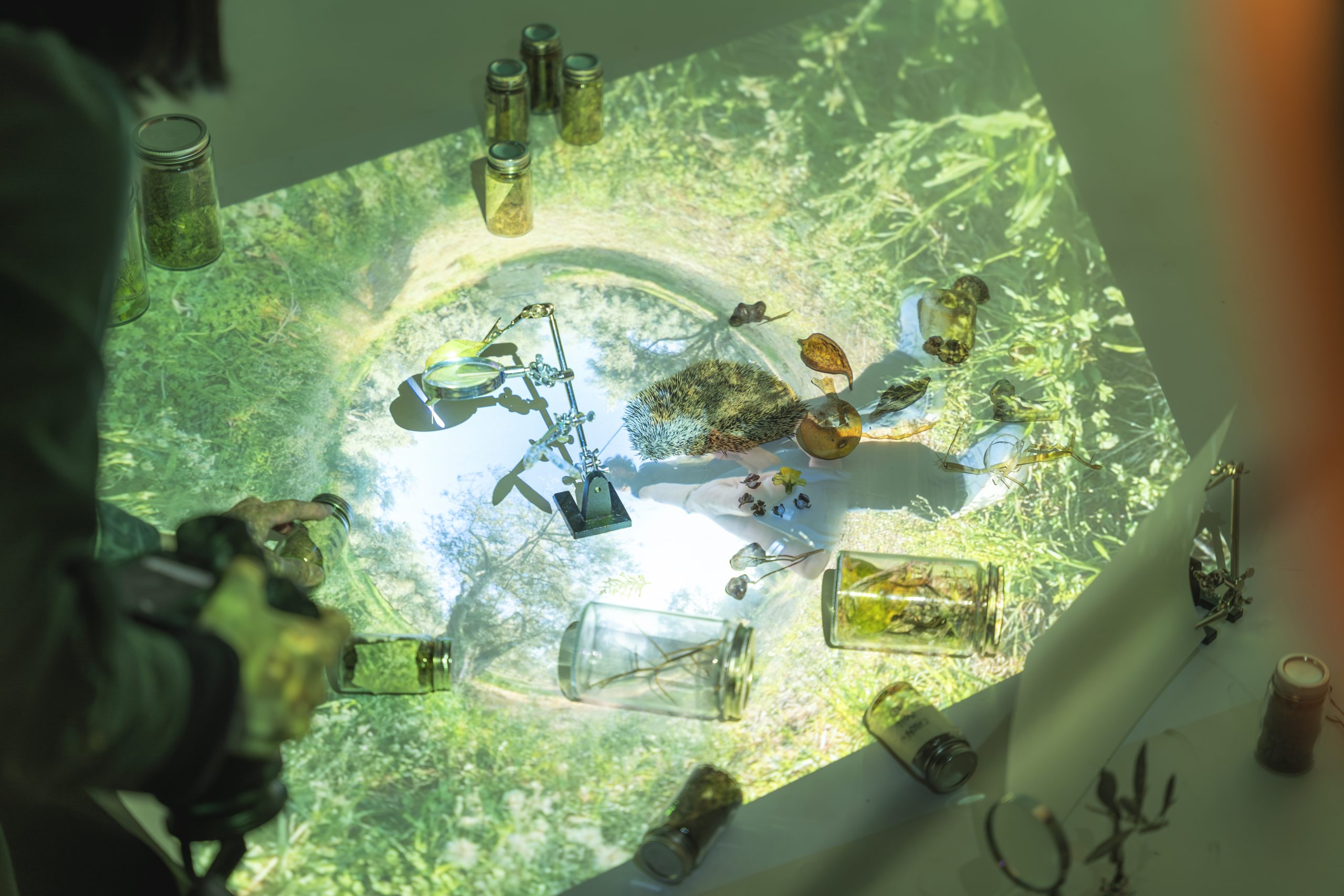
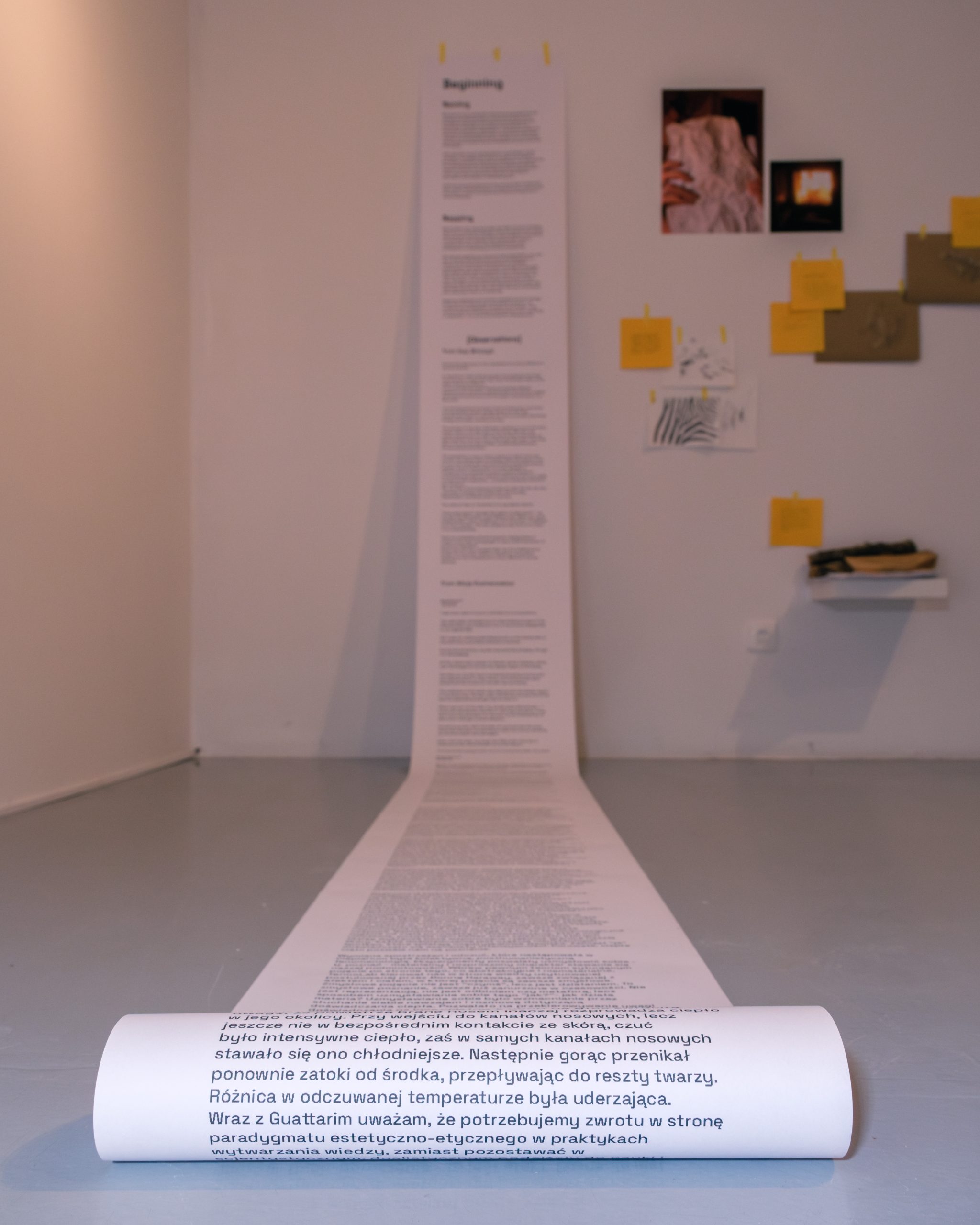
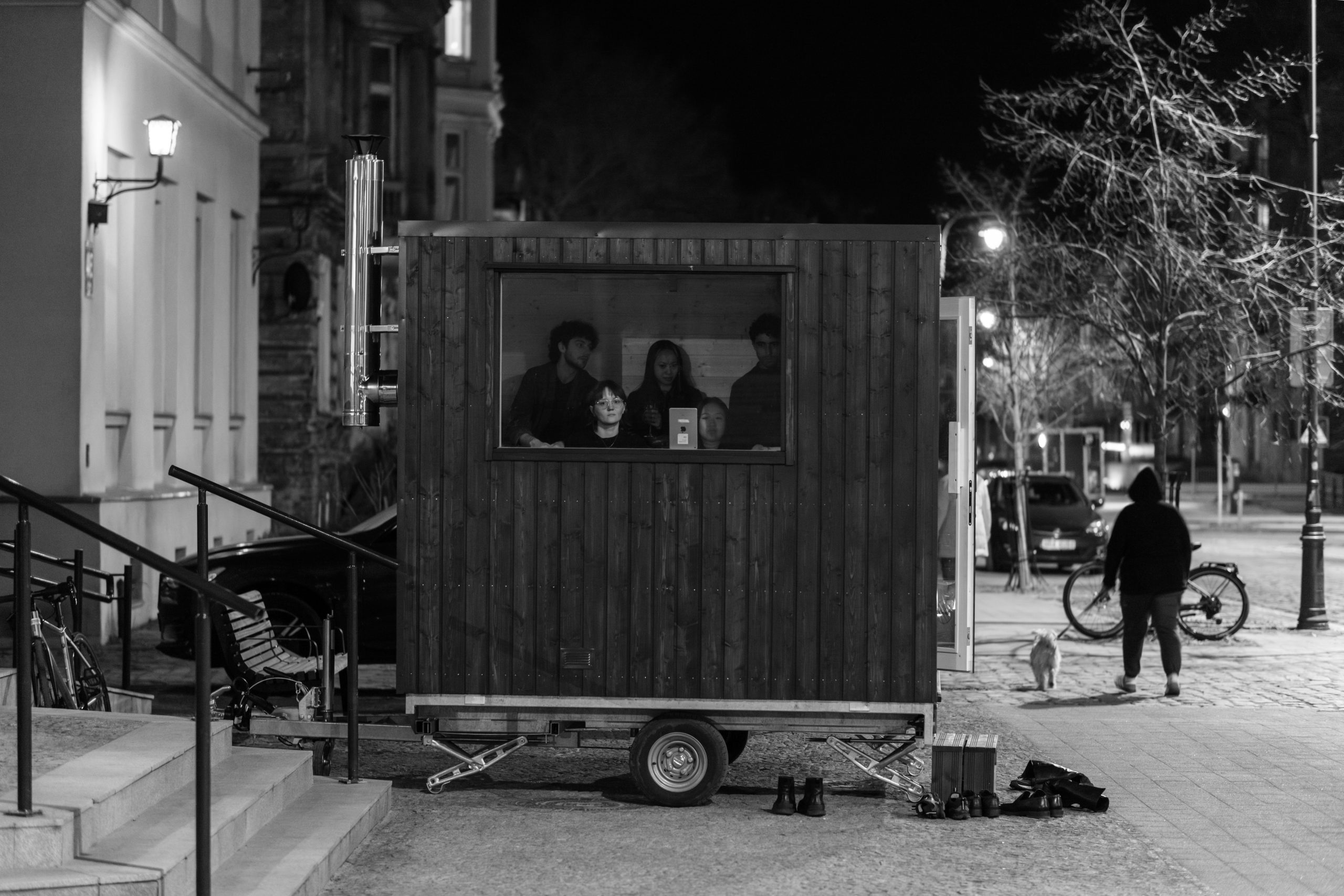
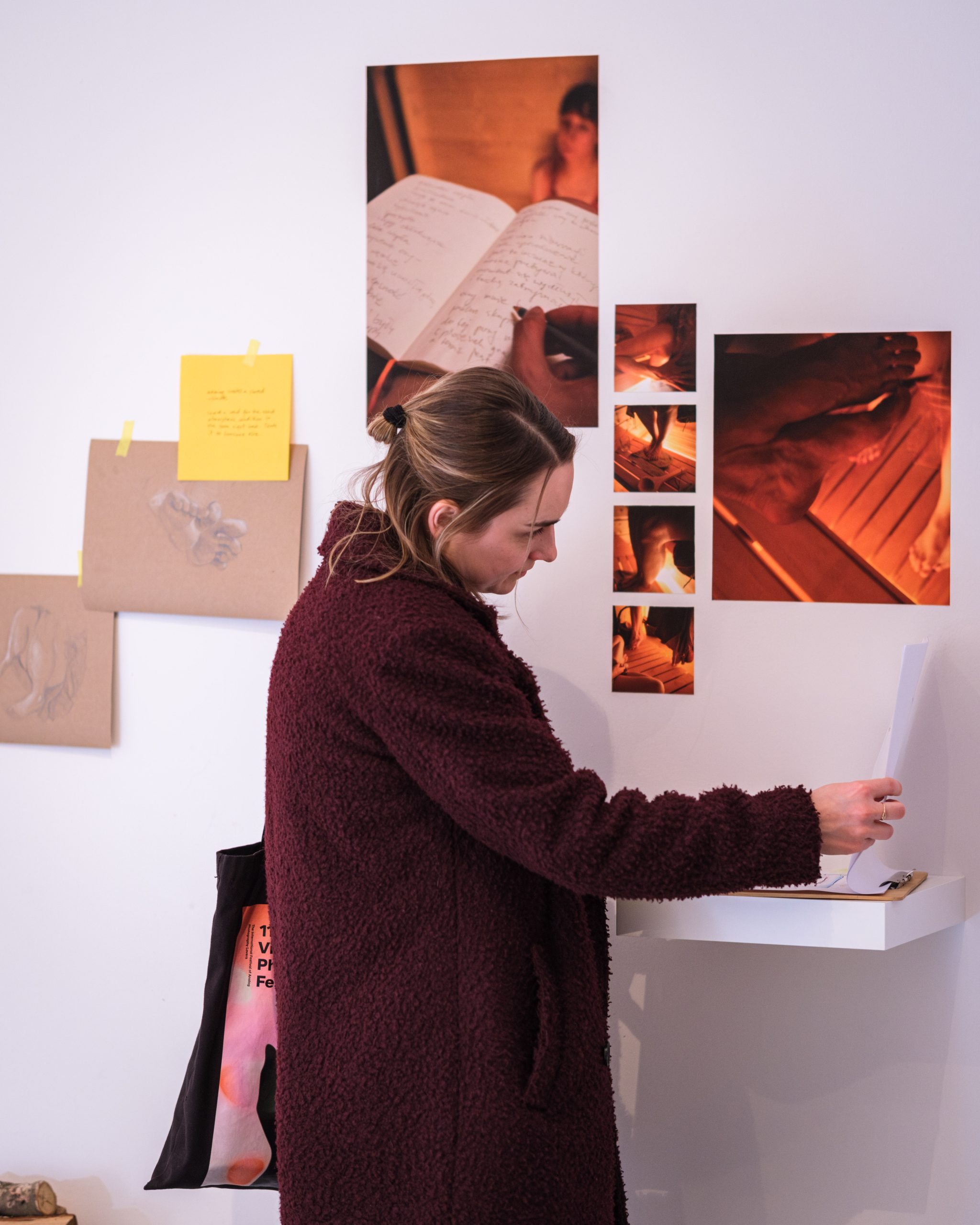
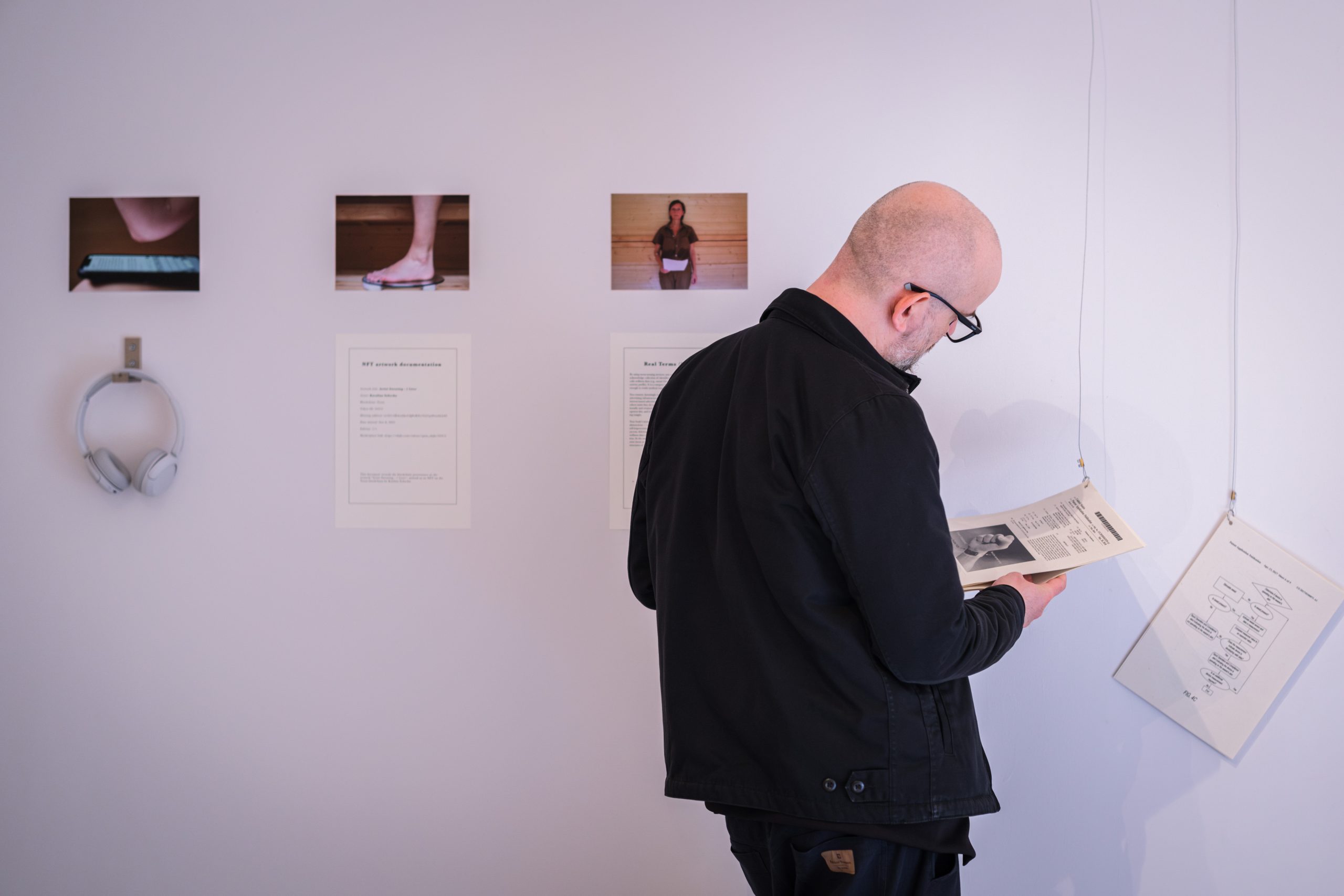
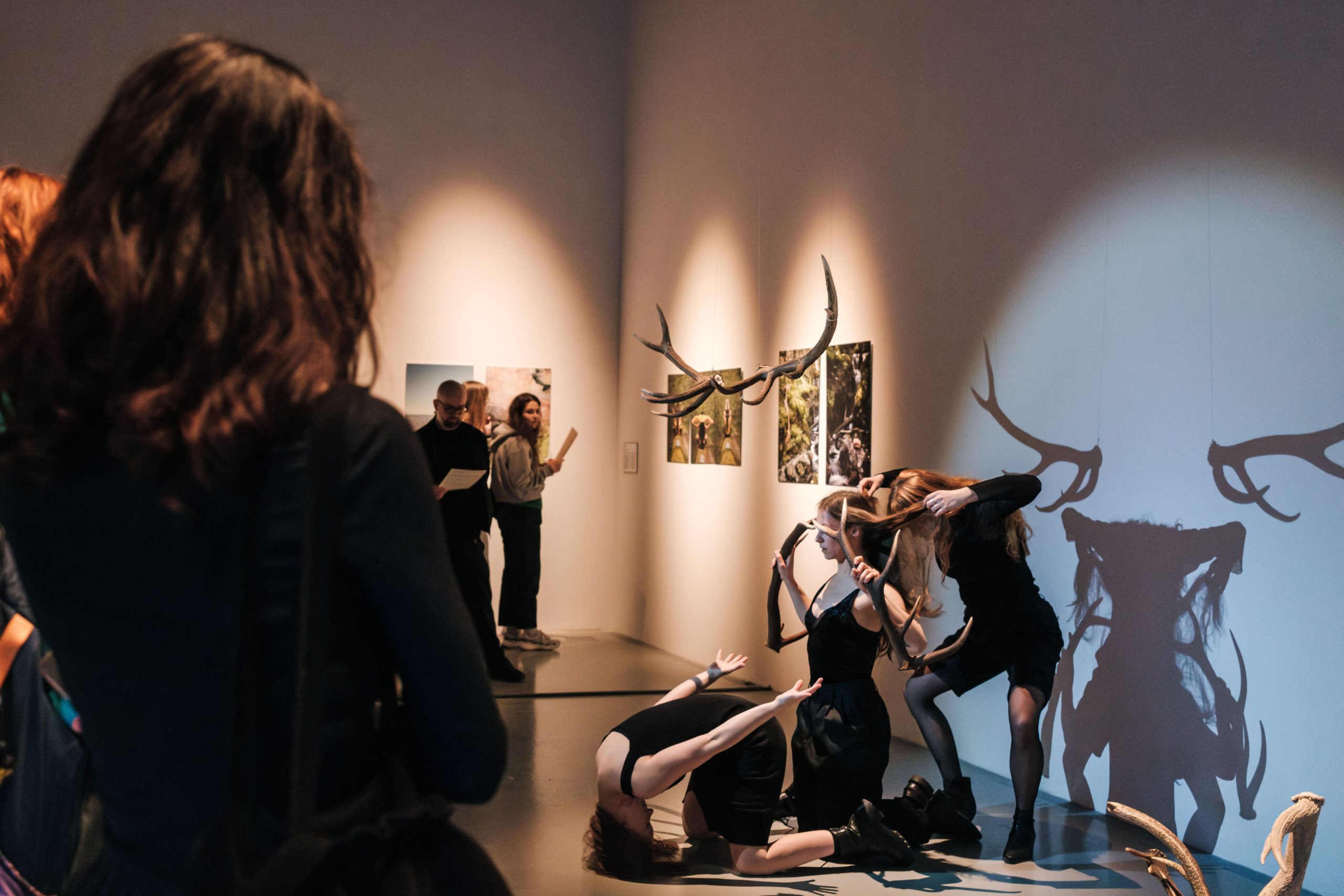
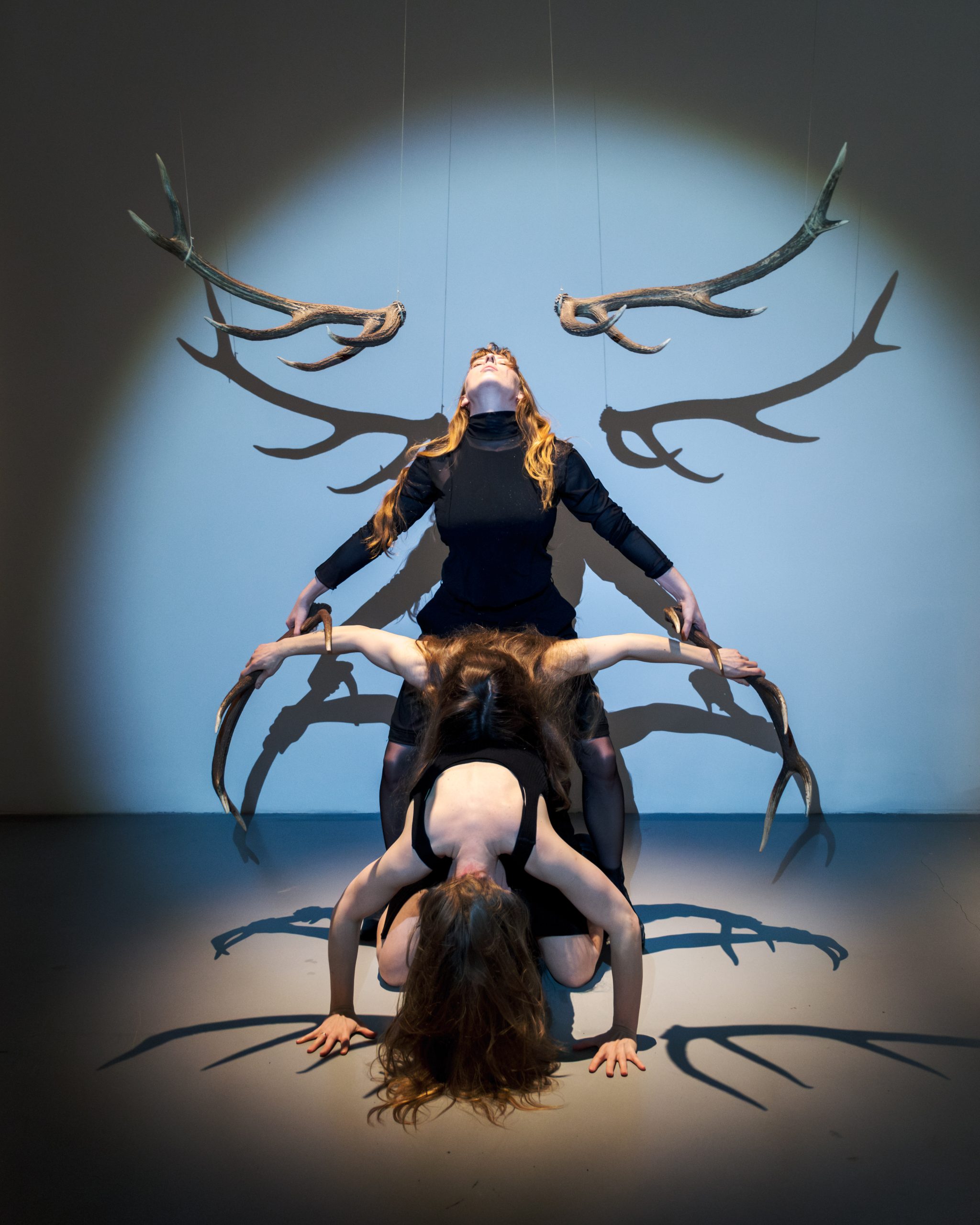
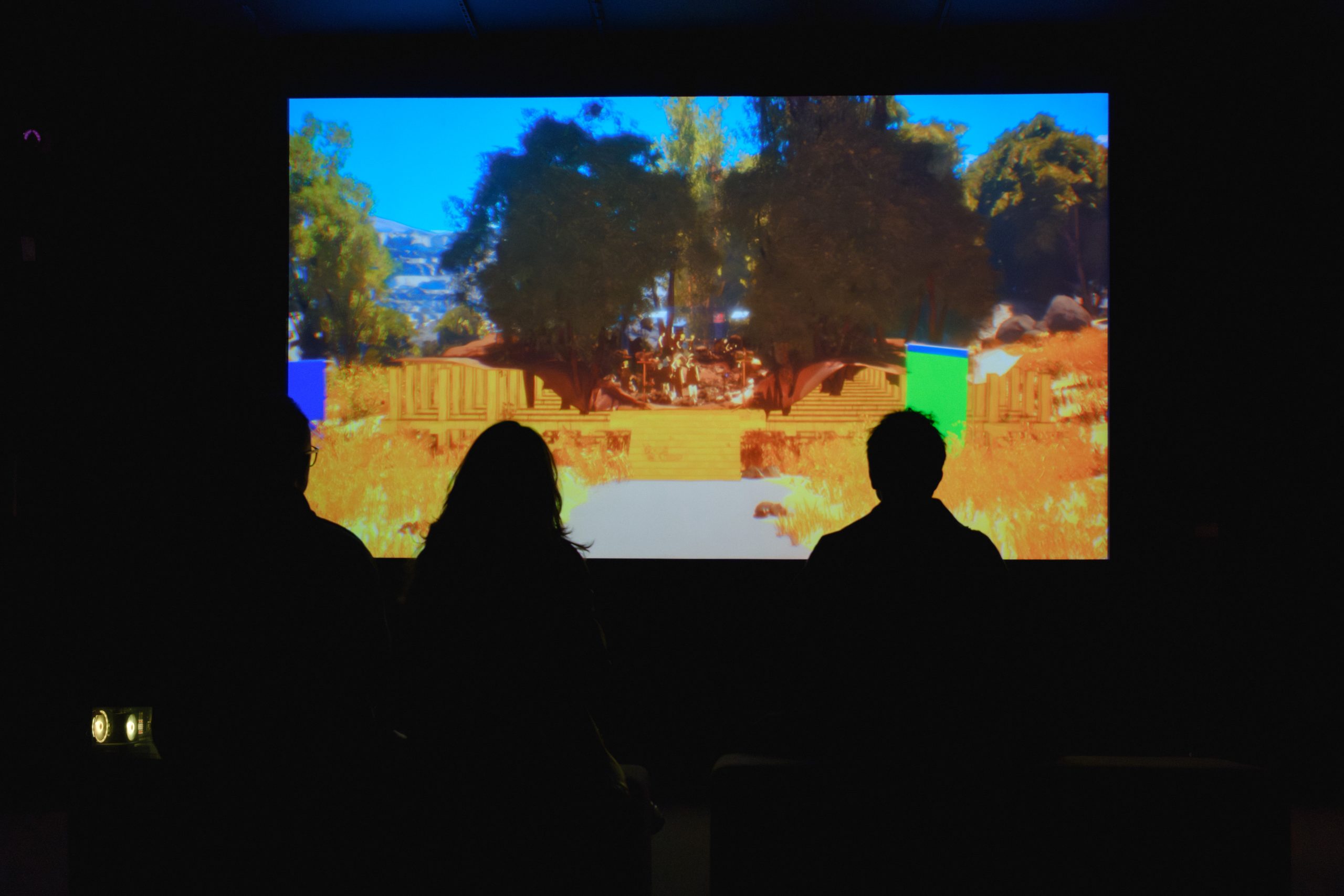
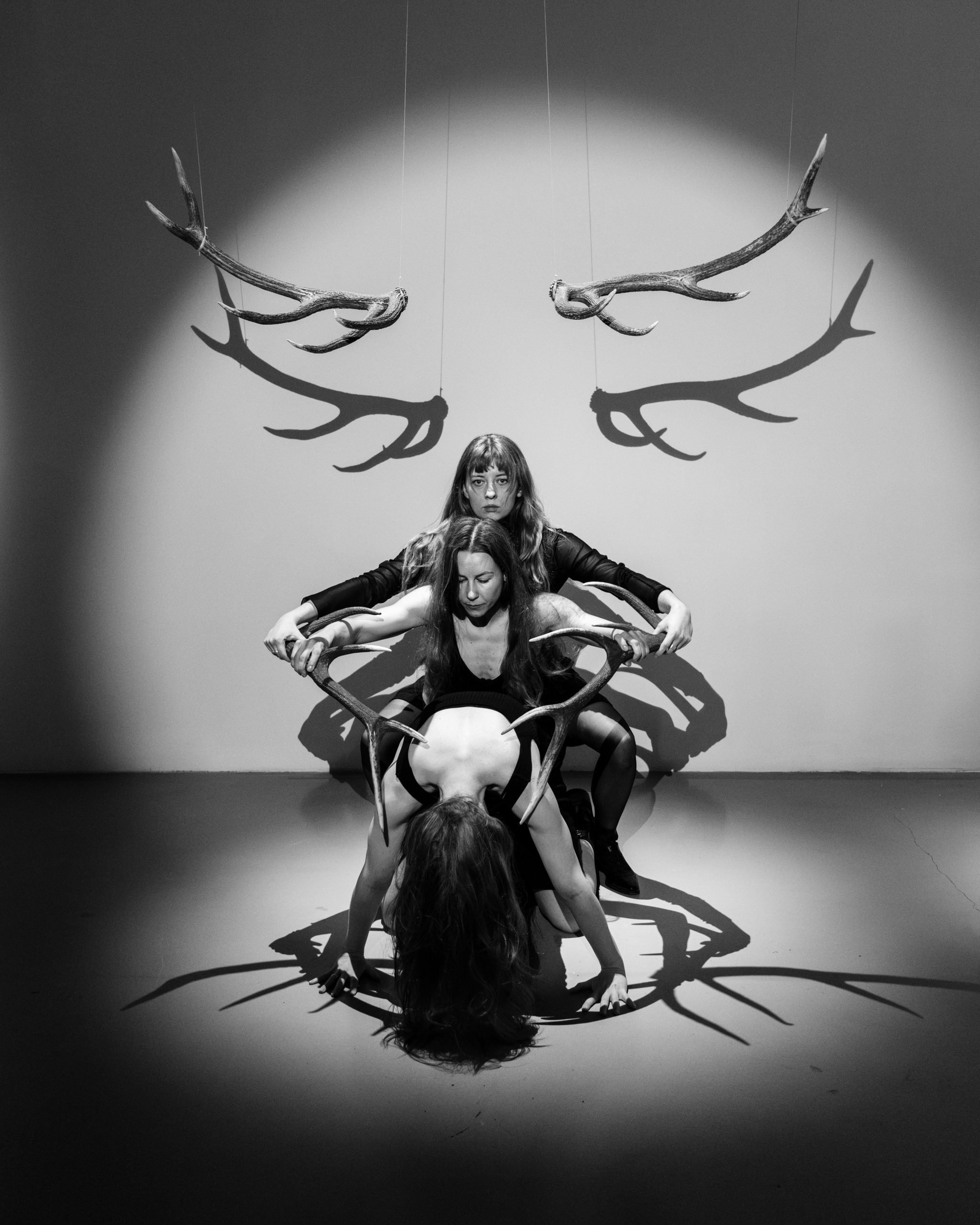
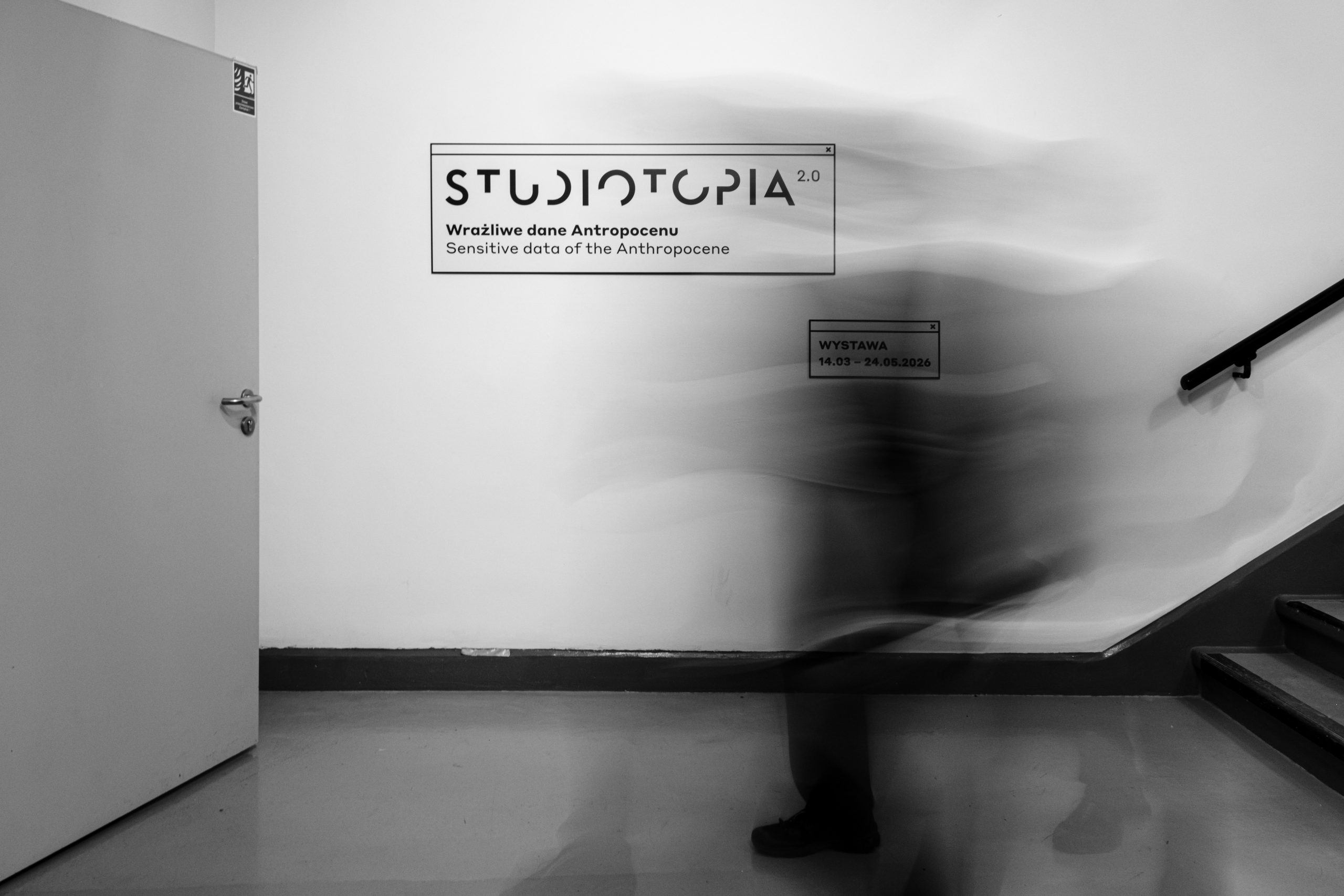
Studiotopia 2.0 Sensitive Data of the Anthropocene @Centre for Contemporary Art Łaźnia
Studiotopia 2.0 Sensitive Data of the Anthropocene @Centre for Contemporary Art Łaźnia
What happens when we gaze into the sun? How do we perceive this gesture? The phenomenon of heat intrigues us, we study it, sense it, experience it. At the same time, global warming may evoke anxiety or a sense of resistance toward scientific research. What would happen when we try to combine both approaches and perspectives? Will new ways of understanding the data that surrounds us emerge from this cognitive chaos? The term ‘data’ is usually associated with numbers, graphs and descriptions. Is the adjective ‘sensitive’ adequate to use with those features? Can we truly experience data? Can we live through it to look anew at the relationships binding our planet together, or to identify with the experience of another species?
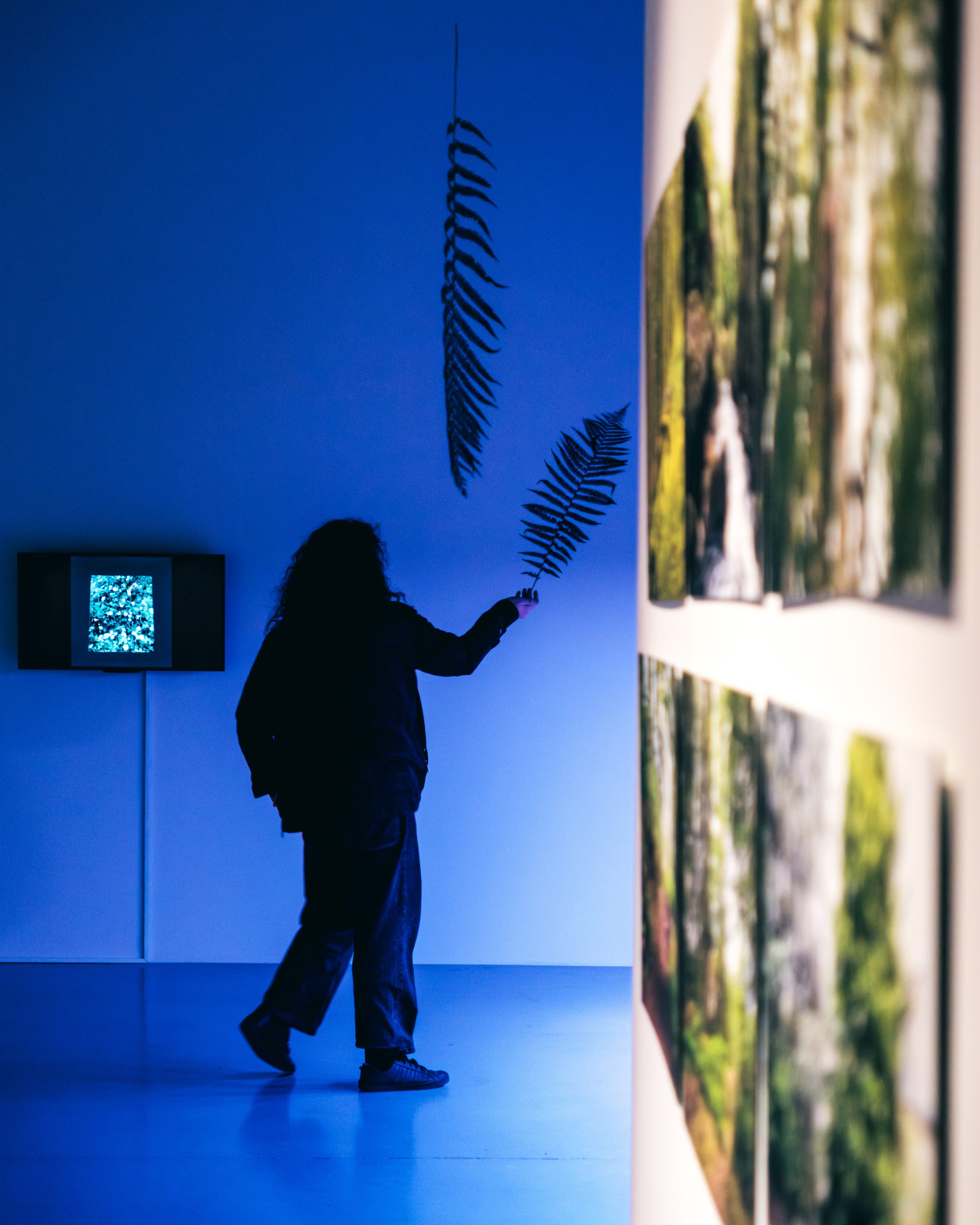
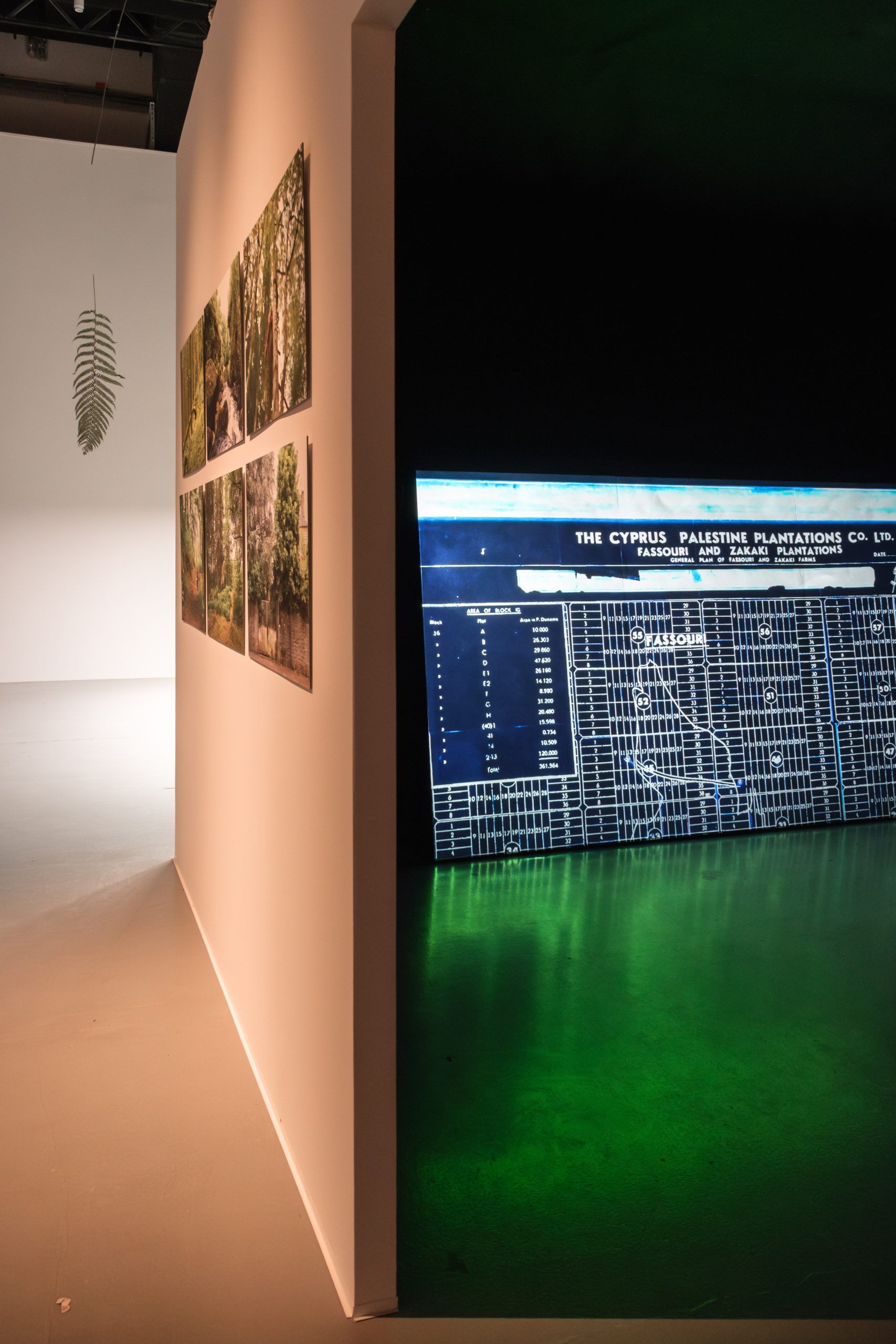
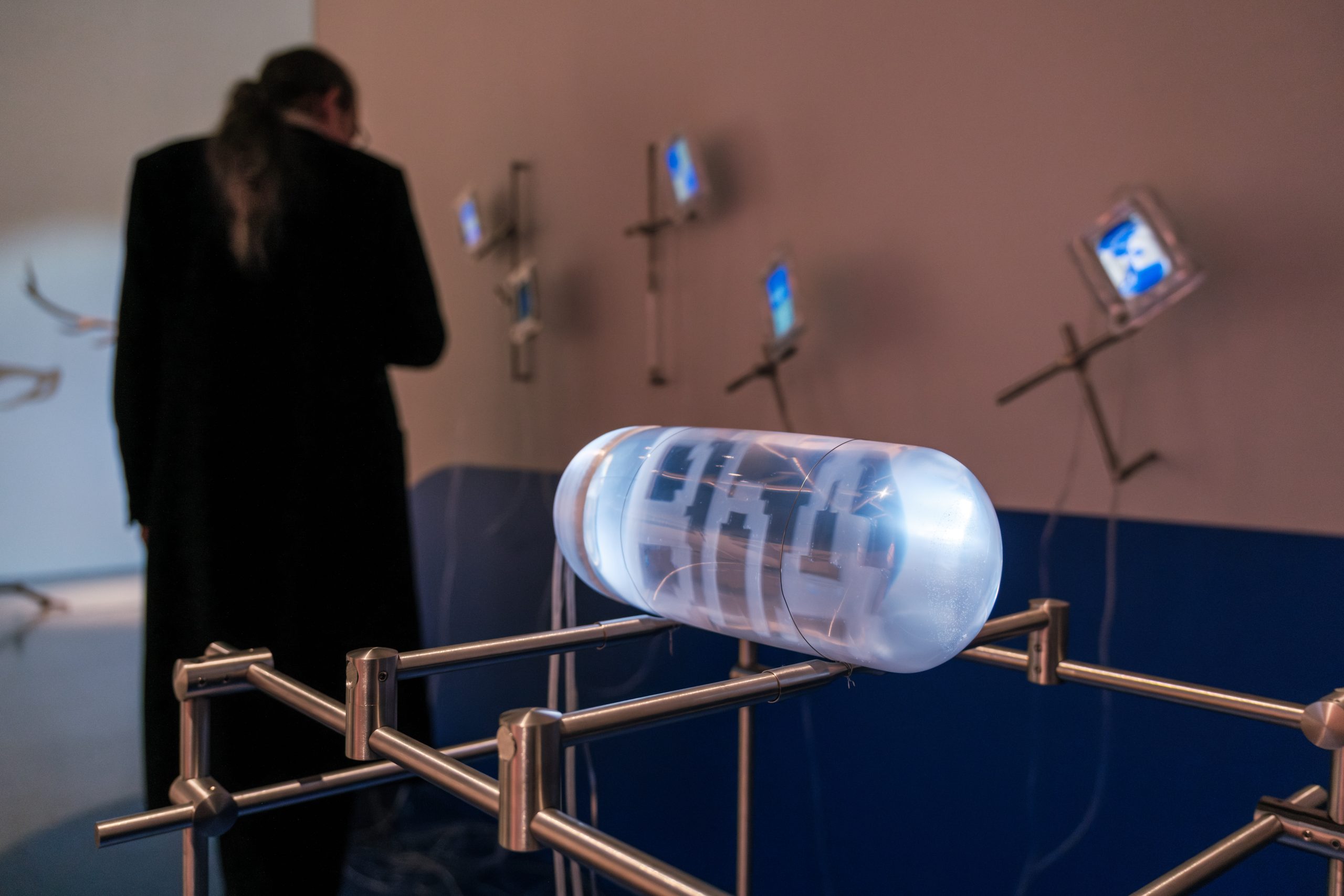
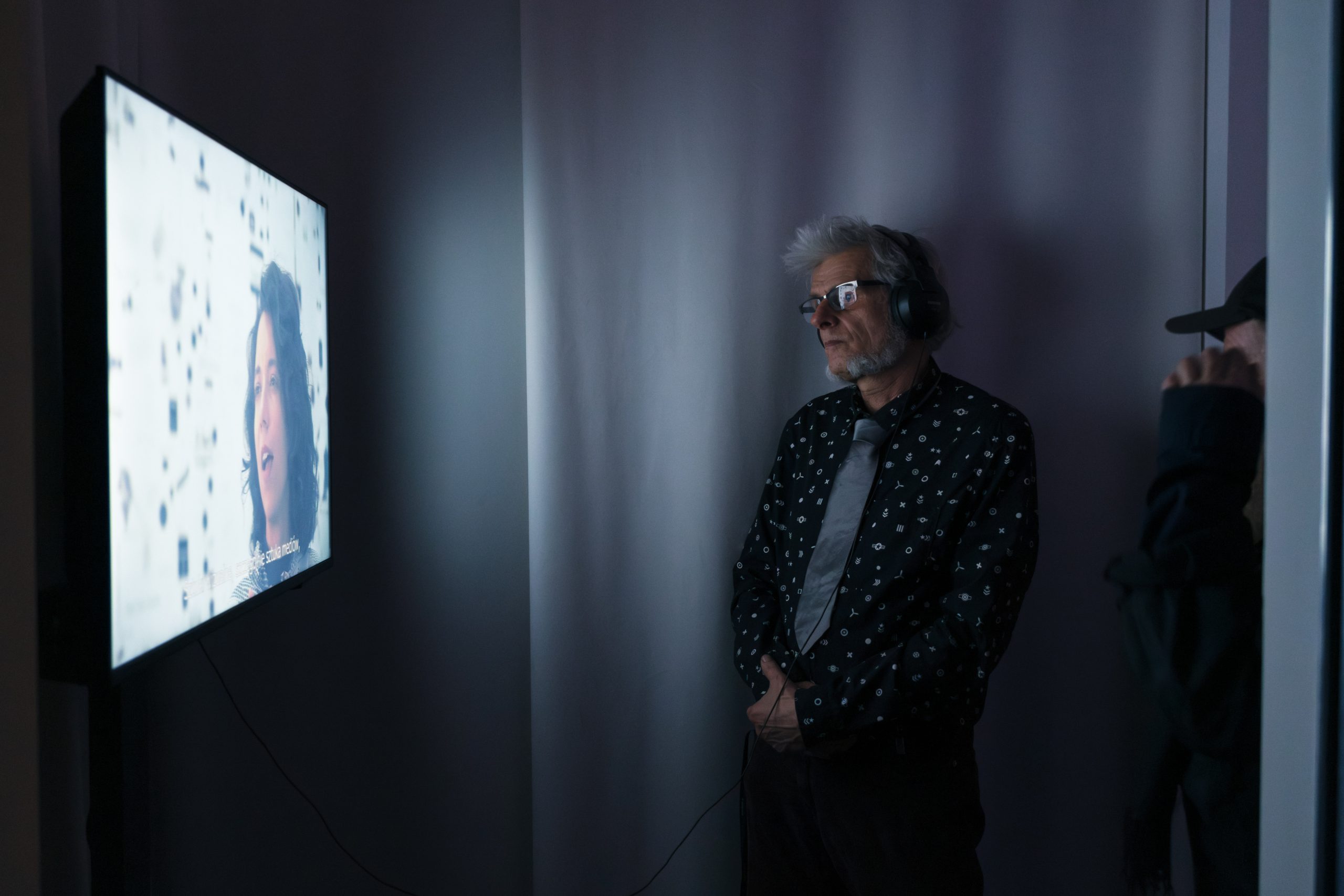
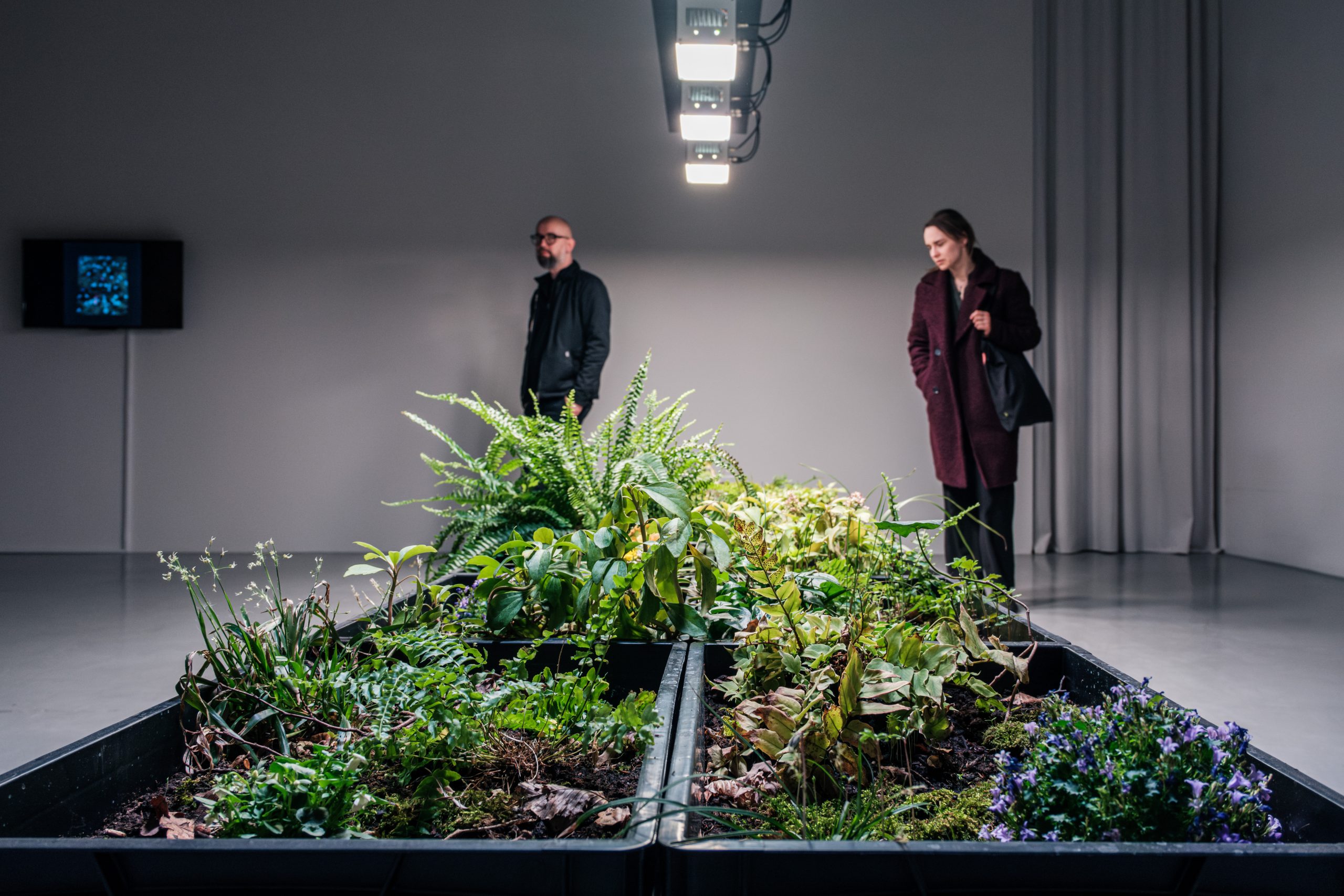
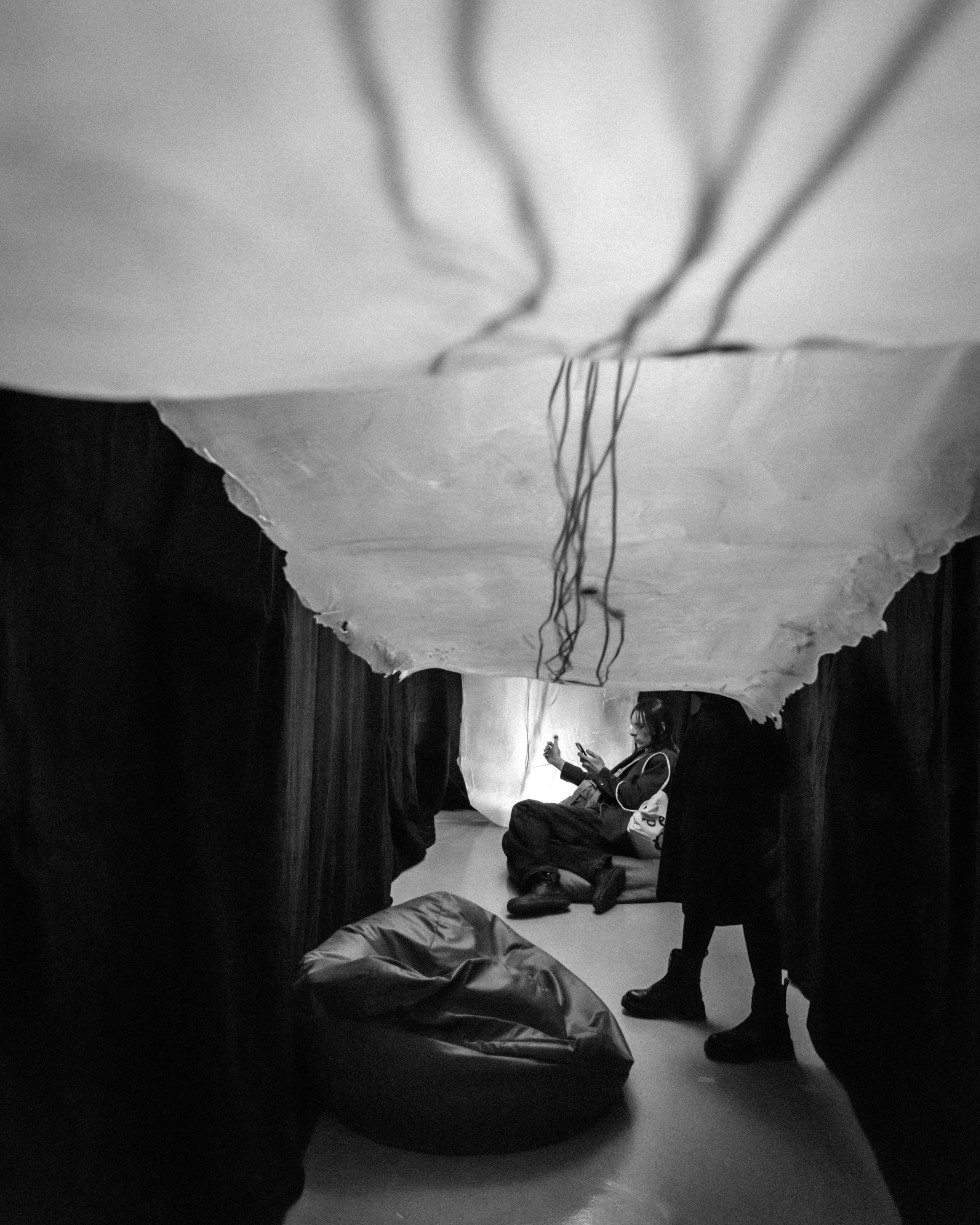
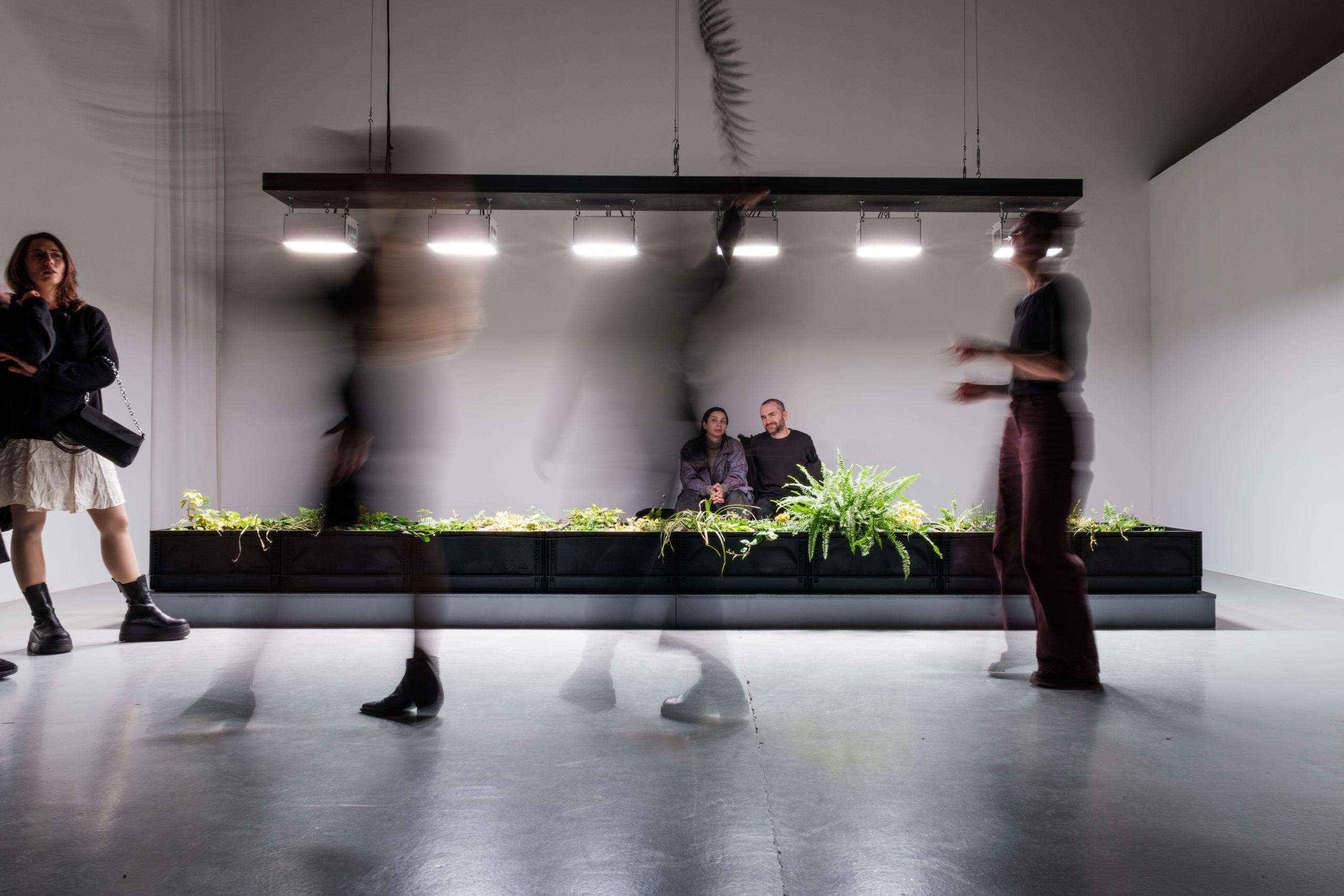
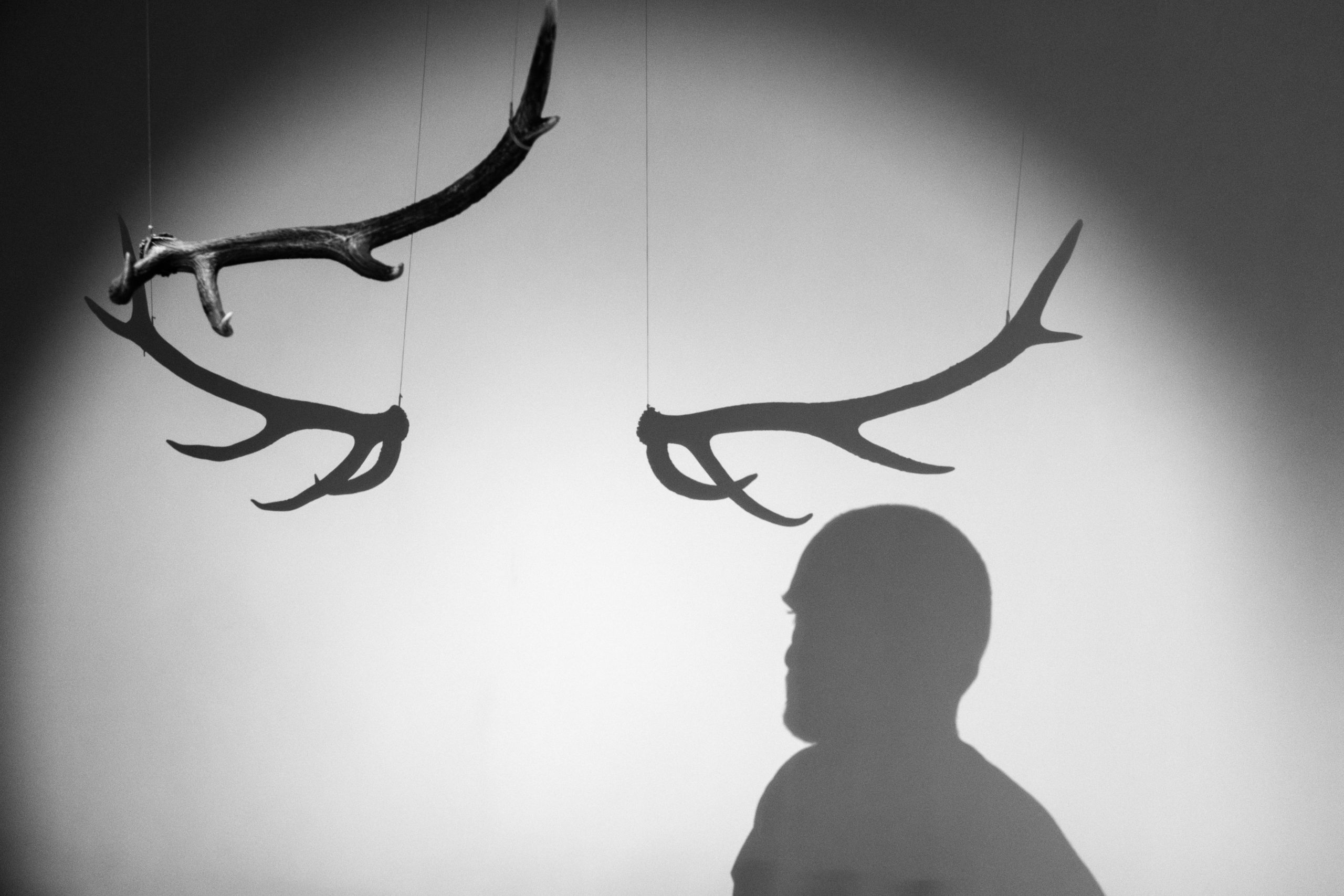
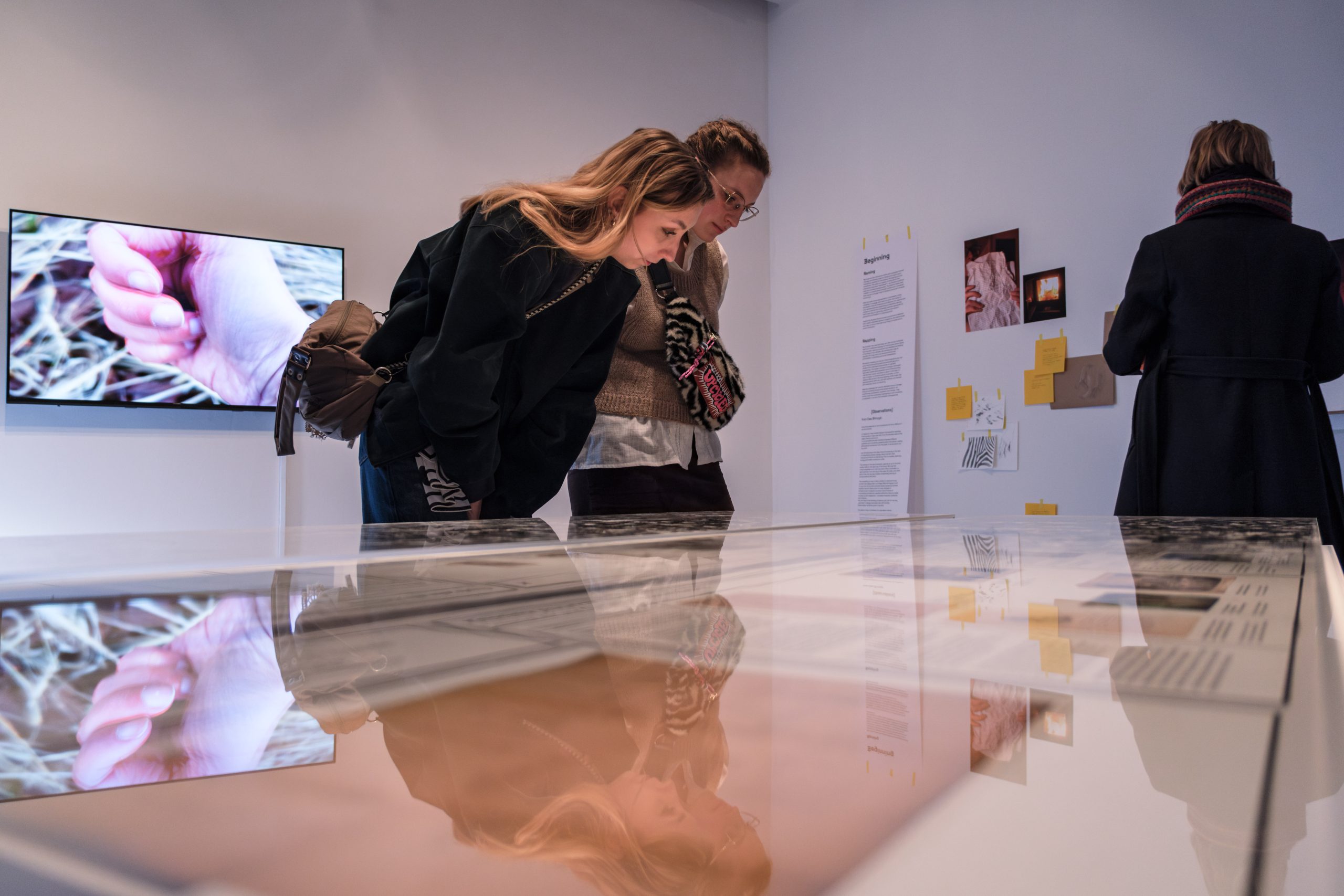
The works presented in the exhibition “Studiotopia 2.0: Sensitive Data of the Anthropocene” are the result of residencies within the international project “Studiotopia 2: Art and Science into the Symbiocene,” which bridges art and science to confront the complex challenges of our time. These artistic projects offer a fresh lens through which to view data concerning various aspects of the Anthropocene.
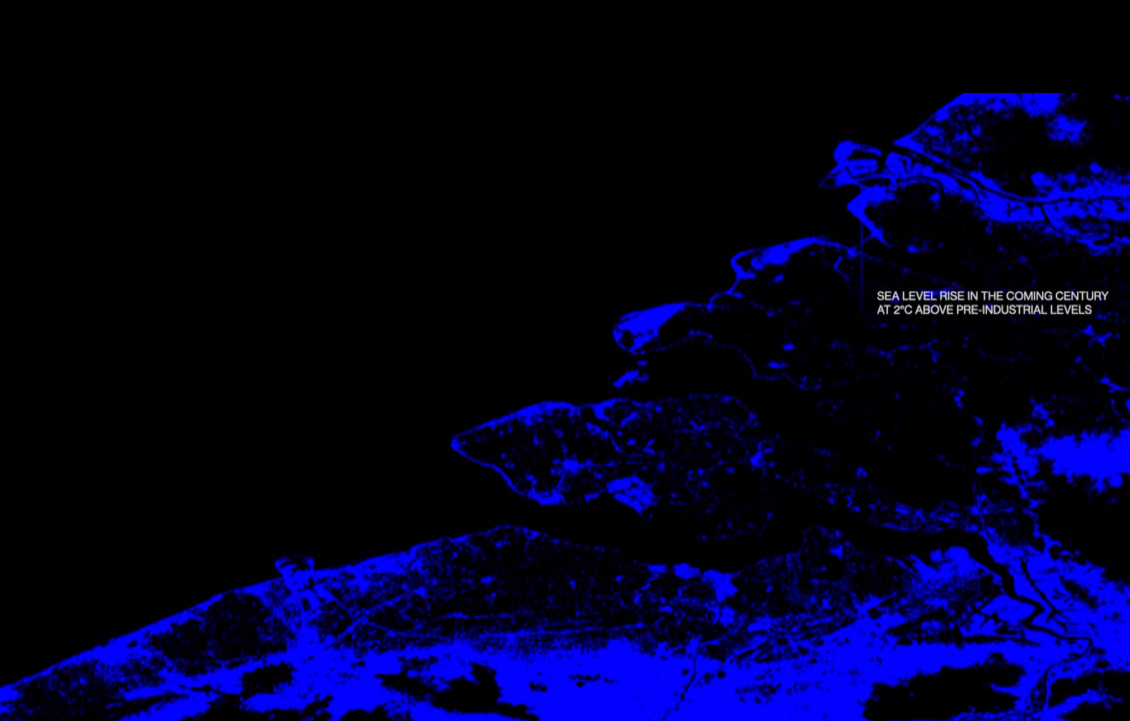
The starting point of the opening installation by Territorial Agency is the alarmist term “The Great Acceleration” and the charts that illustrate it. This term synthesizes objective data from various scientific fields collected since 1950. The visuals reveal the interconnectedness of indicators such as population growth, energy consumption, industrial production, and pollution levels. The accompanying charts depict the rapid escalation of human impact on the environment.
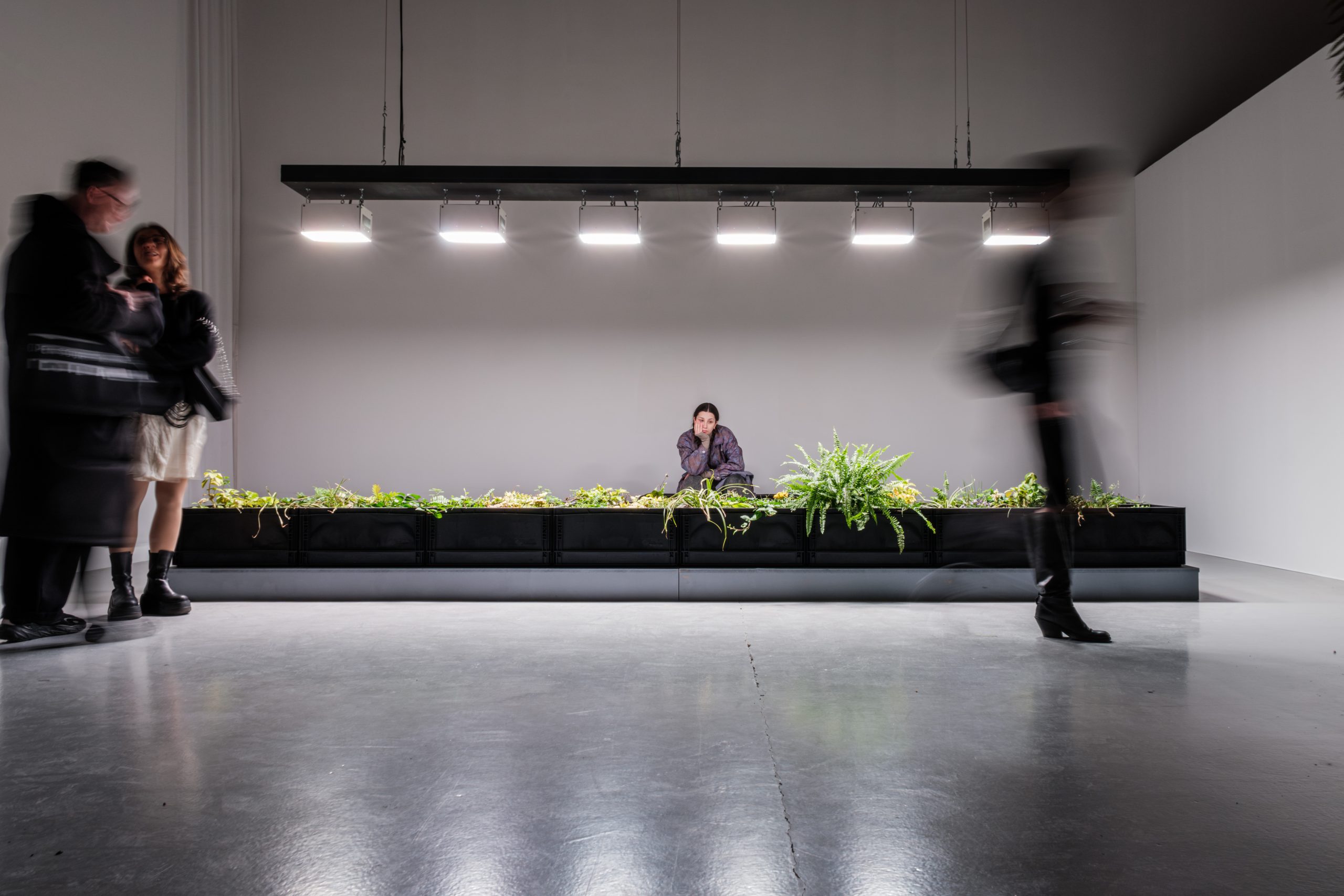
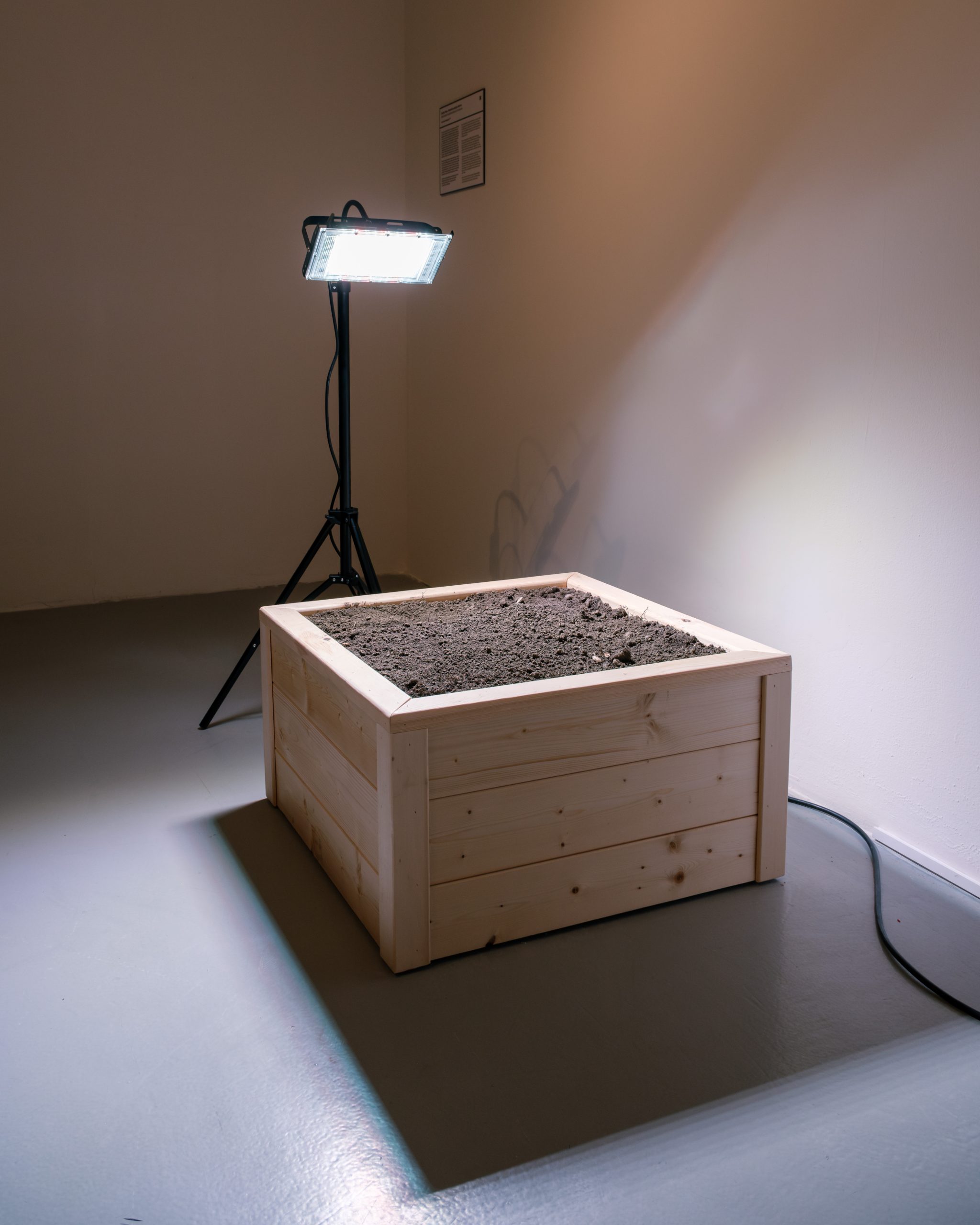
The works in the exhibition oscillate between the interpretation of data and an attempt to re-read it through emotion, empathy, and lived experience. Adrien Lucca’s installation deceives the eye to analyse light pollution and its impact on nocturnal pollinators. Justyna Górowska questions the ecological cost of the digital cloud and explores alternative databases. Miguel Teodoro’s installation analyses plant adaptation strategies, treating them as biological indicators of climate change. These artistic interventions propose a shift in perspective—moving beyond a logic where two plus two always equals four, and where the world is reduced to strings of digits and graphs.
As part of the Studiotopia 2 project, artists and scientists from diverse backgrounds collaborated to sketch possible scenarios for the Symbiocene, while questioning how we think and speak about the world. Is it possible to see the night through the eyes of a moth? Or to experience a mysterious process of fermentation to understand who makes our food? The exhibition at ŁAŹNIA Centre for Contemporary Art presents the outcome of this artistic-scientific synergy. From exploring biodiversity hotspots to analysing sustainable technologies, each project offers a unique perspective on our relationship with the digital world of data and the organic world of nature. The exhibition is an invitation to interpret available indicators in a different way, to understand them beyond logic, and to redefine our ways of being in the world—to feel how the Earth lives and “breathes.”
Curator: Agnieszka Kulazińska
Artists/Artistic collectives: Justyna Górowska, (ART) Thomas Heinis (SCI) Adrien Lucca (ART) professor Colas Schretter, PhD, dr Marko Ilić, dr Aiman RAZA (SCI), Cezar Mocan (ART), Barry O’Sullivan (SCI), Sikau / Pubalova (Dr. Lea Luka Sikau & Denisa Pubalova), Felipe Lombó (SCI), Karolina Sobecka (ART), Agnieszka Szostok, Michał Piasecki (SCI), Fanny Soriano (ART), Kalliopi Ioumpa (SCI), Miguel Teodoro (ART), George Zittis (SCI), Territorial Agency (John Palmesino and Ann-Sofi Rönnskog) (ART), Dr Alexander Damianos (SCI)
Photos: Robert Wolak
New Perspectives on the Anthropocene: Territorial Agency and Dr. Damianos in Dialogue
New Perspectives on the Anthropocene: Territorial Agency and Dr. Damianos in Dialogue
In a new video released within the STUDIOTOPIA 2 project, John Palmesino (Territorial Agency) and Dr. Alexander Damianos unpack the core ideas behind their project.
They discuss why the original Great Acceleration graphs, once groundbreaking visualisations of humanity’s impact on Earth systems, no longer capture the complexity of today’s planetary dynamics. Their dialogue brings together art, science and environmental governance, offering fresh insight into how we might visualise and understand the Anthropocene today.
The video invites viewers to explore how artistic research can help make global transformations visible and meaningful. Watch the full conversation to dive deeper into their perspectives.
Beyond the “Fake”: Martyna Marciniak’s Artwork, Anatomy of Non-Fact, Explores Synthetic Images
Beyond the “Fake”: Martyna Marciniak’s Artwork, Anatomy of Non-Fact, Explores Synthetic Images
Joël Chevrier has been a Physics Professor at Université Grenoble Alpes (UGA) since 1998. This article discusses artist Martyna Marciniak’s work, ‘Anatomy of Non-Fact’, which uses images moving from optical images (photography as it comes out XIX century) to non-optical images or synthetic images as generated by AI.
Martyna Marciniak: “to examine how design and technology shape ideologies and social structures”
In 2025, Martyna Marciniak is artist-in-residence at CERN in Geneva, in collaboration with Copenhagen Contemporary. CERN introduces her practice as follows: “Marciniak’s interdisciplinary practice combines spatial storytelling, speculative fiction and 3D reconstruction to examine how design and technology shape ideologies and social structures.” Her work, rooted in the present moment, draws attention to the immense and irreversible transformation of the world brought about by the powerful alliance of design, technology and science—what we might call “the Tech”. Her work raises pressing questions: who is truly able to control, or even measure—let alone anticipate—these sweeping transitions?
A Pope in a Balenciaga puffer? That doesn’t exist…
In 2023, an image appeared showing Pope Francis clad in a white Balenciaga puffer coat. The image went viral, far beyond the expectations of its creator, Pablo Xavier, a passionate user of the AI tool MidJourney. For him, this synthetic image was clearly a “fake”, a playful product of his experiments with AI. But for much of the world, it wasn’t recognized as such. People failed to grasp the scale and violence of the transition underway. The rapid production and instantaneous global dissemination of synthetic images has become accessible to everyone, requiring no training or particular skill. In her work Anatomy of Non-Fact, Martyna Marciniak explores, as an artist, this radical shift in our relationship to the image.
Photographic or optical images versus synthetic or non-optical images
Synthetic images are entirely shaped by XXI century science and technology. But unlike photographs—here named optical images—there is no need to capture a real-world scene. Nineteenth-century photography enabled the recording of optical images on a screen through chemical and physical engineering. It is a process rooted in real interactions between light and matter. Photography is physically constrained: reality imposes itself on the image. This is no longer the case with synthetic imaging. Its foundations lie in nanotechnology, computing, big data processing, and thus AI. It manipulates digital data on a digital screen—the image’s substrate—and can generate any conceivable image. Thanks to AI, what appears on the screen is exactly what the creator intends, down to the last pixel. Total freedom.
A “mise en abyme”: a fake Pope in a Balenciaga puffer—clearly fake, but still real
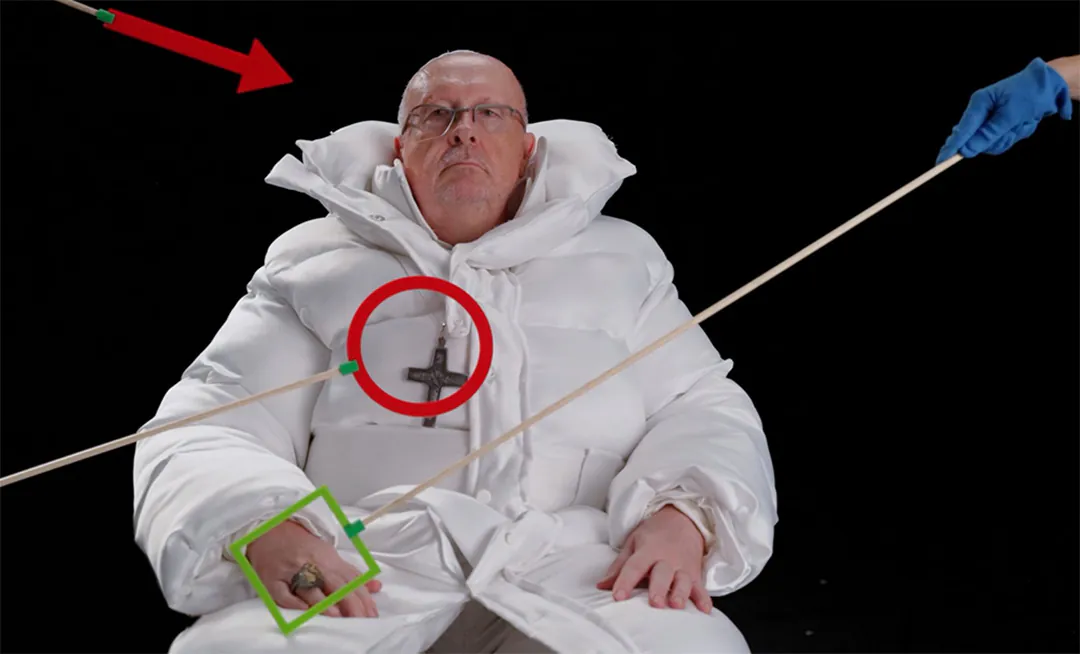
In a video trailer titled AI Hyperrealism, Martyna Marciniak presents a real person who strongly resembles Pope Francis, dressed in an actual Balenciaga puffer. She thus takes Pablo Xavier’s synthetic fake one step further, anchoring the imaginary scene he created in the physical world through a staged re-enactment. Yet it remains a fake—it is not the real Pope Francis, still alive at the time, strolling about at Marciniak’s behest. What we see is a real-life scene, filmed in the traditional way. This optical image becomes a faithful recording of the material incarnation of an entirely artificial “synthetic image”—what Marciniak calls a “post-optical” or “non-optical” image. And yet it is astoundingly convincing. The “mise en abyme” is dizzying.
The first age of the image: drawing, painting and engraving
Marciniak’s term “non-optical image” highlights a pivotal shift in image-making that began with the invention of photography in the 19th century. Before that, humanity’s images were hand-drawn, painted or engraved. Artists placed on a surface what they intended to represent. Their only constraint was technical, though often a demanding one: a painter could only paint what they were capable of rendering. This work on the “appearance of reality”, regardless of style—from Botticelli to Rembrandt to Picasso—fills the world’s museums. A multitude of styles, histories, narratives and revolutions bears witness to the extraordinary richness of human visual creation.
The second age of the image: Joseph-Philibert Girault de Prangey and the first optical images of Athens
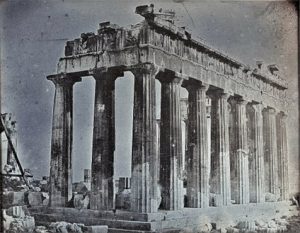
North facade and colonnade of the Parthenon on the Acropolis, Athens.
Daguerreotype by Joseph-Philibert Girault de Prangey (1842)
Following the 1839 invention of photography by Nicéphore Niépce and Louis Daguerre, image quality and recording techniques advanced at lightning speed. By the 1840s, Joseph-Philibert Girault de Prangey was producing the first photographic images of Athens, Jerusalem, and Cairo. Roger Fenton photographed the Crimean War in 1855. War photographers have since risked their lives to document conflicts around the globe. Robert Capa’s brutal maxim still resonates: “If your pictures aren’t good enough, you’re not close enough.”
For nearly two centuries, photography remained the gold standard. To most, a photograph was indisputable evidence of reality. Of course, some images were doctored—but doing so was technically complex, and such efforts merely reinforced the status of optical images, their truth-value guaranteed by physics and chemistry.
The third age of the image: From optical to synthetic images in the 21st century
Today’s billions of smartphones have exploded the number of photographs—optical images—being produced. But now these photographs exist within a wider ecosystem of synthetic imagery. Every photo can be digitally altered at the moment of capture or after. The distinction between photographic and synthetic images grows harder to discern, but synthetic images are fast becoming the norm. In this early 21st century, one might feel we’ve returned to the era before photography—when all images were purely human-made. Indeed, the image-maker is once again fully in control. With AI, one can define every aspect of the image, pixel by pixel. But this is not a simple return to the past, and Marciniak’s work makes that very clear.
The synthetic image: between painting and the photographic image?
In the 19th and 20th centuries, photography swept everything before it, offering a faithful depiction of reality, swift execution, ease of use, mass reproduction and dissemination. Yet now photography—an optical image—may itself be swept away by the rise of synthetic, non-optical imagery. With Anatomy of Non-Fact, Martyna Marciniak confronts us with an even deeper abyss. Deliberately so? We have no reason to doubt that her video was made with an actor, a set and a camera. She tells us so—we can take her word for it. But how can we truly be sure? If she had instead generated the video using AI, would we be able to tell? And more importantly, would it make any difference…?
Beside Martyna Marciniak, do we need help of French sociologist and philosopher Jean Baudrillard to explore fake news or alternative facts?
In his book Simulacra and Simulation (1961) the French philosopher and sociologist Jean Baudrillard wrote:
“Thus, feigning or dissimulating leaves the reality principle intact: the difference is always clear, it is only masked; whereas simulation threatens the difference between “true” and “false”, between “real” and “imaginary”.”
Returning to this work, Simulacra and Simulation, in order to follow Martyna Marciniak more closely, one is struck by the fact that, in the era of synthetic images — themselves performative in the real and/or virtual world — the very notions of fake news or alternative facts are not defined in relation to reality or truth.
Jean Baudrillard had already introduced four successive phases of the image.
“These would be the successive phases of the image:
1 – It is the reflection of a basic reality.
2 – It masks and perverts a basic reality.
3 – It masks the absence of a basic reality.
4 – It bears no relation to any reality whatever: it is its own pure simulacrum.”
« In the first case, the image is a good appearance: the representation is of the order of sacrament. In the second, it is an evil appearance: of the order of malefice. In the third, it plays at being an appearance: it is of the order of sorcery. In the fourth, it is no longer in the order of appearance at all, but of simulation. »
Images produced by AI have long surpassed level two, passed level three, and have probably reached level four.
Baudrillard’s book opens with a quote from Ecclesiastes, which is in fact entirely his own invention: “The simulacrum is never that which conceals the truth–it is the truth which conceals that there is none.”
The simulacrum is true.
The article was written by Joël Chevrier, a LCC member of Studiotopia project, as part of the project’s study visit. The original version of the article was published at Interalia Magazine. The French version of the article is available on this link.
Engineering Students Discover New Ways to Connect with the Living World
Engineering Students Discover New Ways to Connect with the Living World
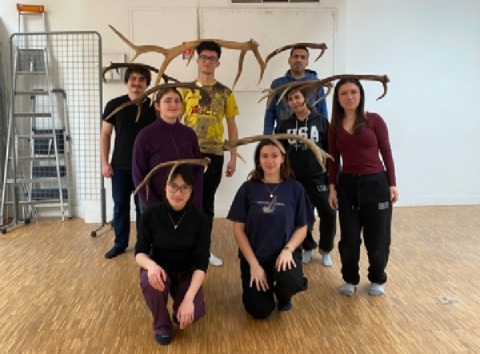
The second Pop‑Up Lab at Hexagone (France) took place from 27 to 29 January 2026 at INP‑UGA/ENSE3 – Graduate School of Sustainable Engineering for Energy, Water and Environment in Grenoble. Once again led by circus and dance artist Fanny Soriano, the workshop invited engineering students to step outside analytical thinking and explore sensitive, emotional, and embodied approaches to the living world.
Through movement‑based experimentation, participants examined how humans can perceive and relate to other species beyond technical or rational frameworks. The workshop culminated in a conference by a senior engineer titled “How to Include the Living World in Engineering”, opening a dialogue on how future engineers might integrate ecological awareness into their professional practice.
Circus Artist Fanny Soriano Explores Human–Plant Relations in Grenoble
Circus Artist Explore Human–Plant Relations in Grenoble
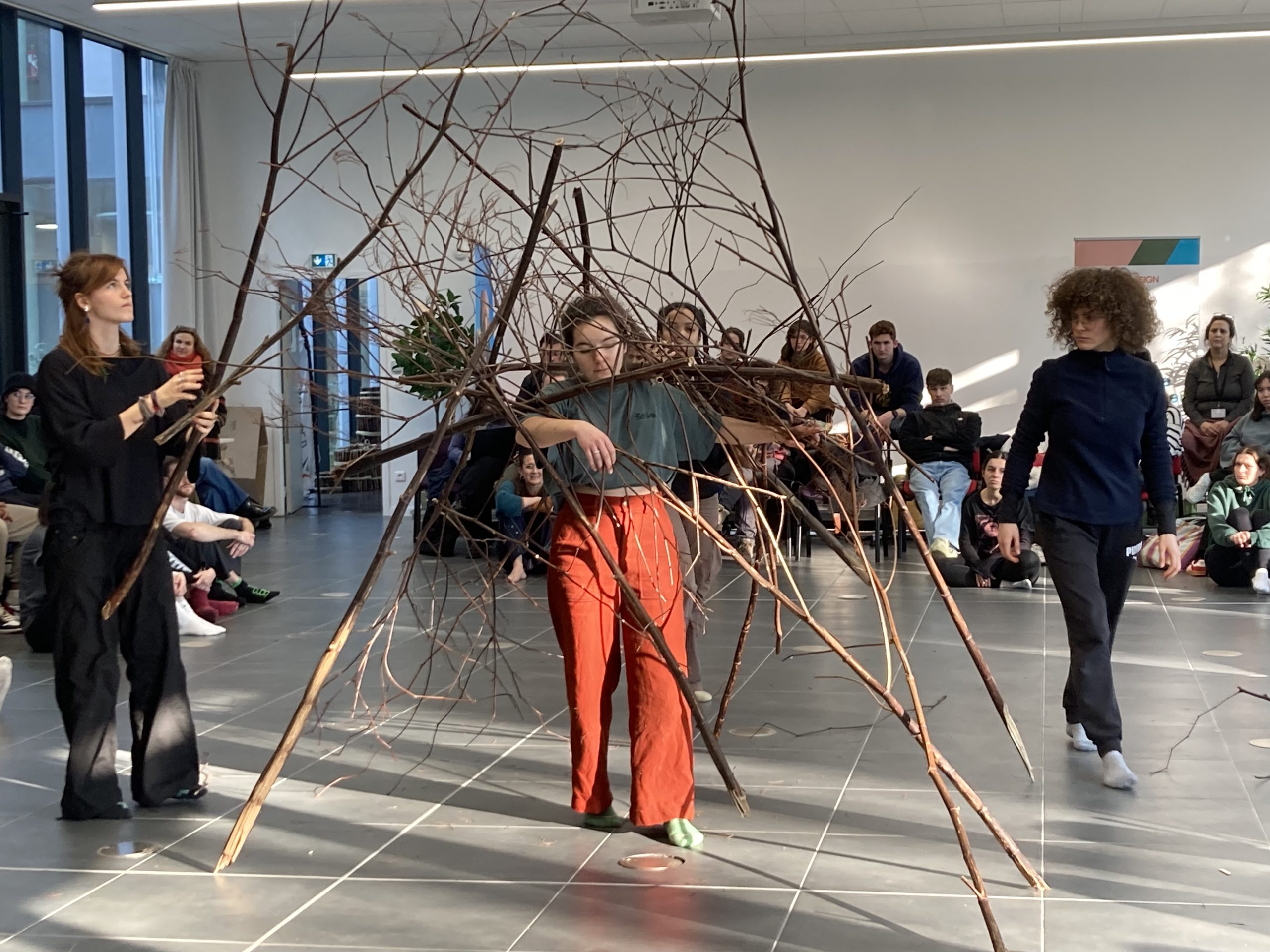
From 13 to 15 January 2025, the University Grenoble Alpes/Design Factory hosted the first Pop‑Up Lab of the European project Studiotopia 2, led by circus artist Fanny Soriano. The artist is, with the help of neuroscientist Kalliopi Ioumpa, developing an interdisciplinary artistic research project examining how humans relate to invasive plant species—particularly Japanese knotweed.
Over three days, students engaged in a workshop blending circus arts, physical theatre, and ecological inquiry. Through movement exercises and direct interaction with knotweed, participants explored notions of symbiosis, imbalance, and the shifting boundaries between bodies and ecosystems.
“Getting back in touch with nature, with our bodies, being sensitive to what surrounds us, listening to our sensations, smelling and touching seems to me to be imperative if we are to evolve in this world in transition,” Soriano reflected at the end of the session.
Artist Kyriaki Goni Joins Scientist Andromachi Gkoulia to Spotlight Alien Species in the Mediterranean
Artist Kyriaki Goni Joins Scientist Andromachi Gkoulia to Spotlight Alien Species in the Mediterranean @CYENS
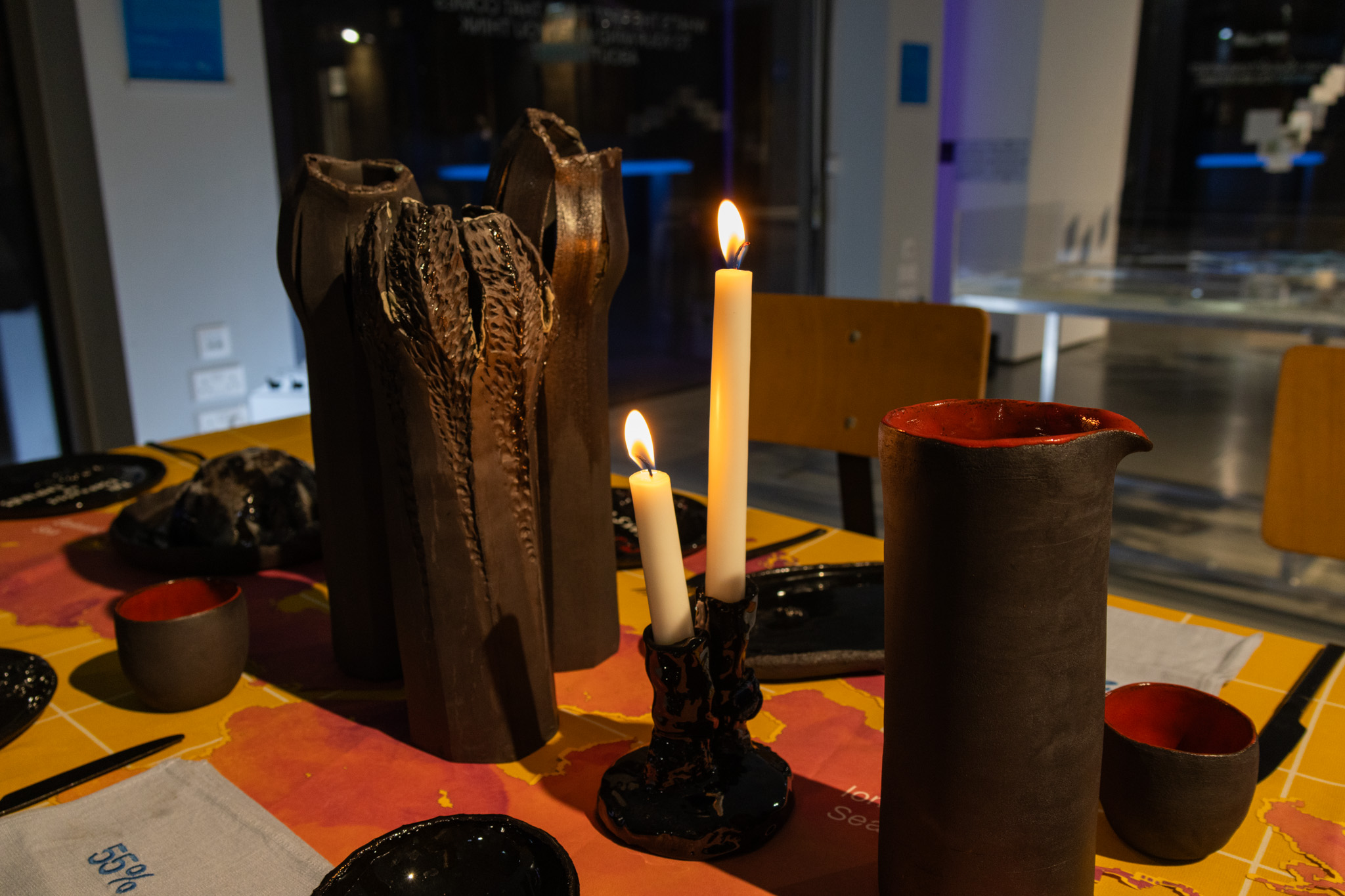
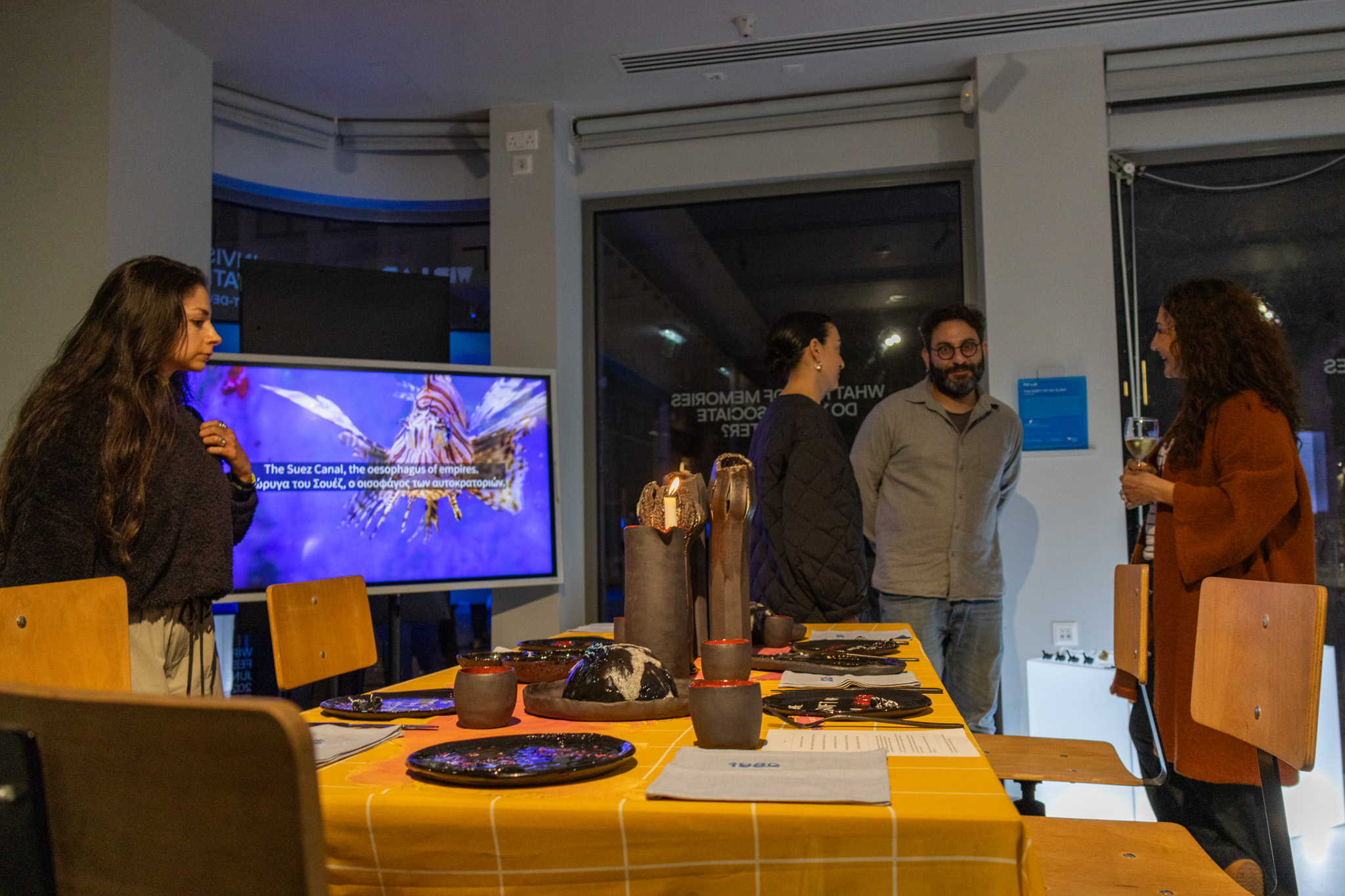
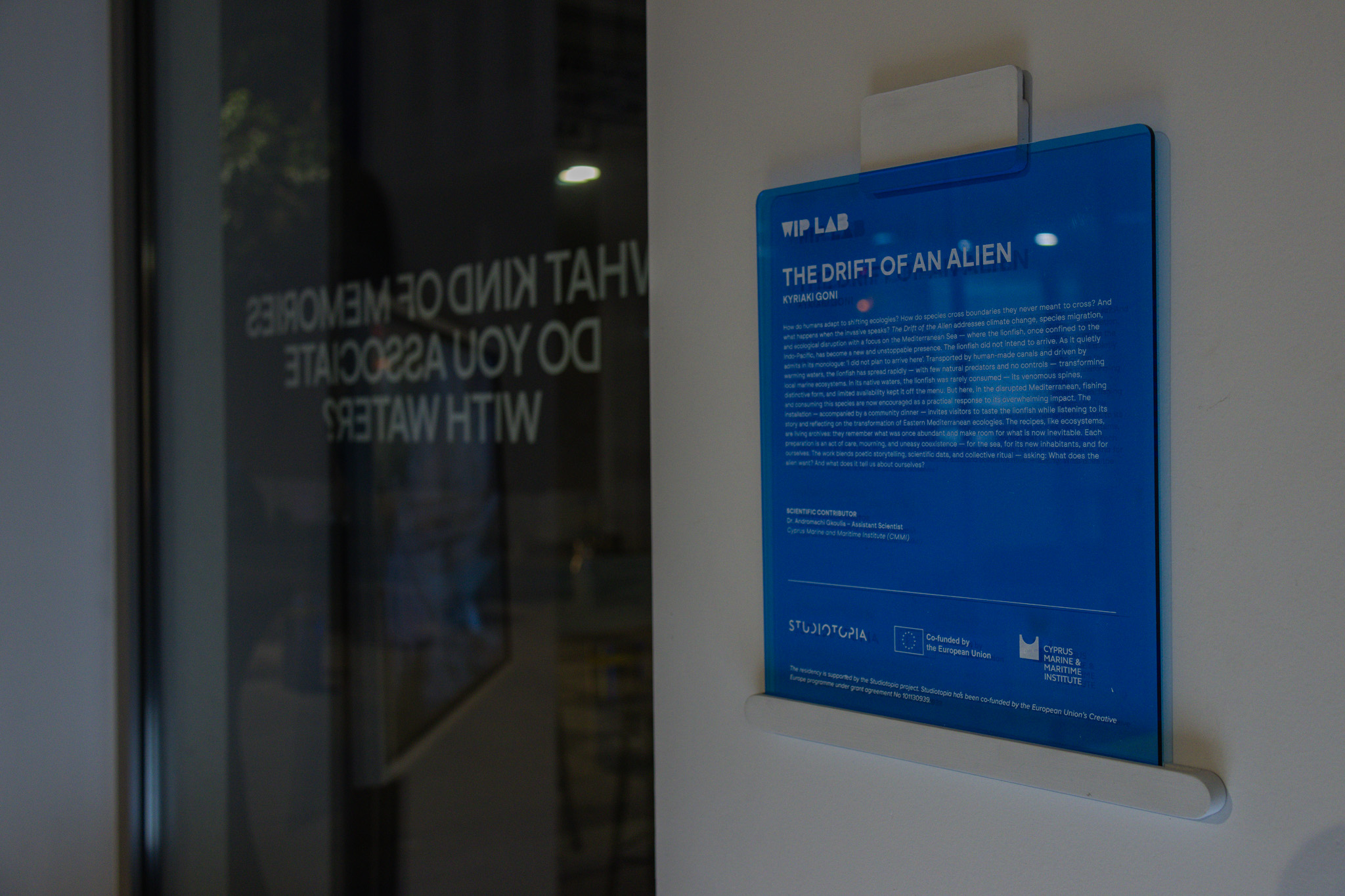
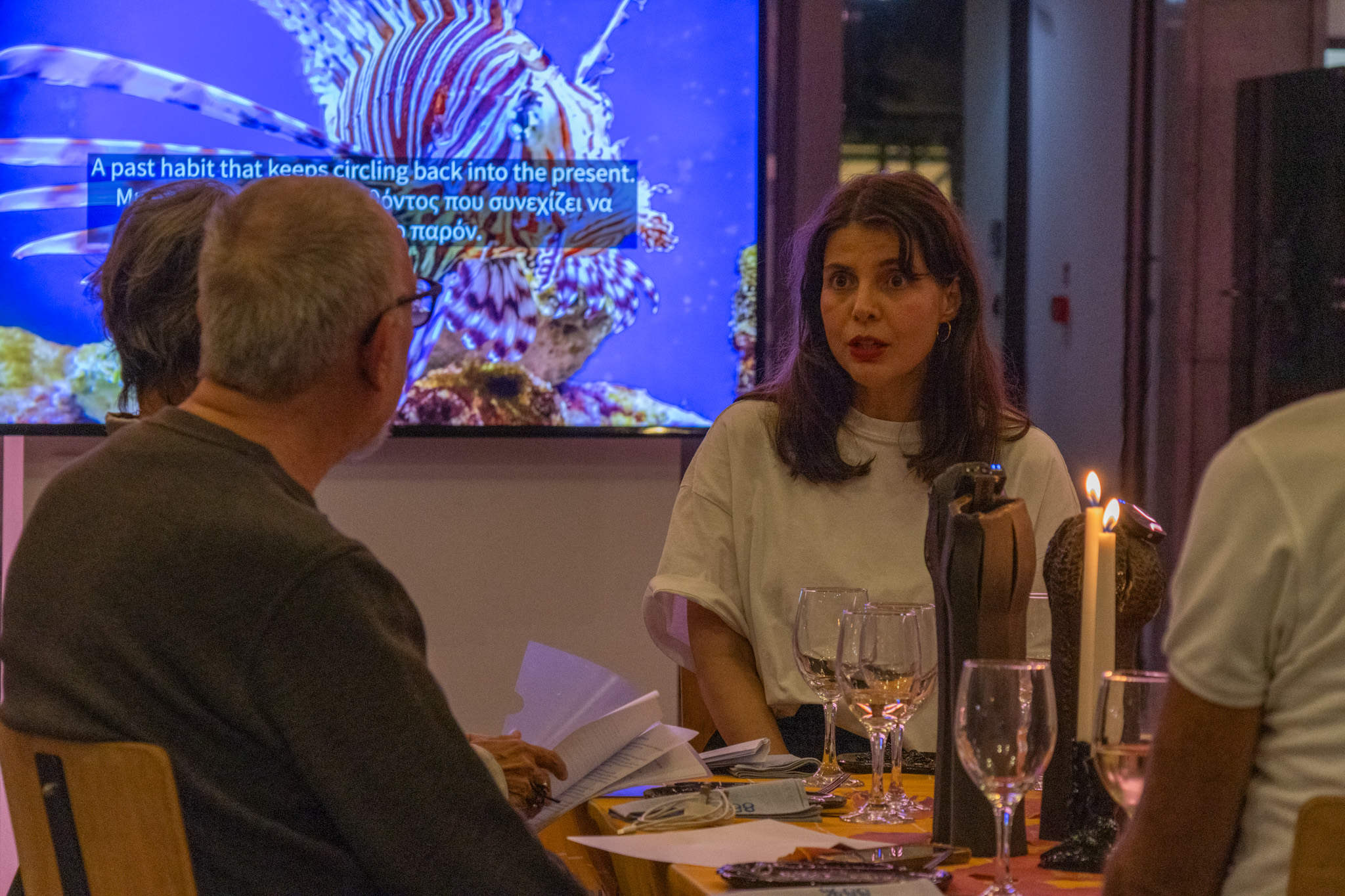
At the WIP Lab 2025 Opening, audiences were introduced to the work of the STUDIOTOPIA artist‑in‑residence exploring marine alien species and climate change in the Mediterranean. Through a concise video interview, the artist outlined how warming seas, shifting migration routes, and human‑driven ecological pressures are transforming marine life across the region.
In the interview, Kyriaki highlights the urgency of understanding how climate change reshapes biodiversity below the surface, and how creative practice can help communicate these invisible shifts to wider publics. The presentation offered a first glimpse into a project that will continue to evolve throughout the residency, contributing to broader conversations on environmental awareness and Mediterranean futures.
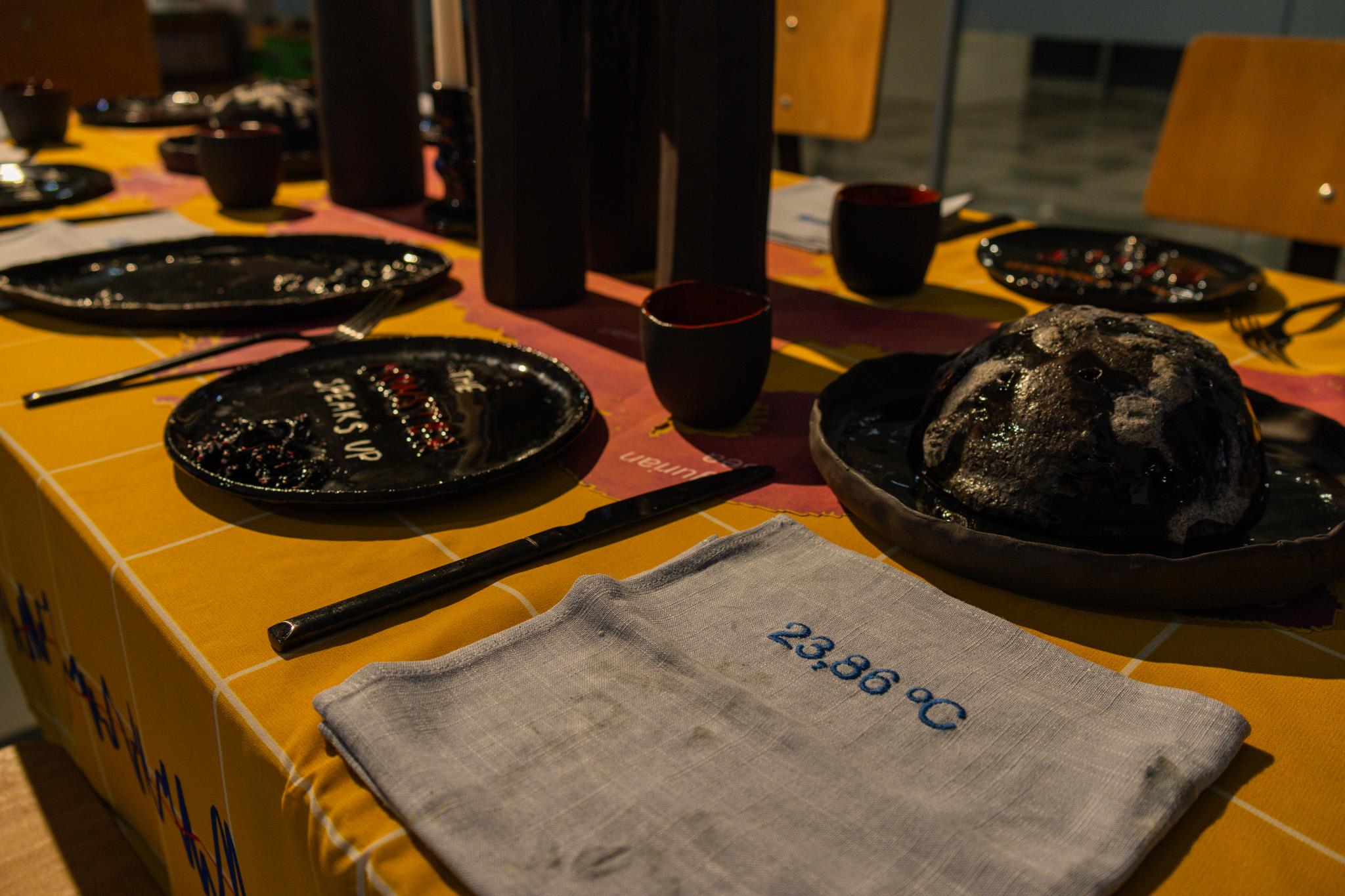
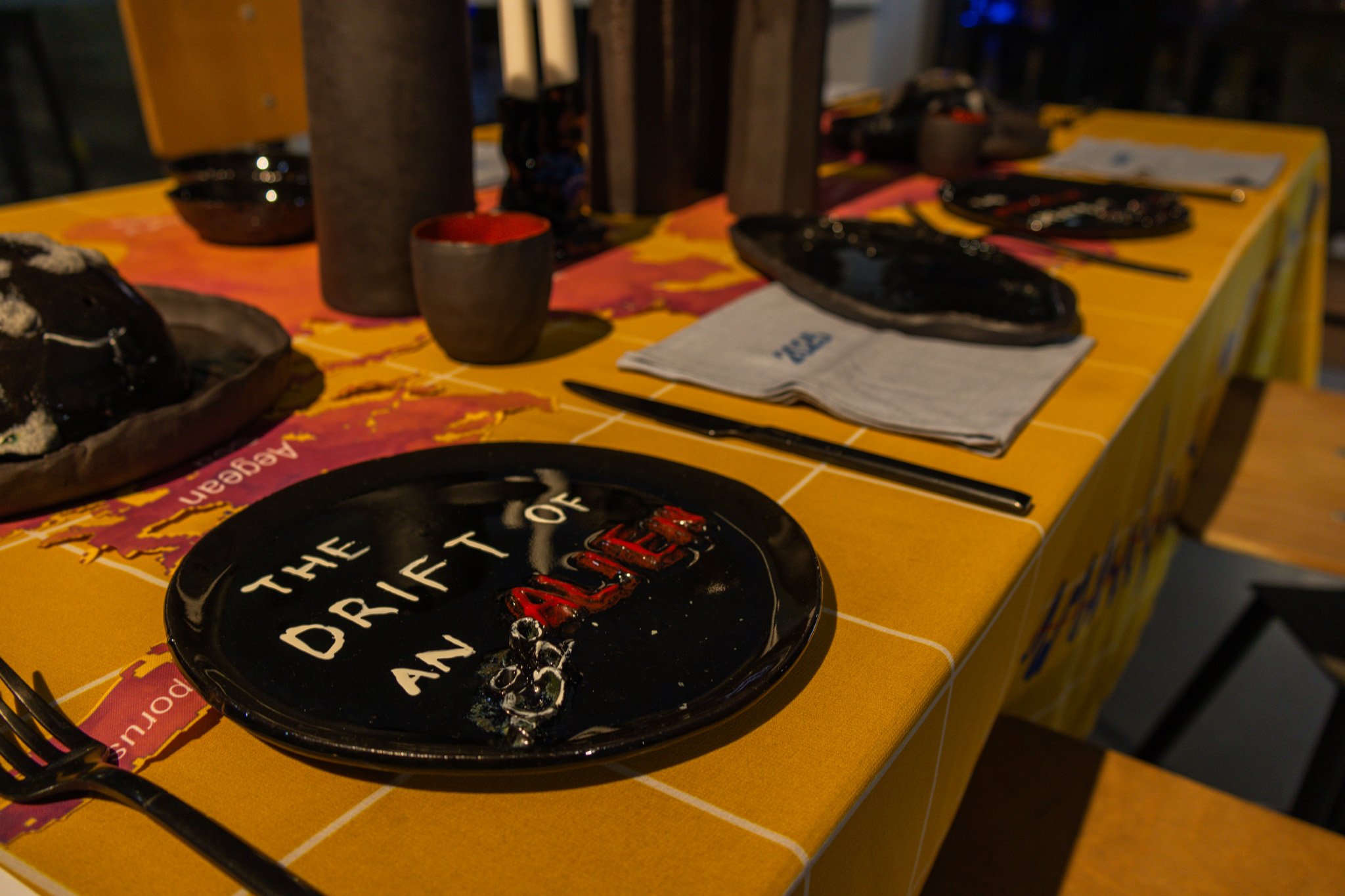
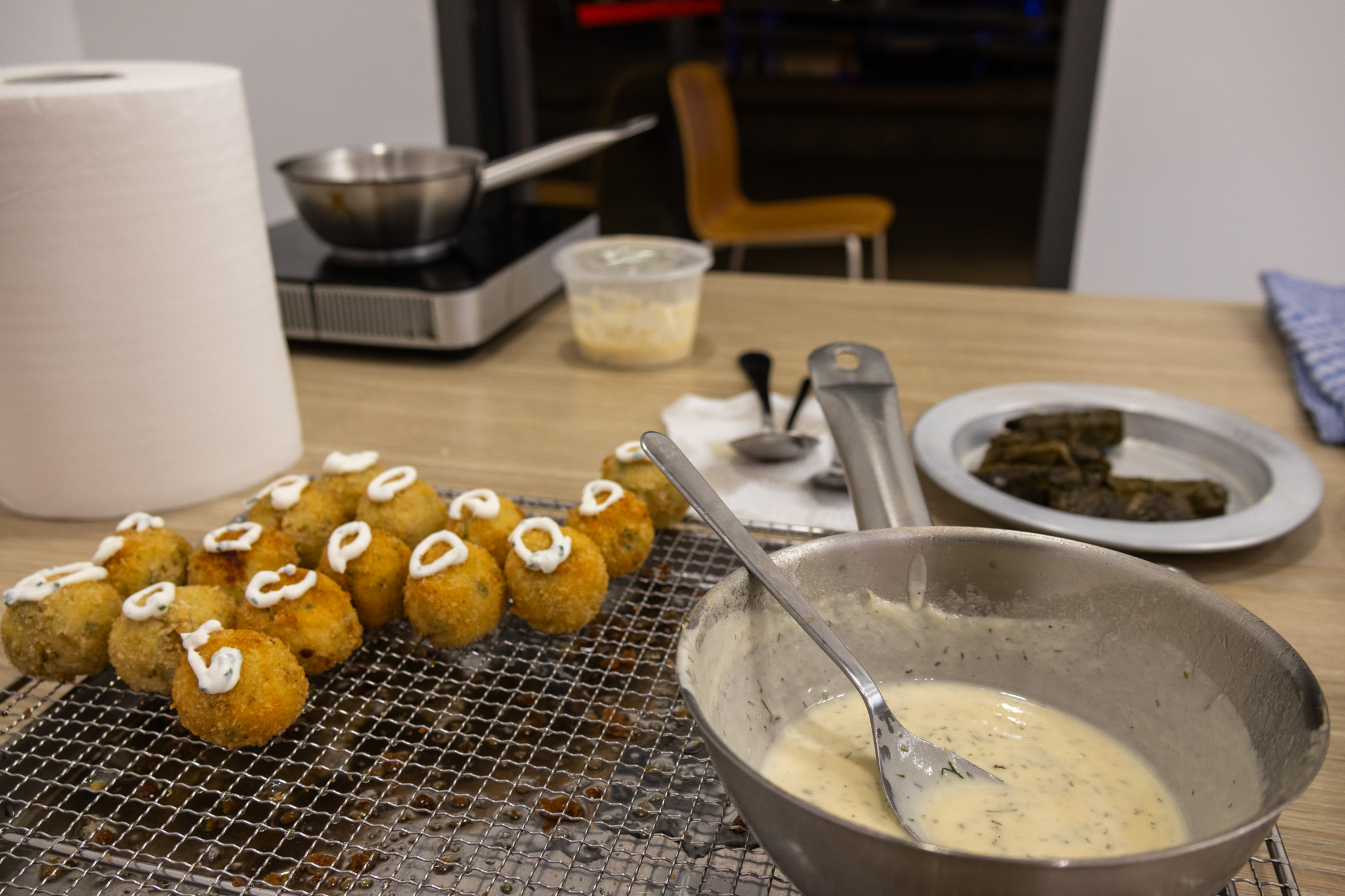
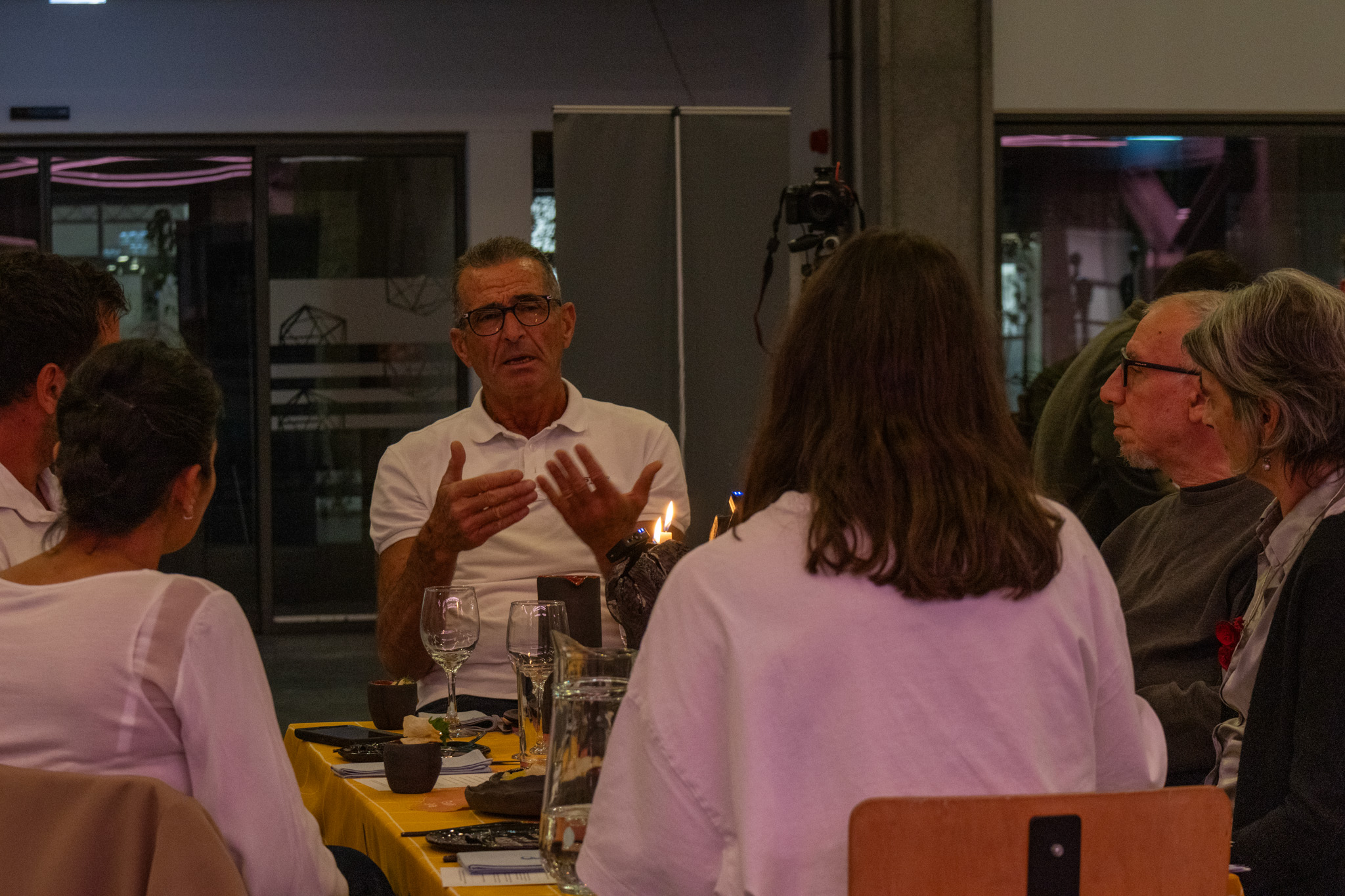
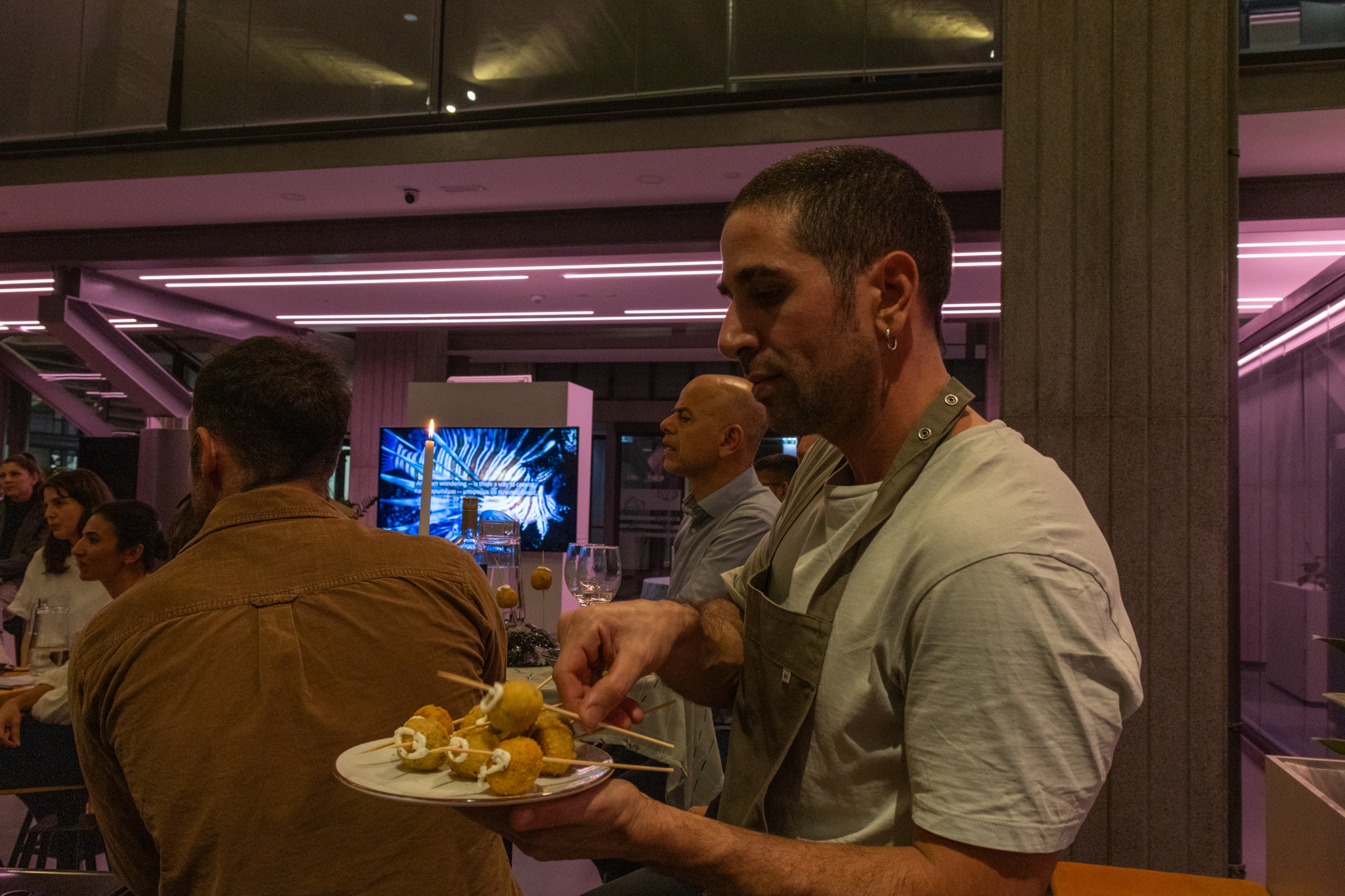
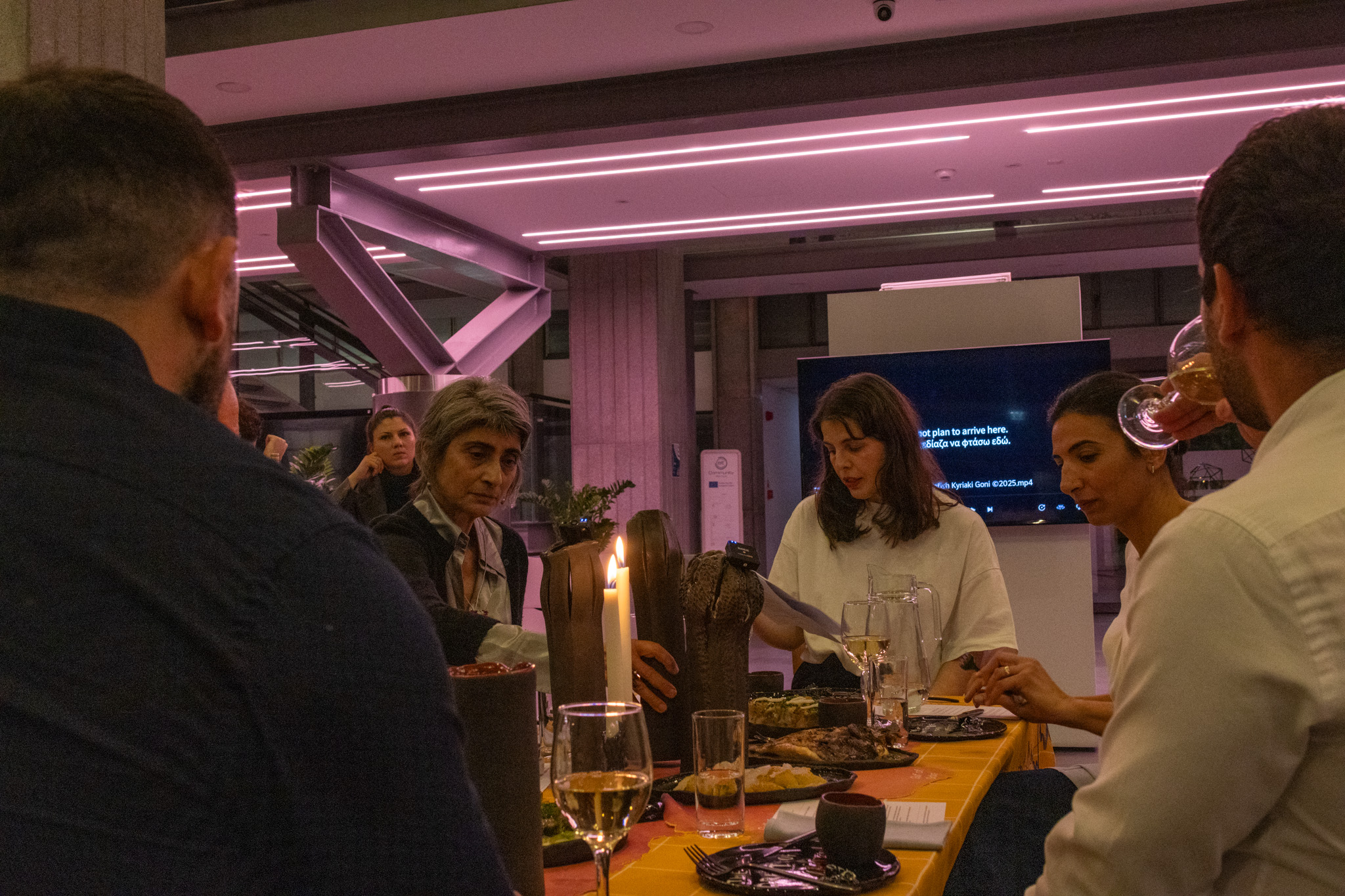
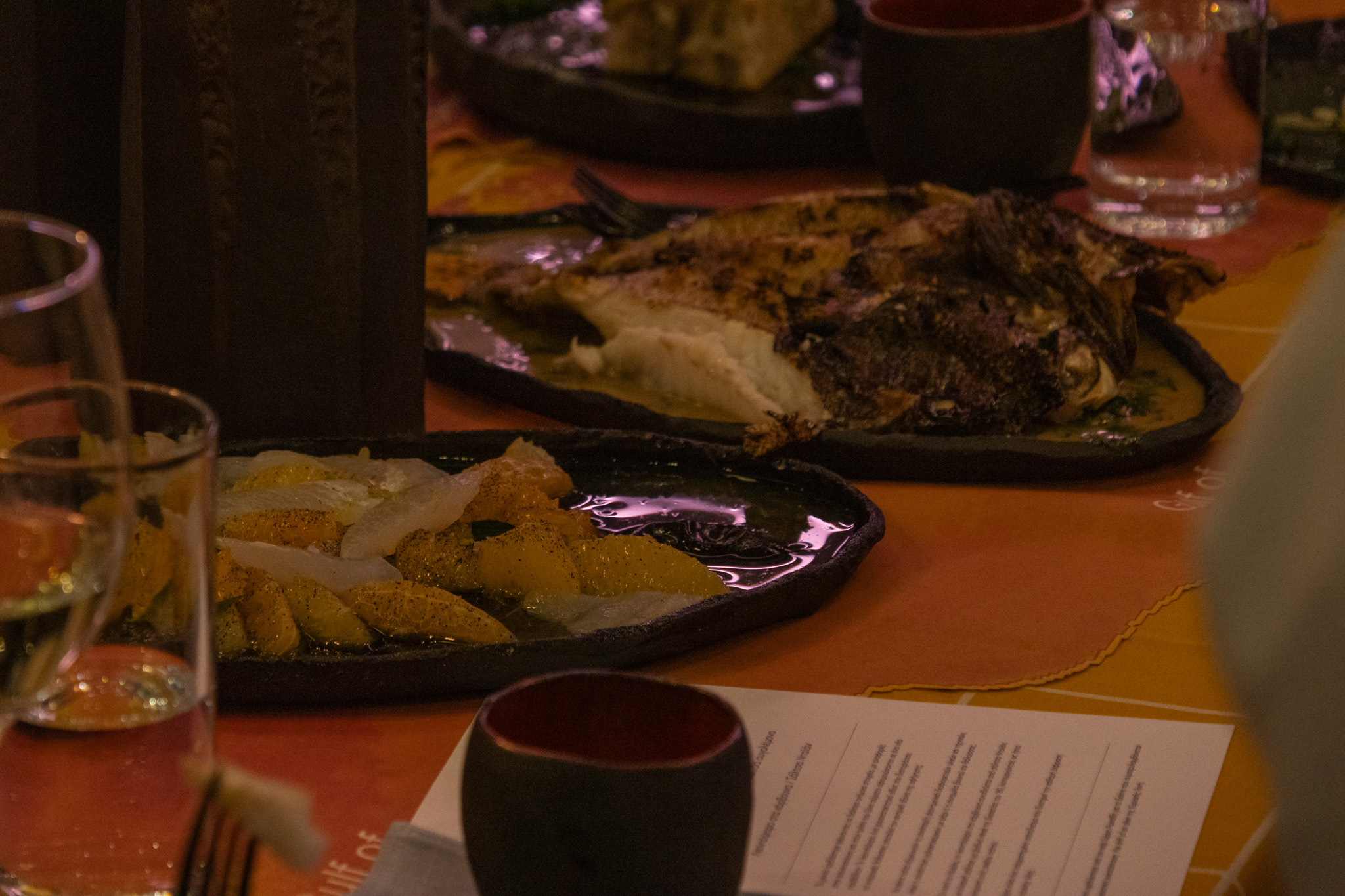
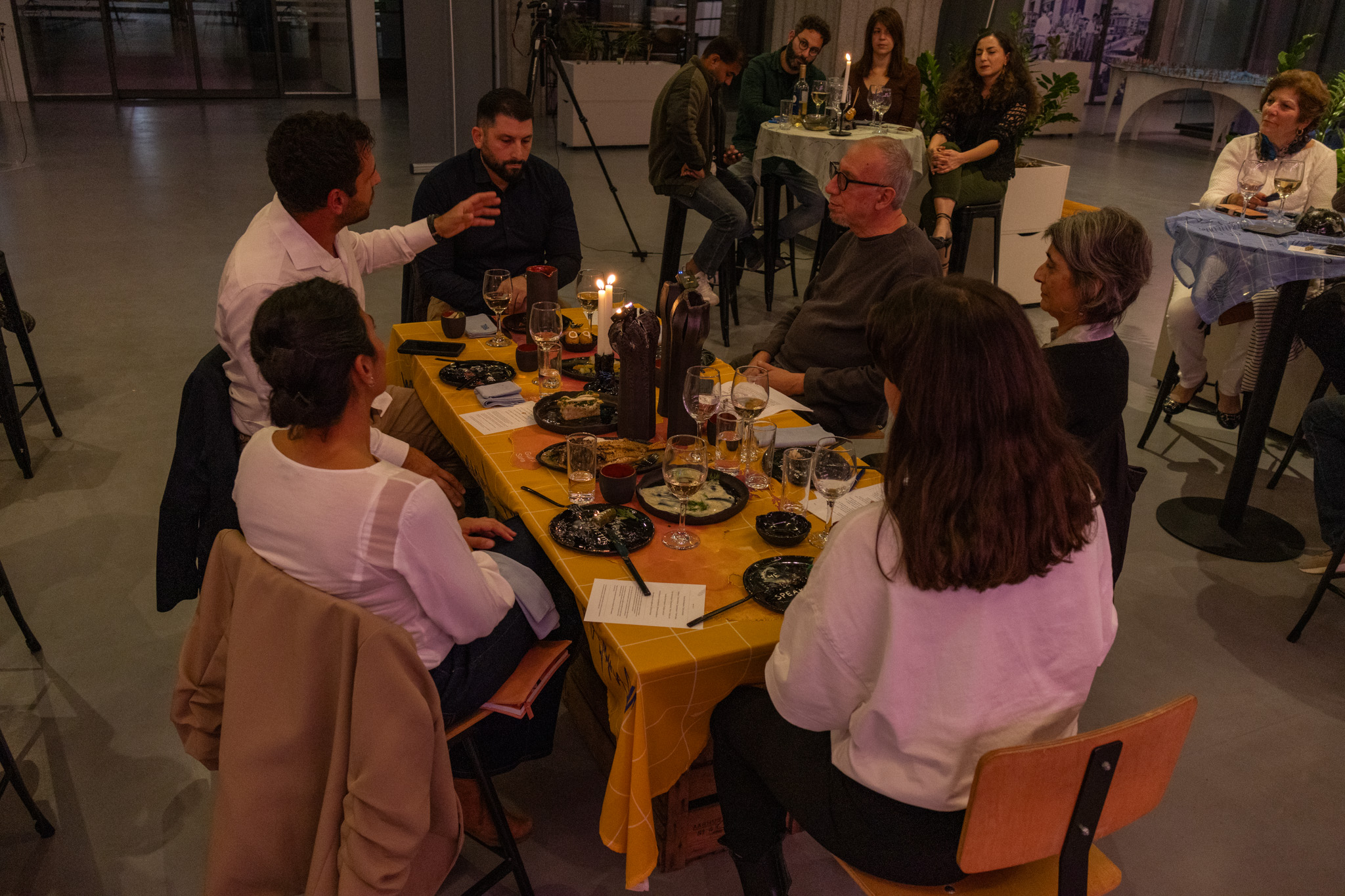
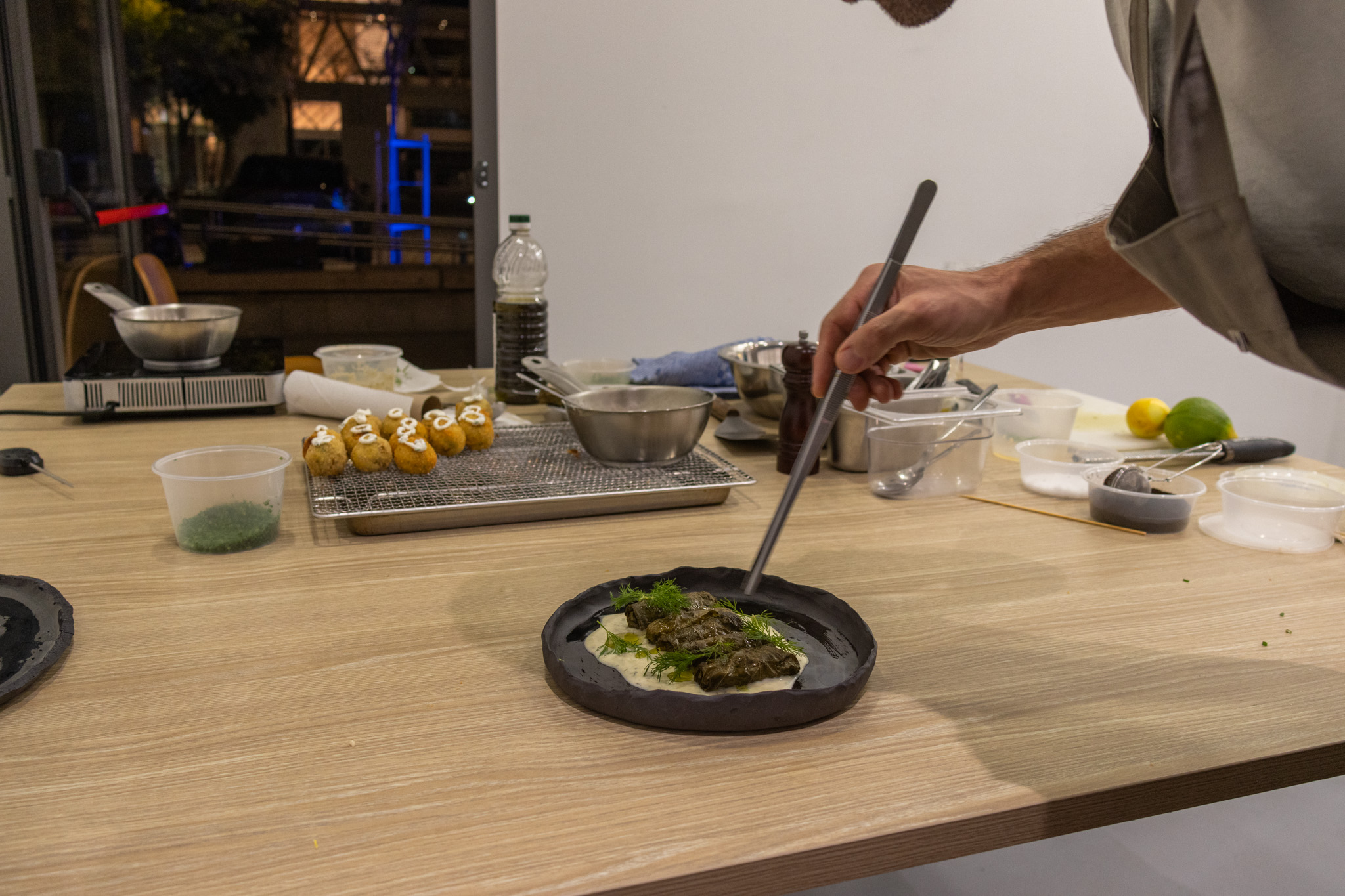
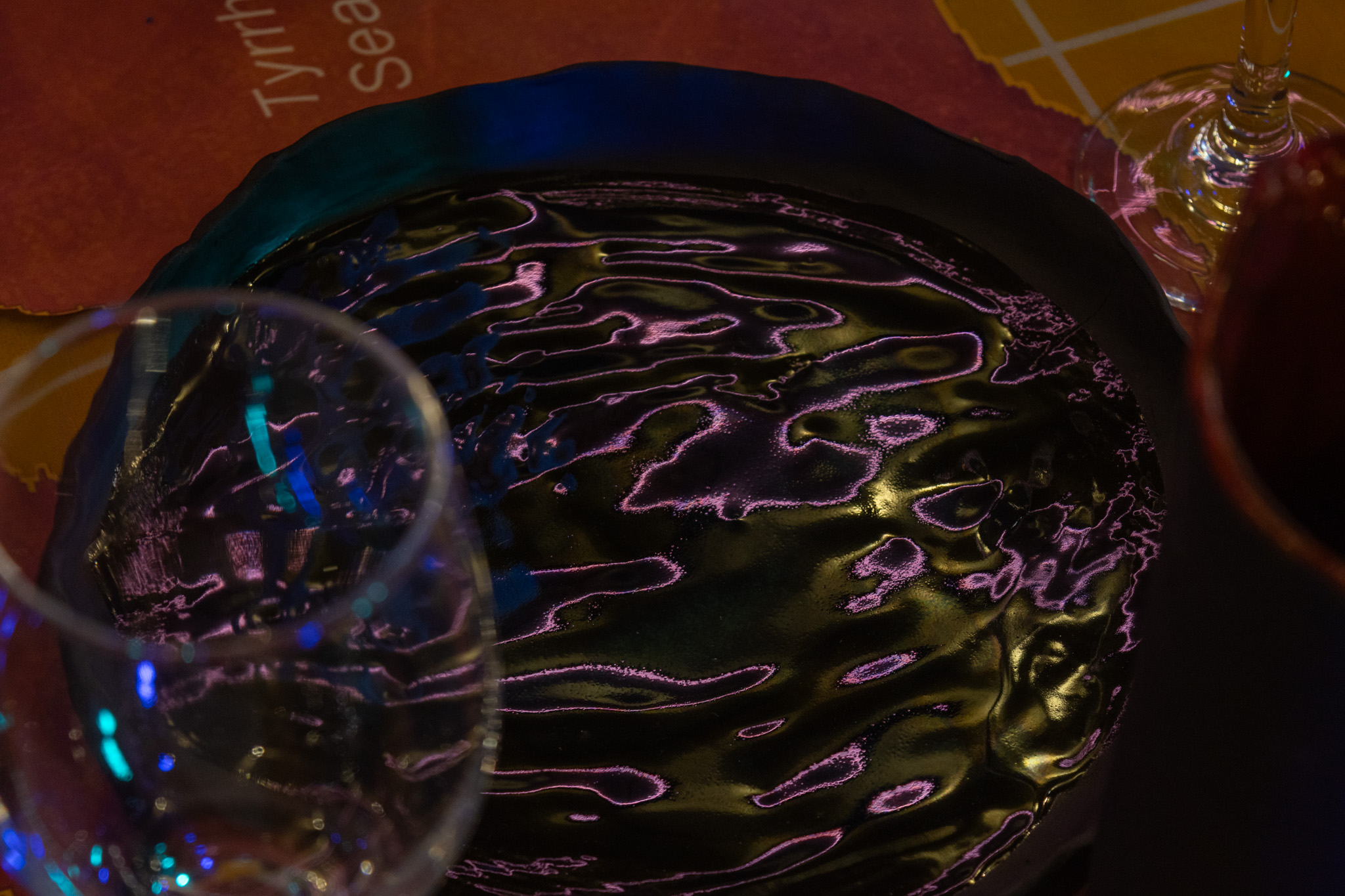
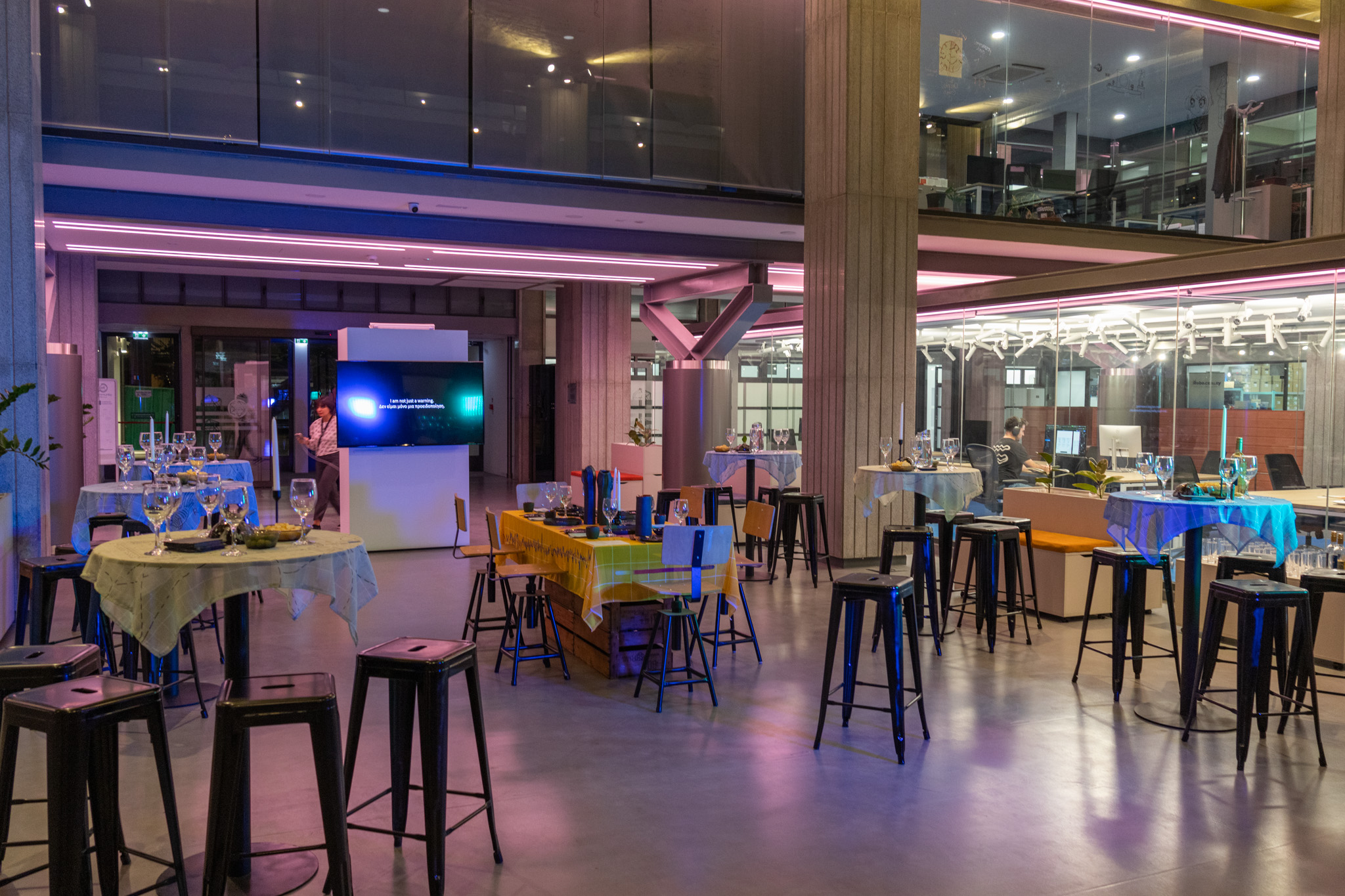
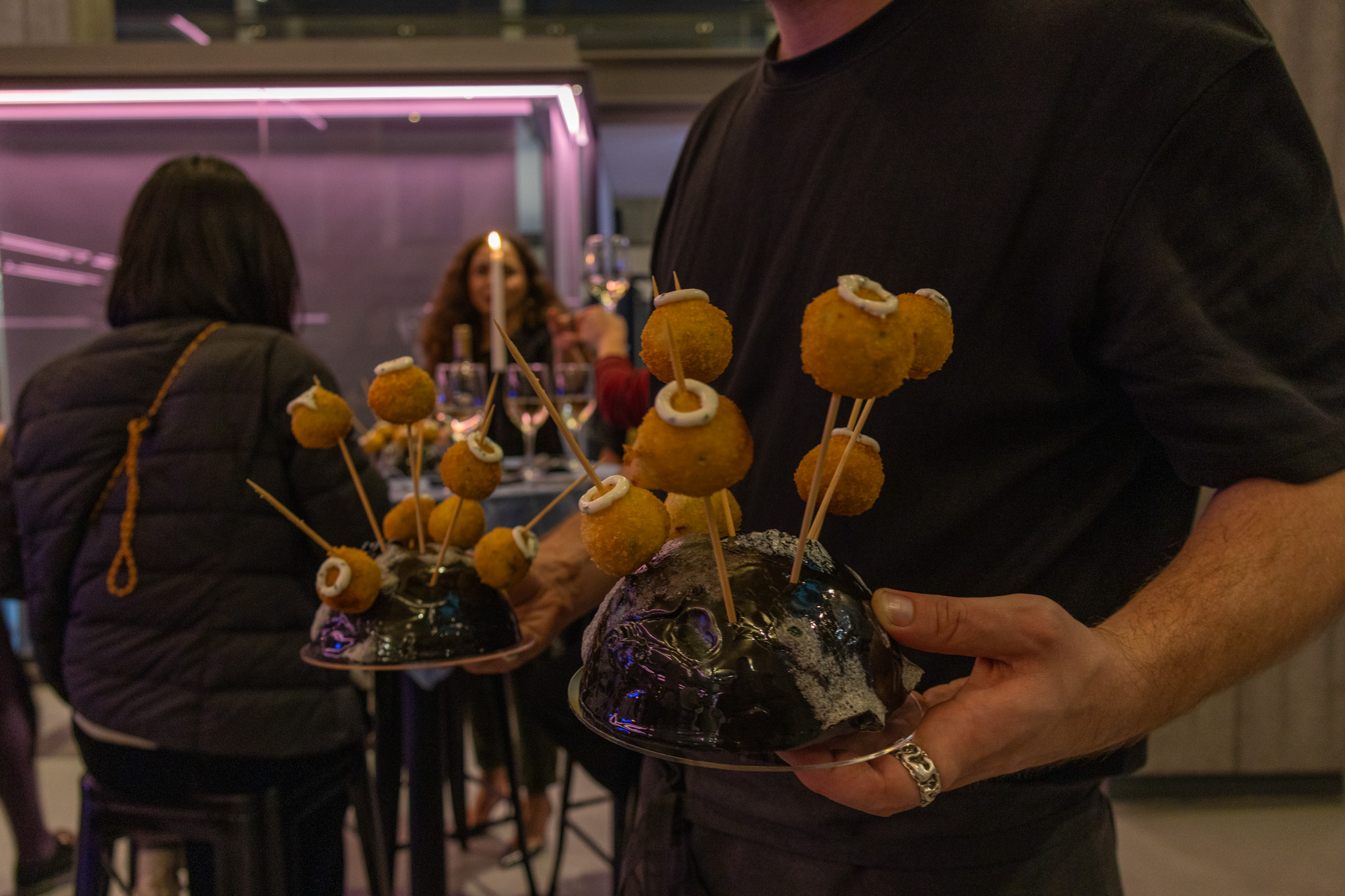
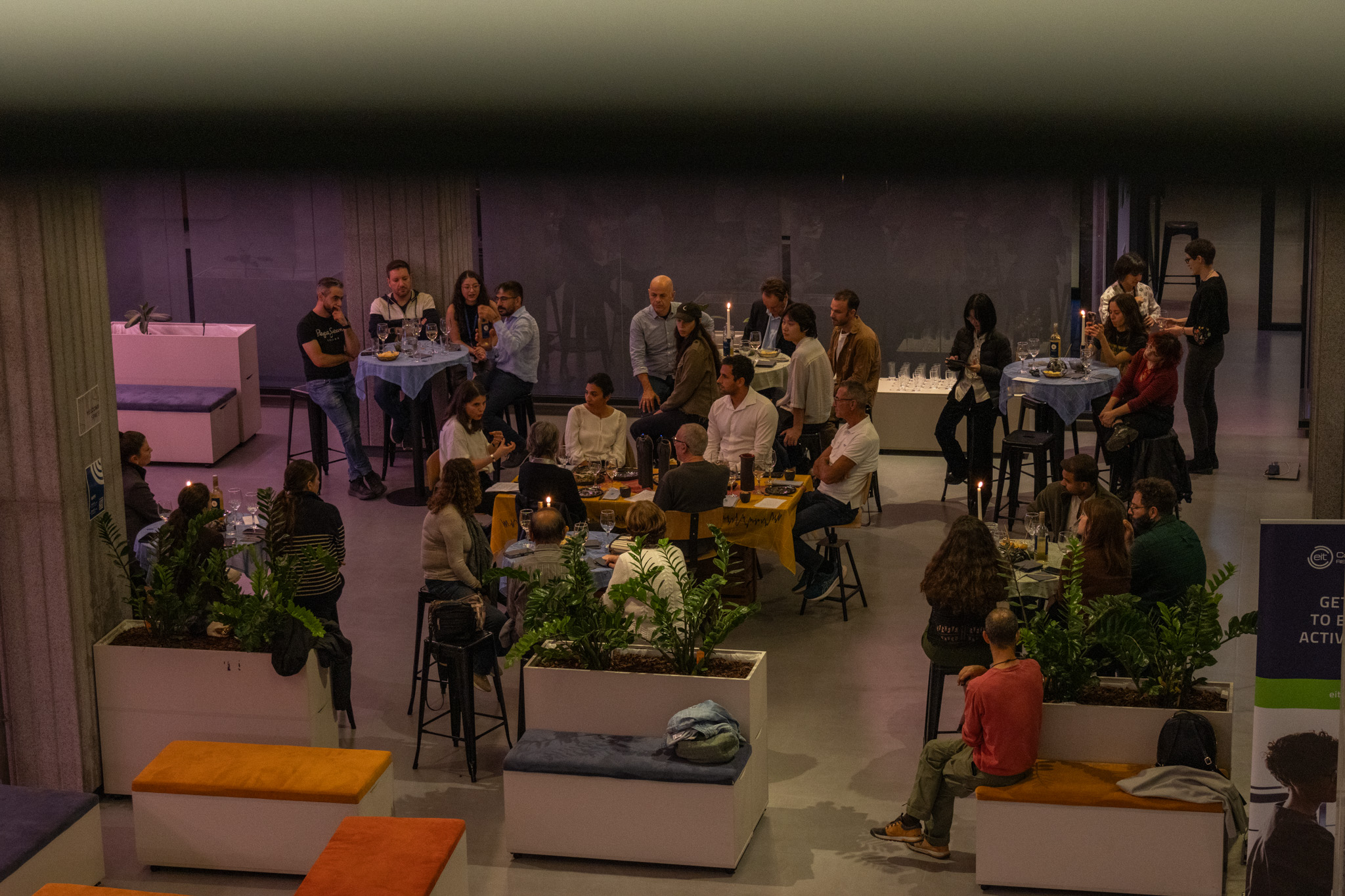
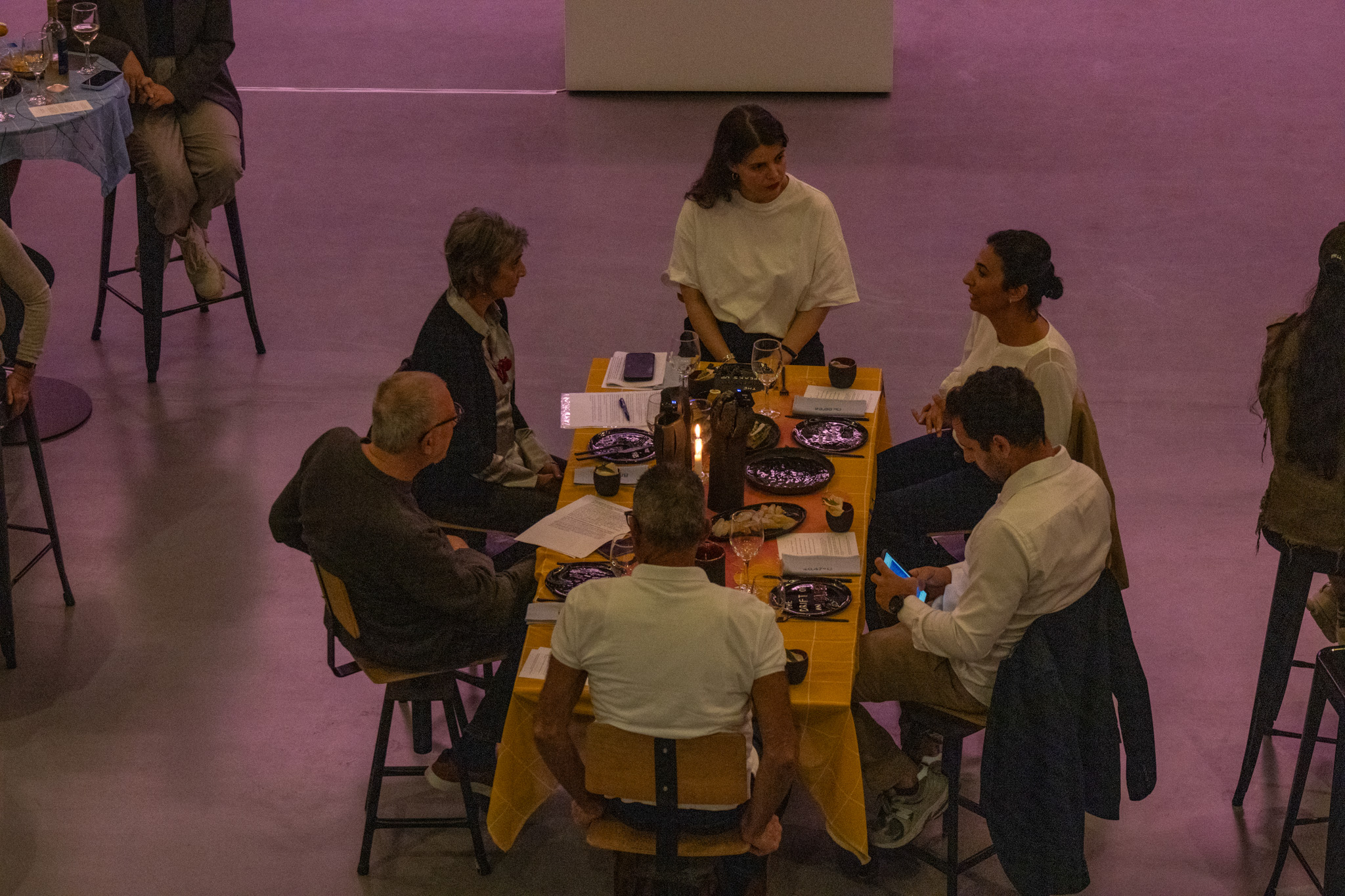
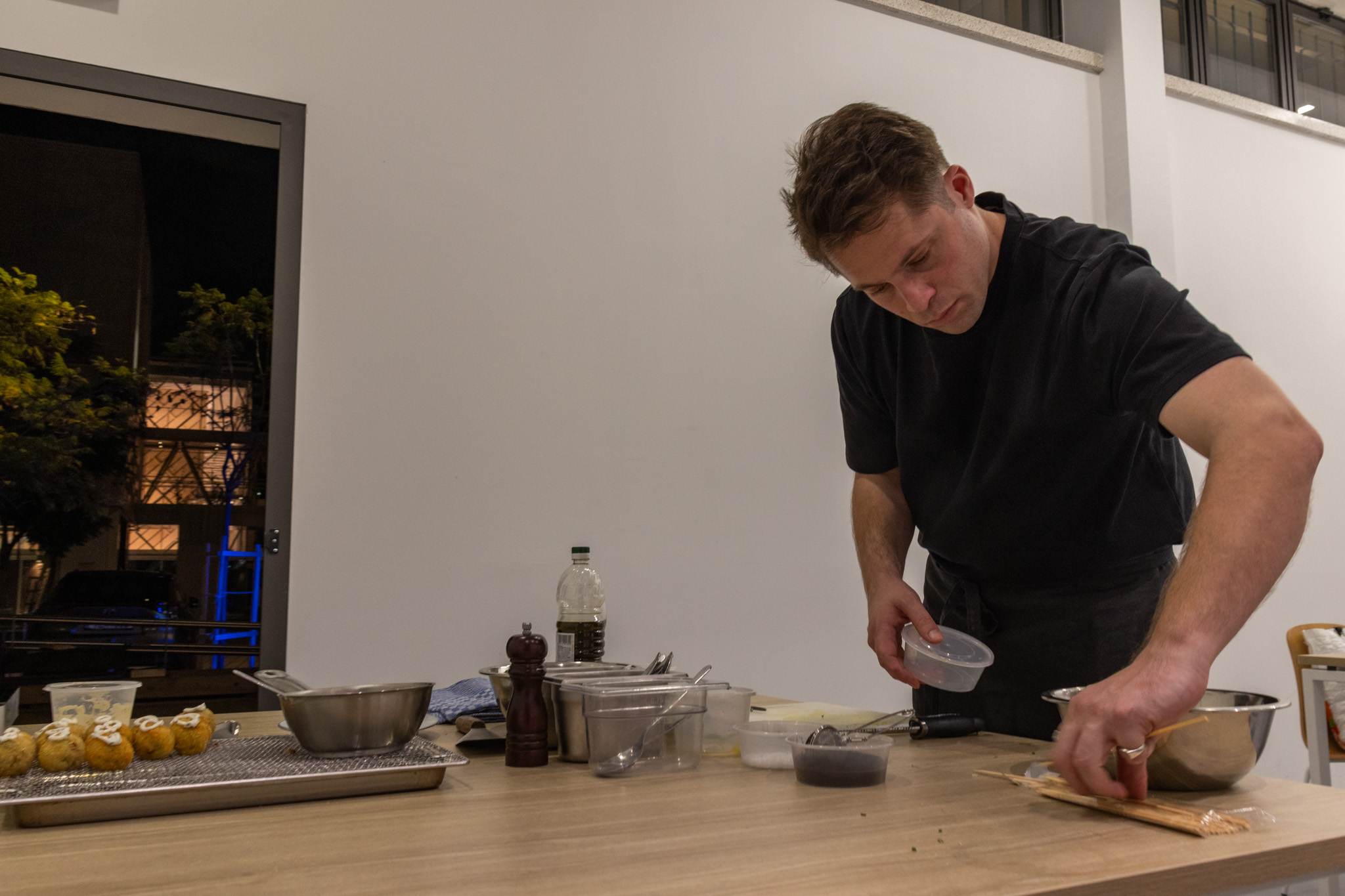
The themes of their work were woven into the dinner and open discussion, where guests explored how species move, adapt, and reshape environments under climate stress. The event provided a shared platform for connecting marine research with artistic perspectives and public dialogue.
Inside the Artist’s Vision: Miguel Teodoro on Water Scarcity in Cyprus
Inside the Artist’s Vision: Miguel Teodoro on Water Scarcity in Cyprus
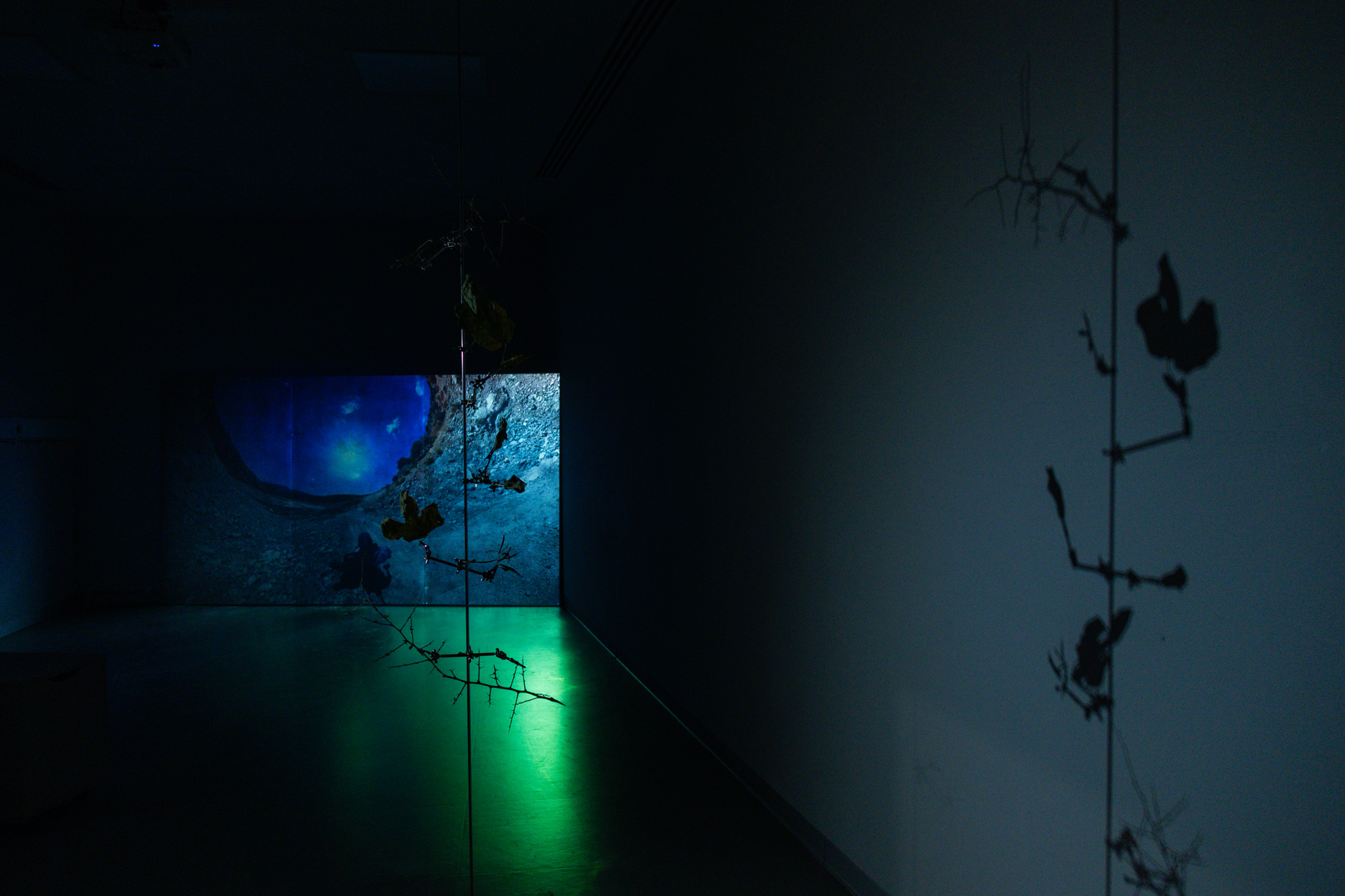
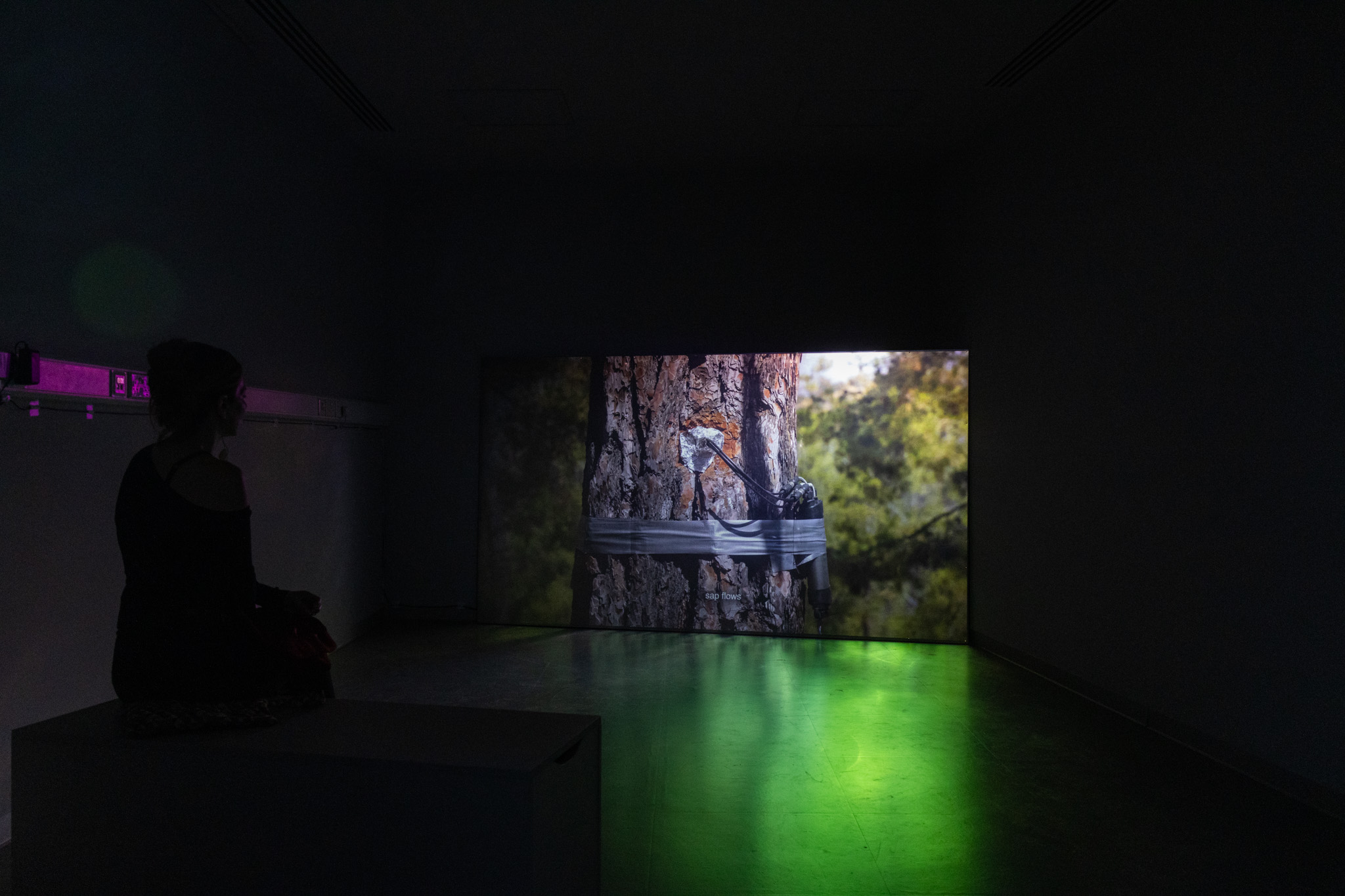
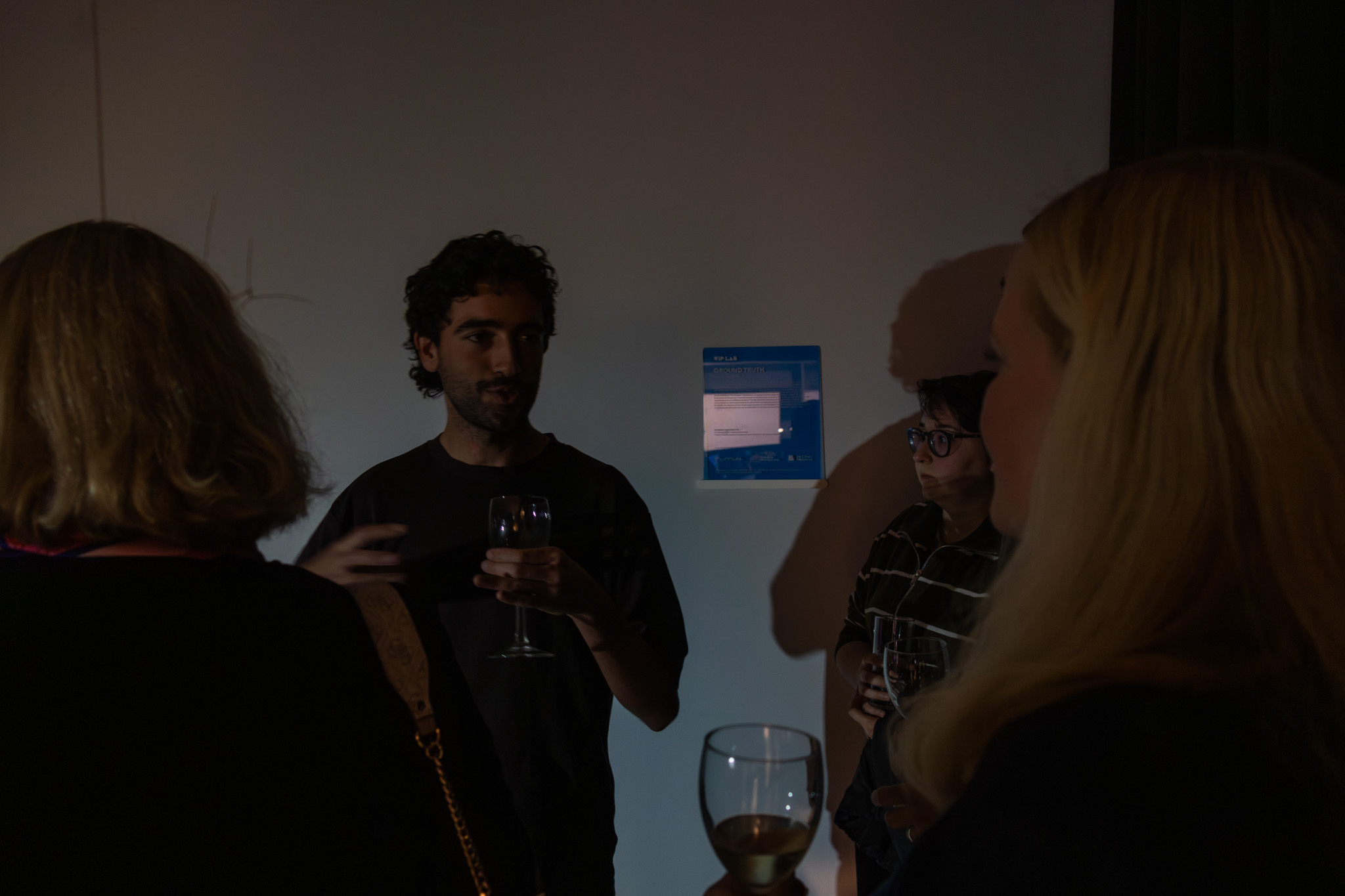
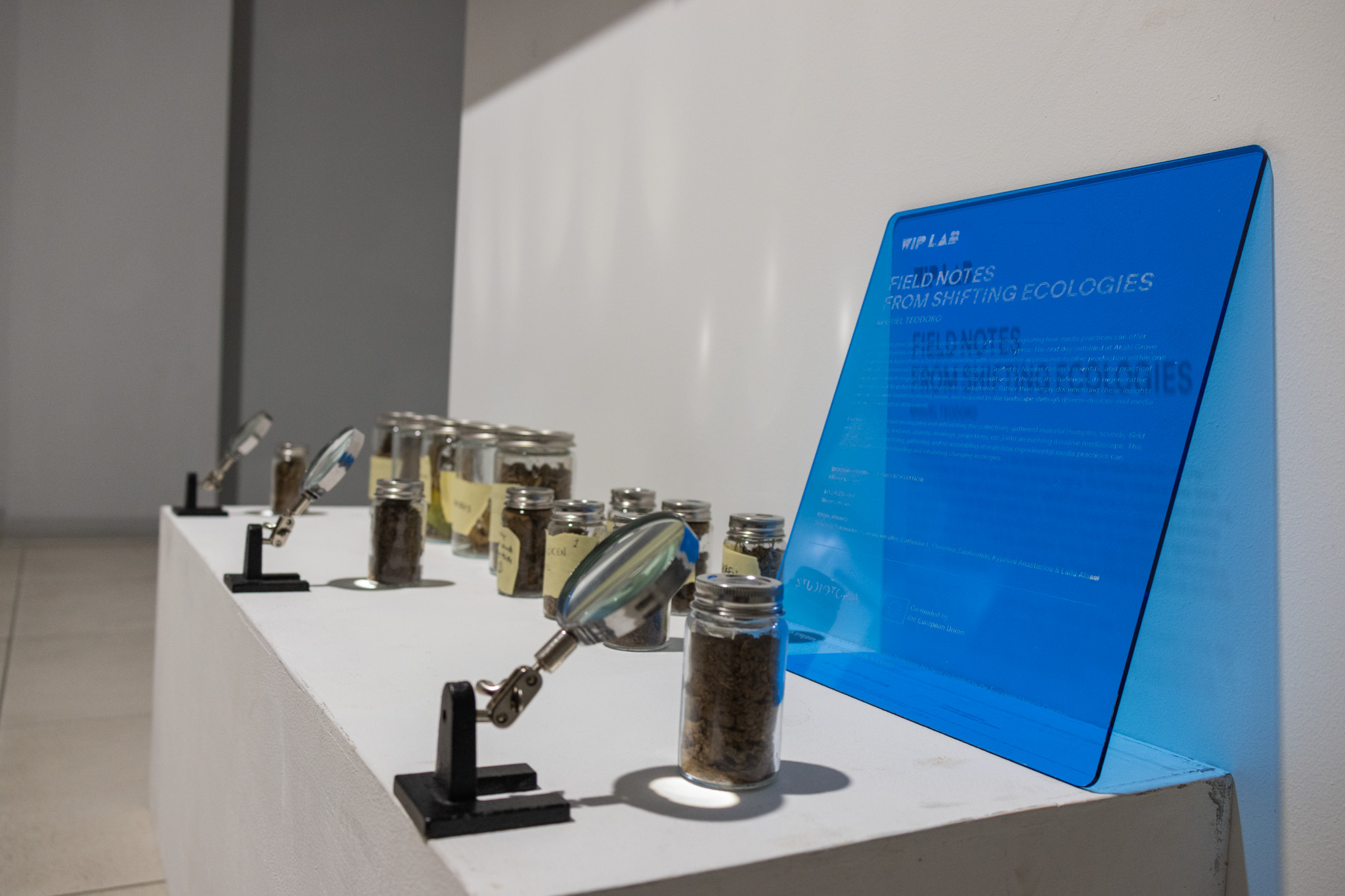
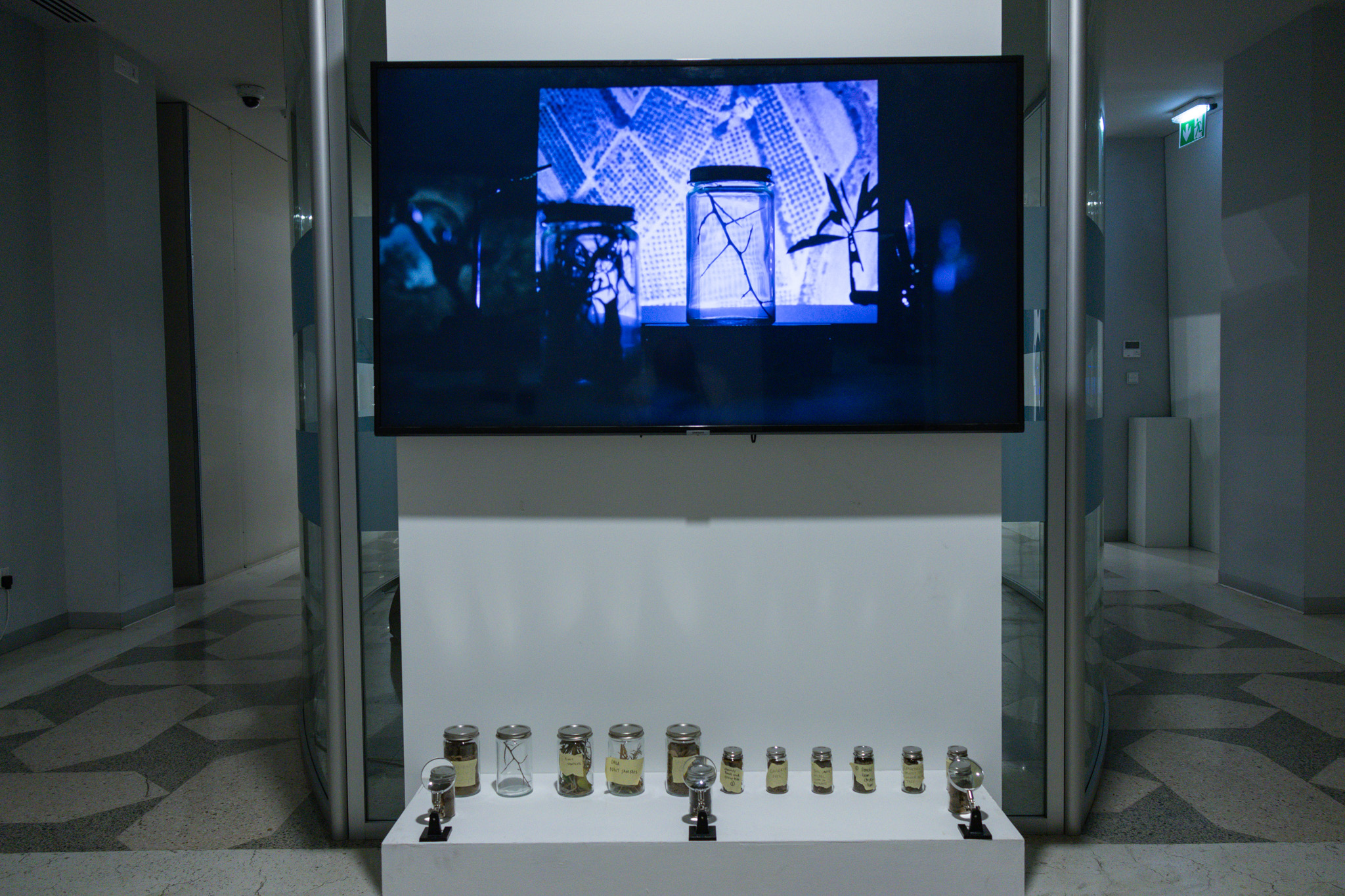
At the opening of the WIP Festival, artist Miguel Teodoro presented an early insight into his ongoing STUDIOTOPIA residency project Preparing for Drought: Addressing Water Scarcity and Desertification in Cyprus.
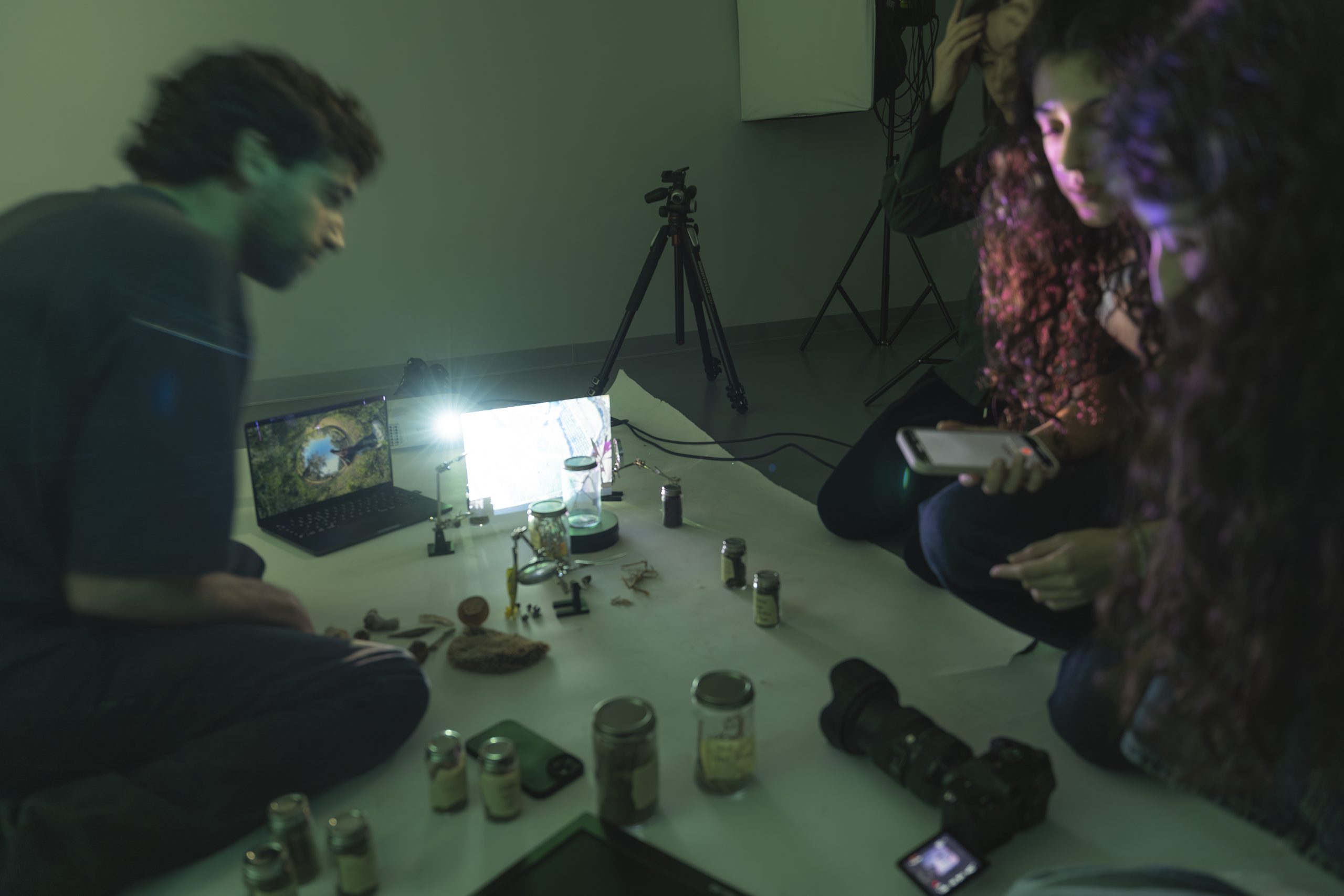
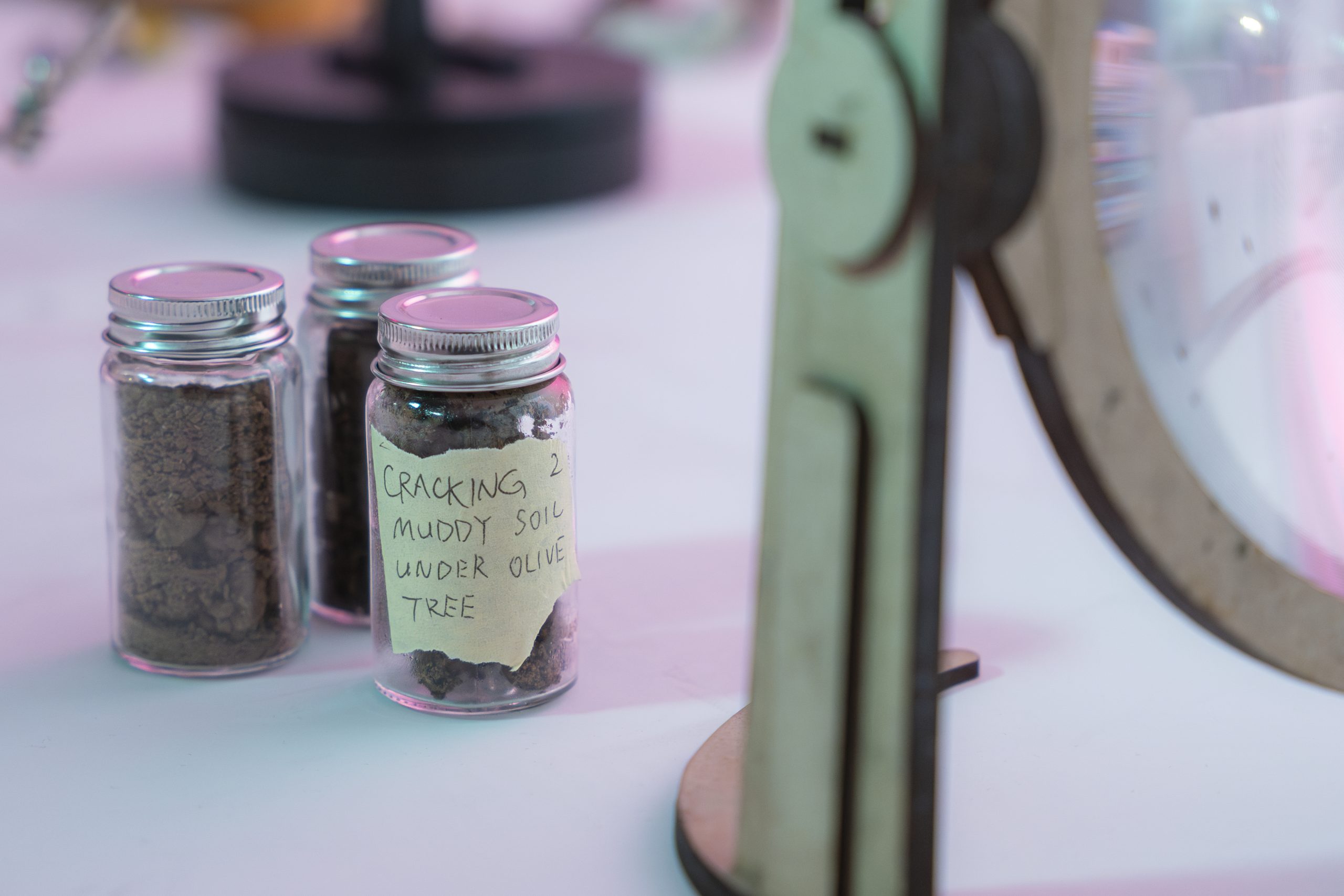
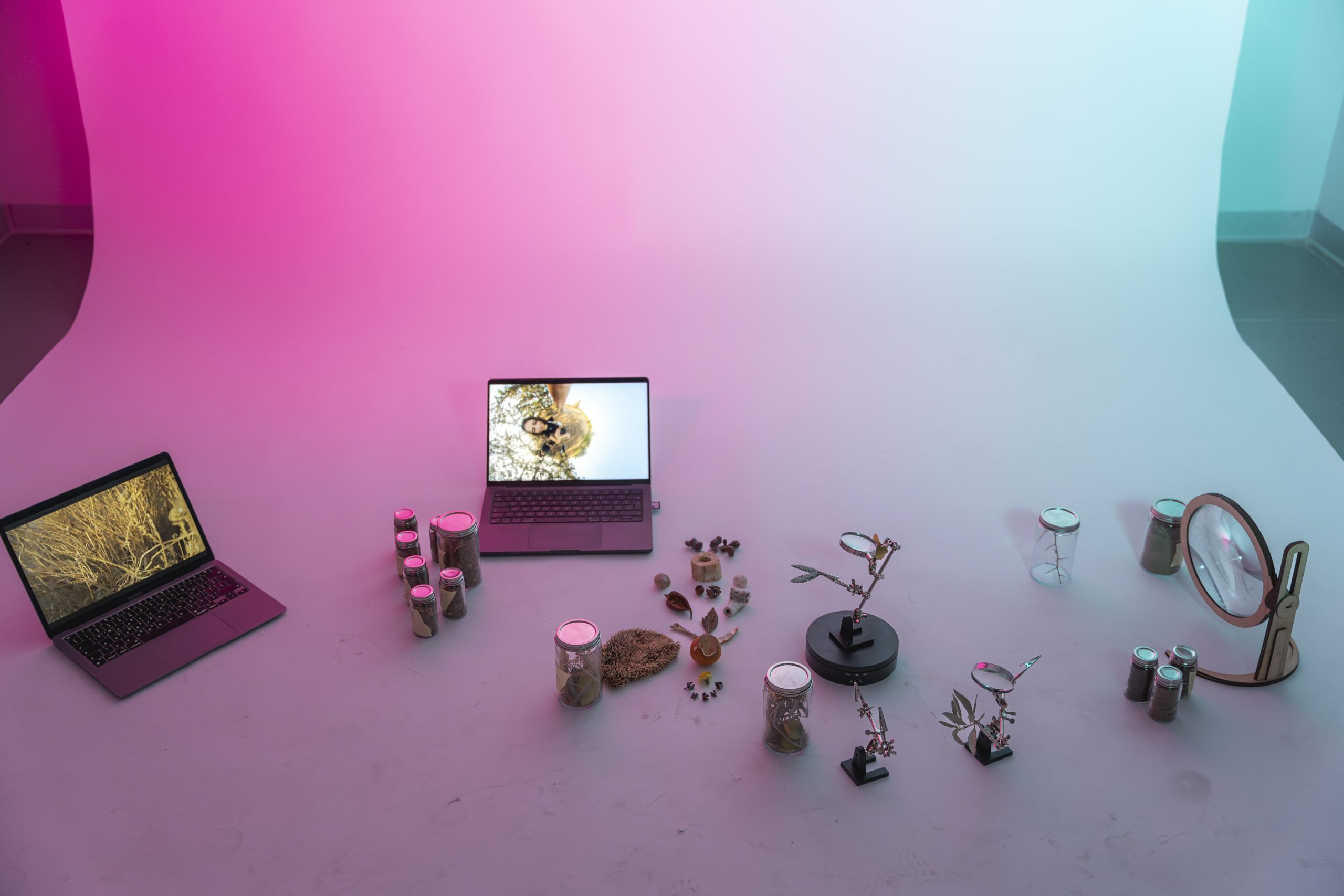
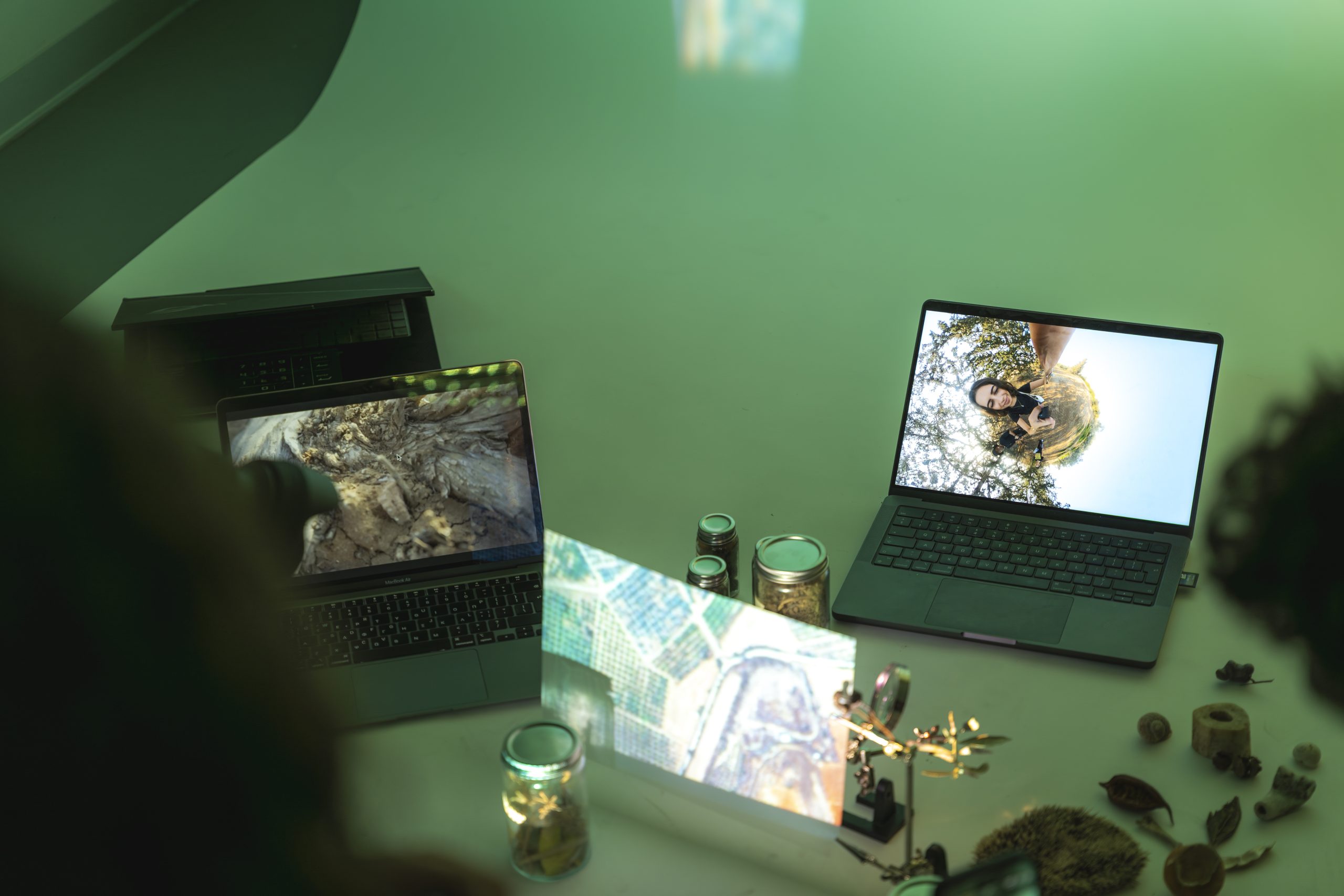
Through a short video interview below, you can get to know more insight into the project that investigates how drought, soil degradation, and shifting climate patterns shape both the landscape and daily life on the island. Working closely with scientists such as George Zittis, local communities, and regenerative agriculture practitioners, Teodoro gathers field samples, documents environmental traces, and translates these observations into visual and material experiments.
Workshop that Explored Water Scarcity Through Art, Science, and Field Research
Workshop that Explored Water Scarcity Through Art, Science, and Field Research
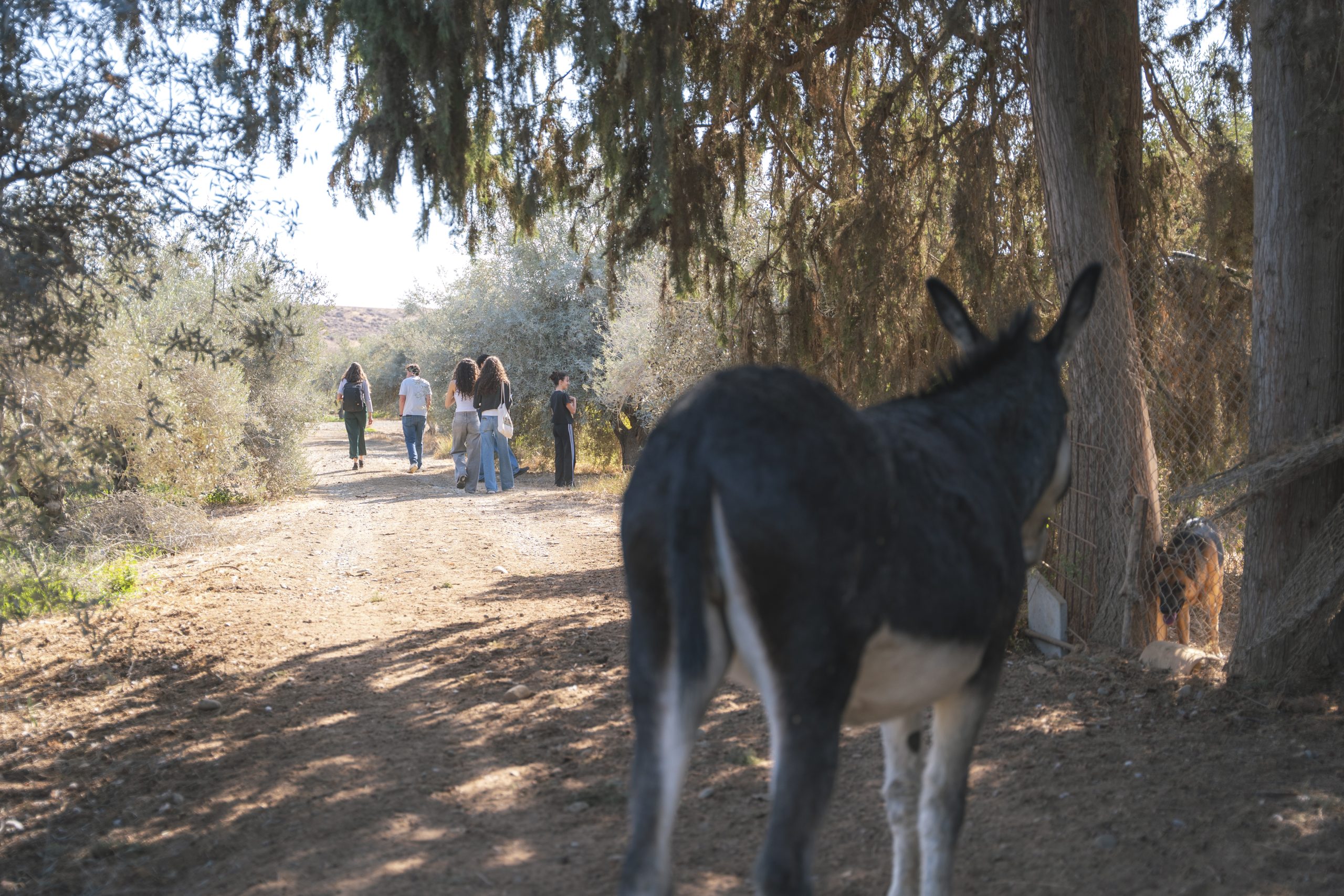
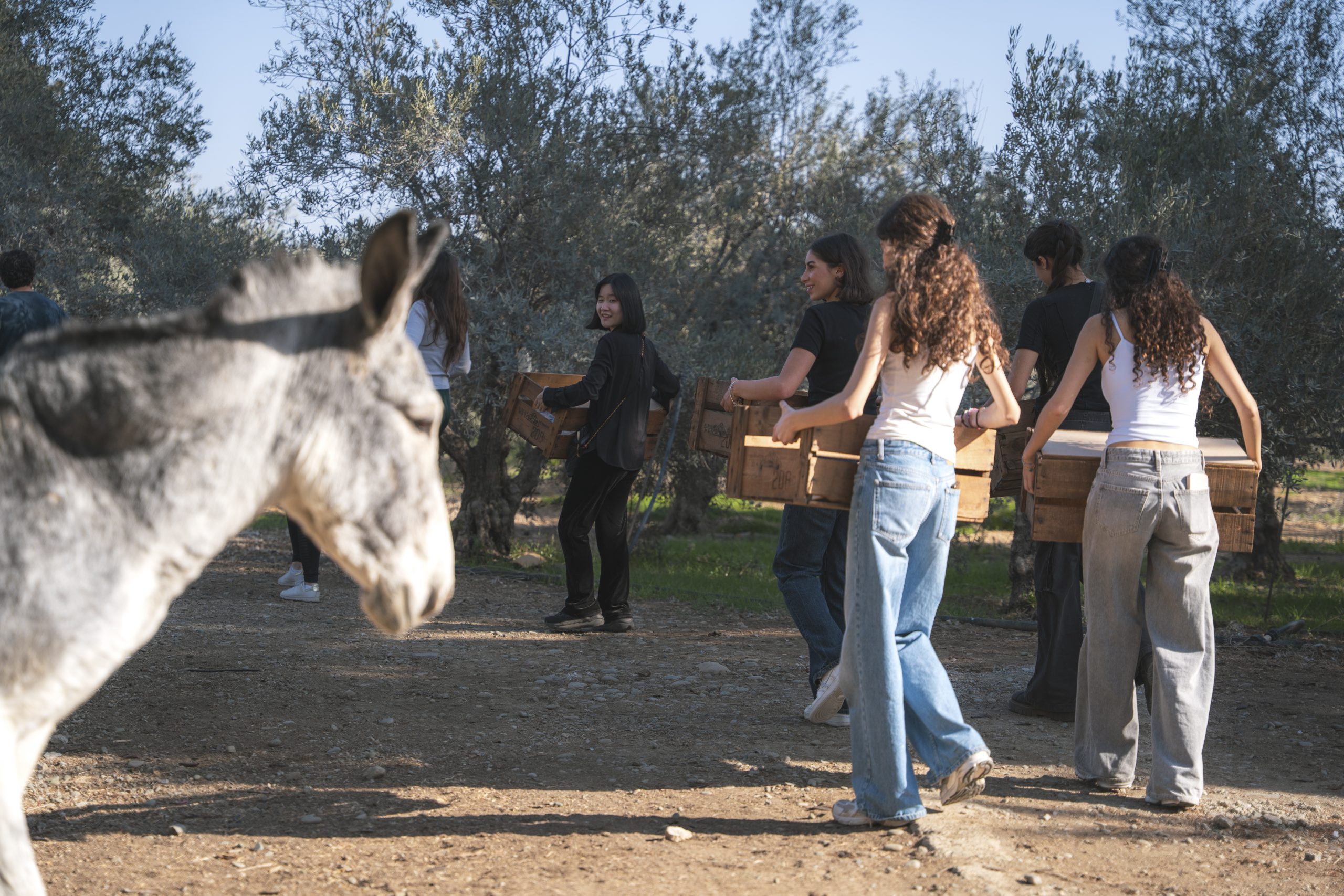
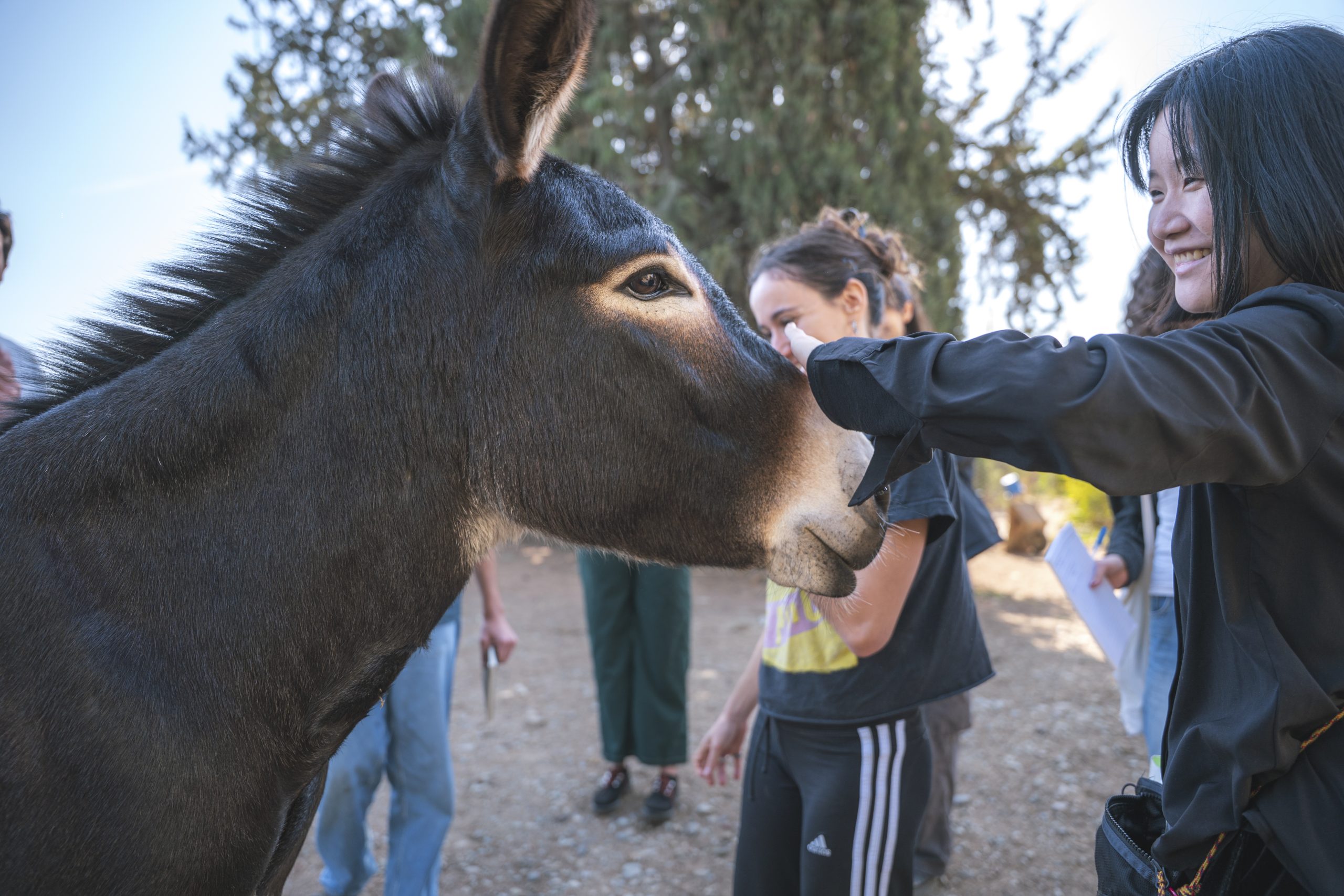
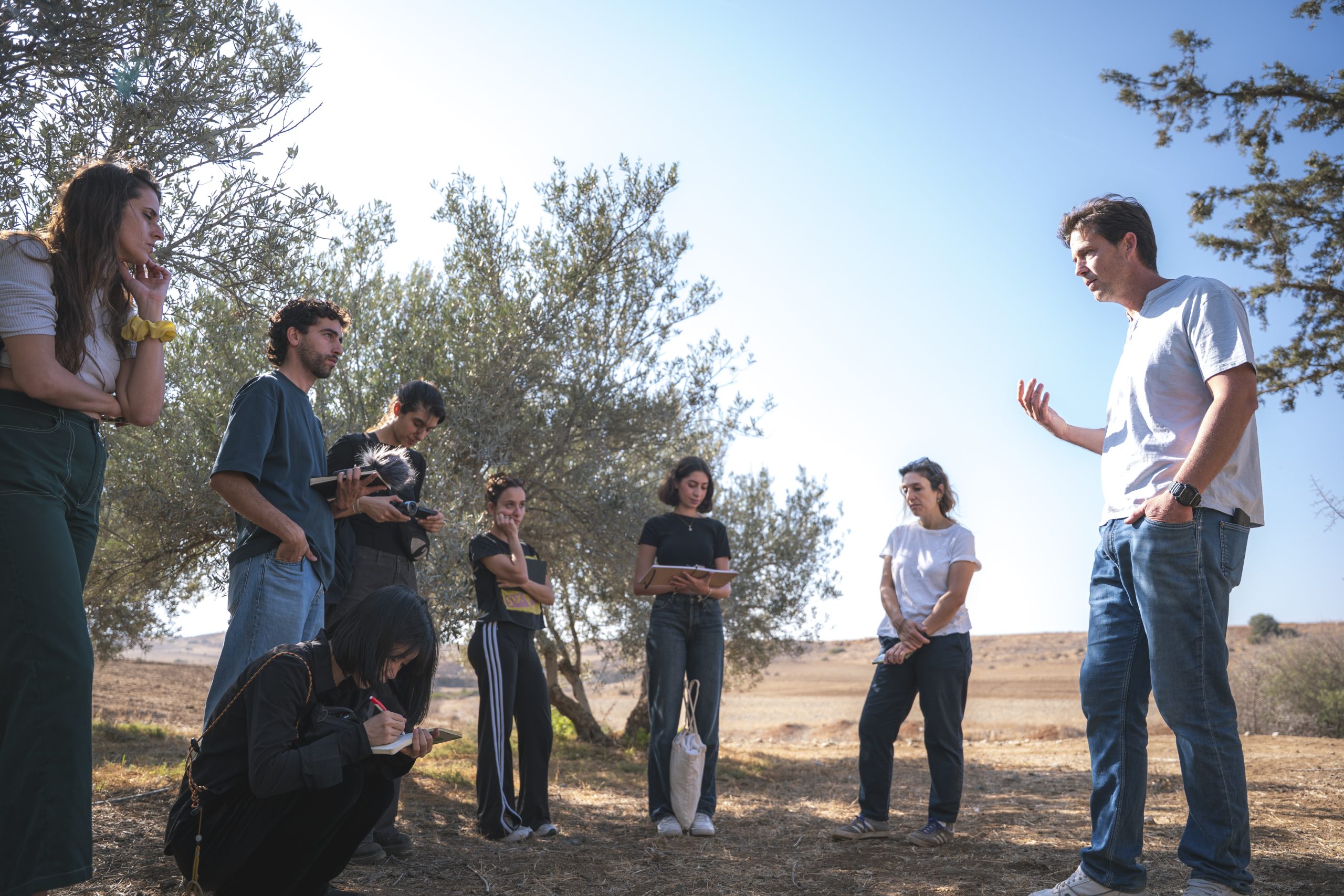
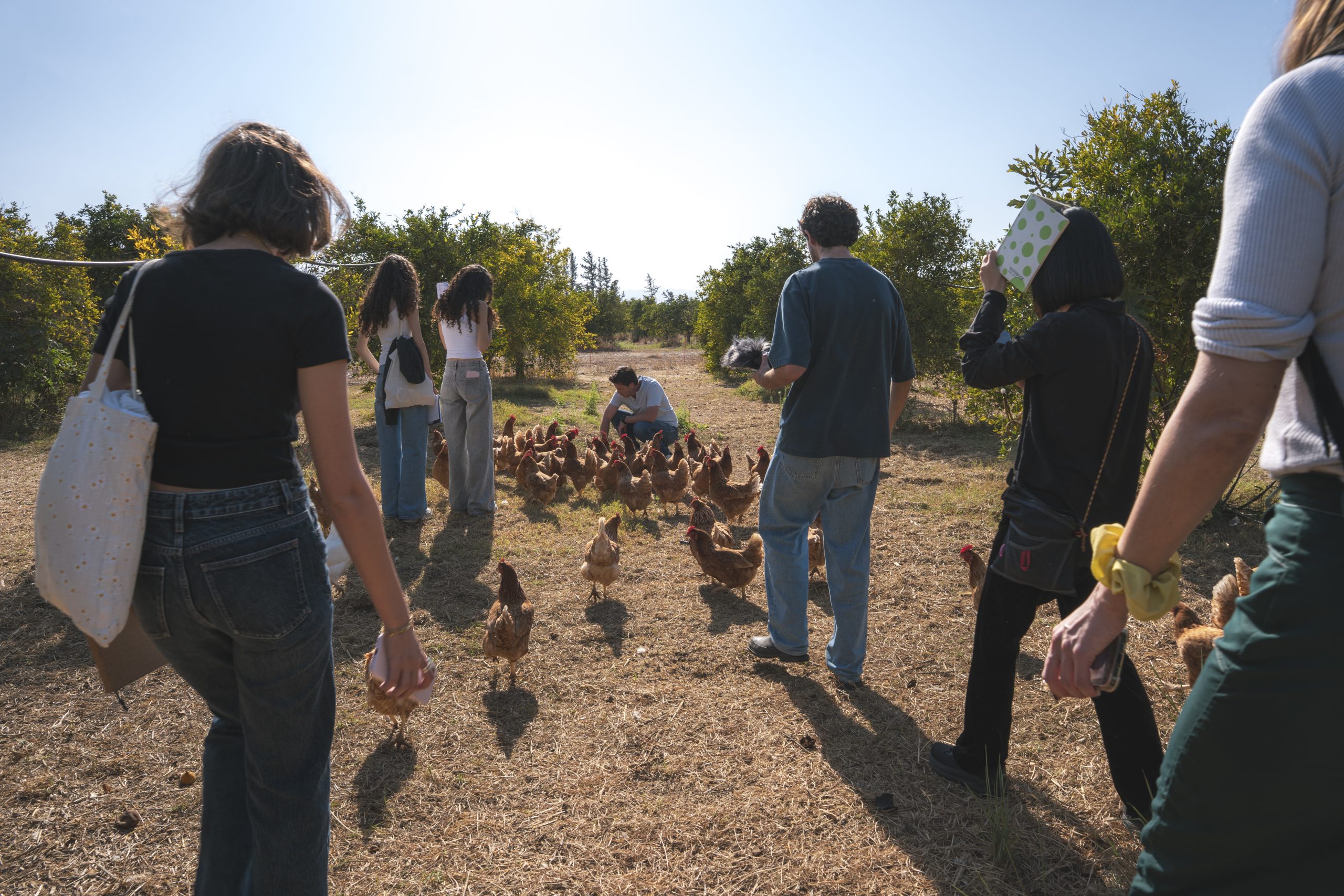
A two‑day Pop‑Up Lab workshop, held on 20-21 November 2025 as part of the WIP Festival that took place in the CYENS Centre of Excellence (Cyprus), brought university students into direct contact with the ecological realities of water scarcity and desertification in Cyprus.
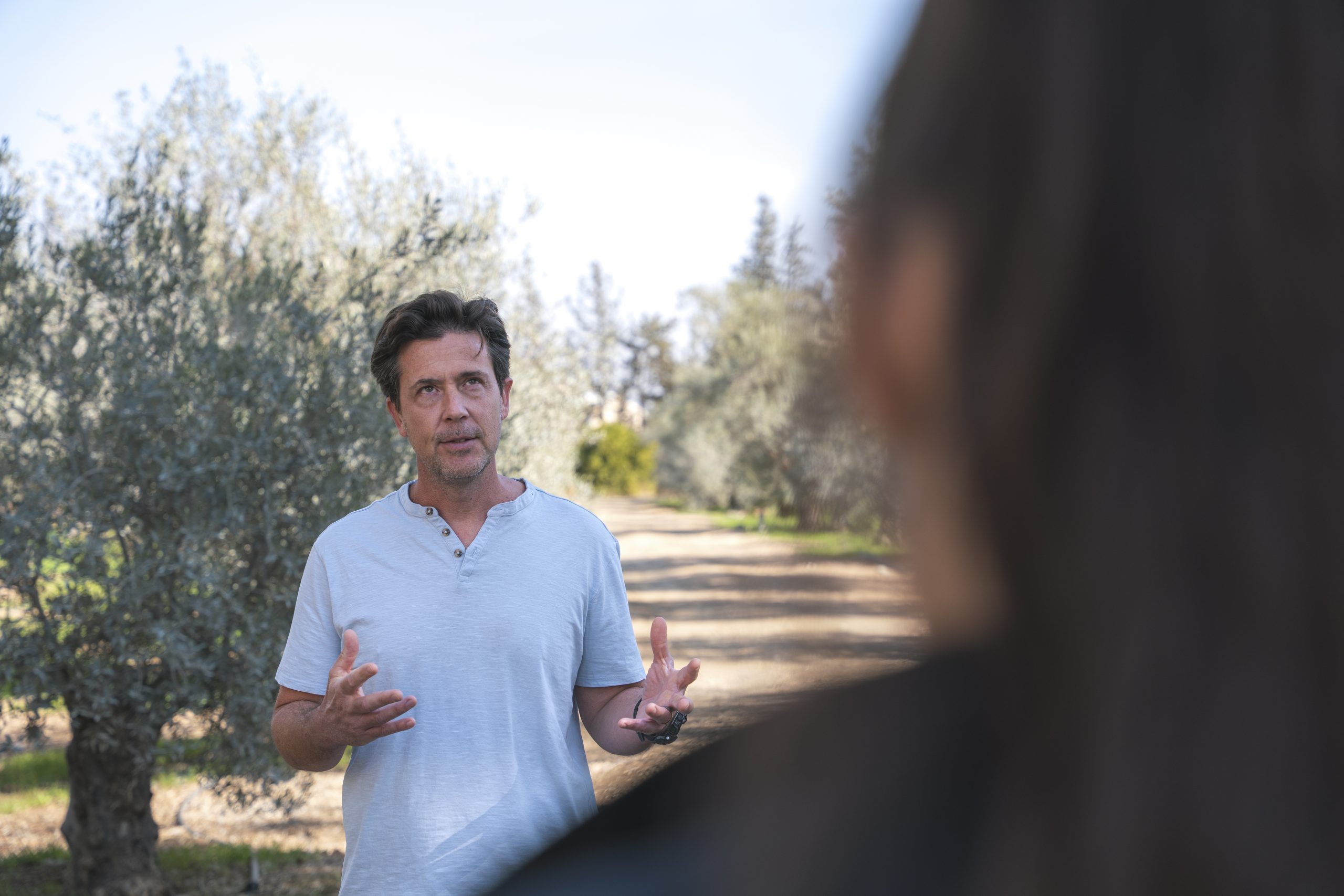
Led by artist Miguel Teodoro, the workshop combined scientific insight, hands‑on fieldwork, and creative interpretation to help participants understand how shifting ecologies shape everyday life on the island.
Immersive Fieldwork in Akaki
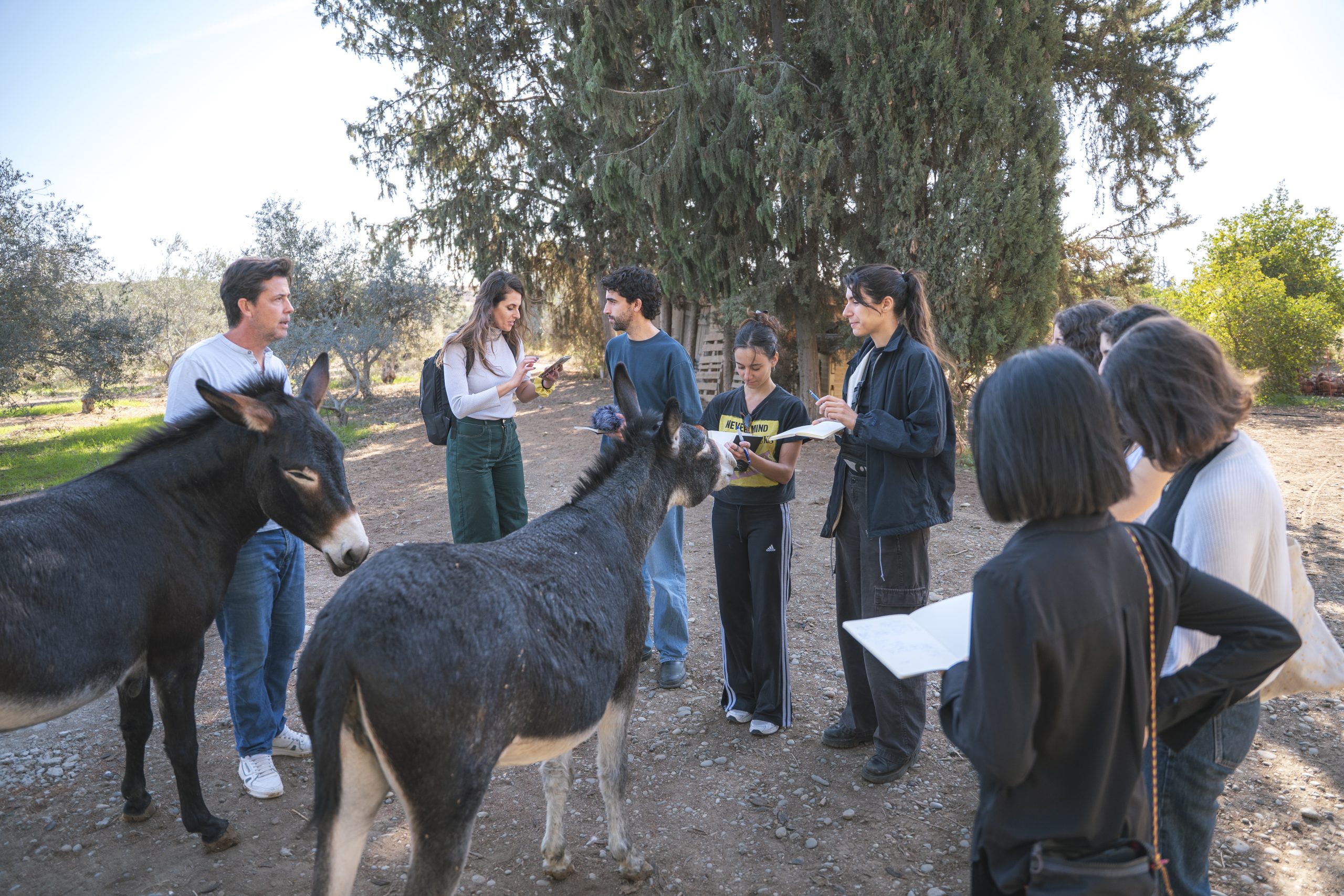
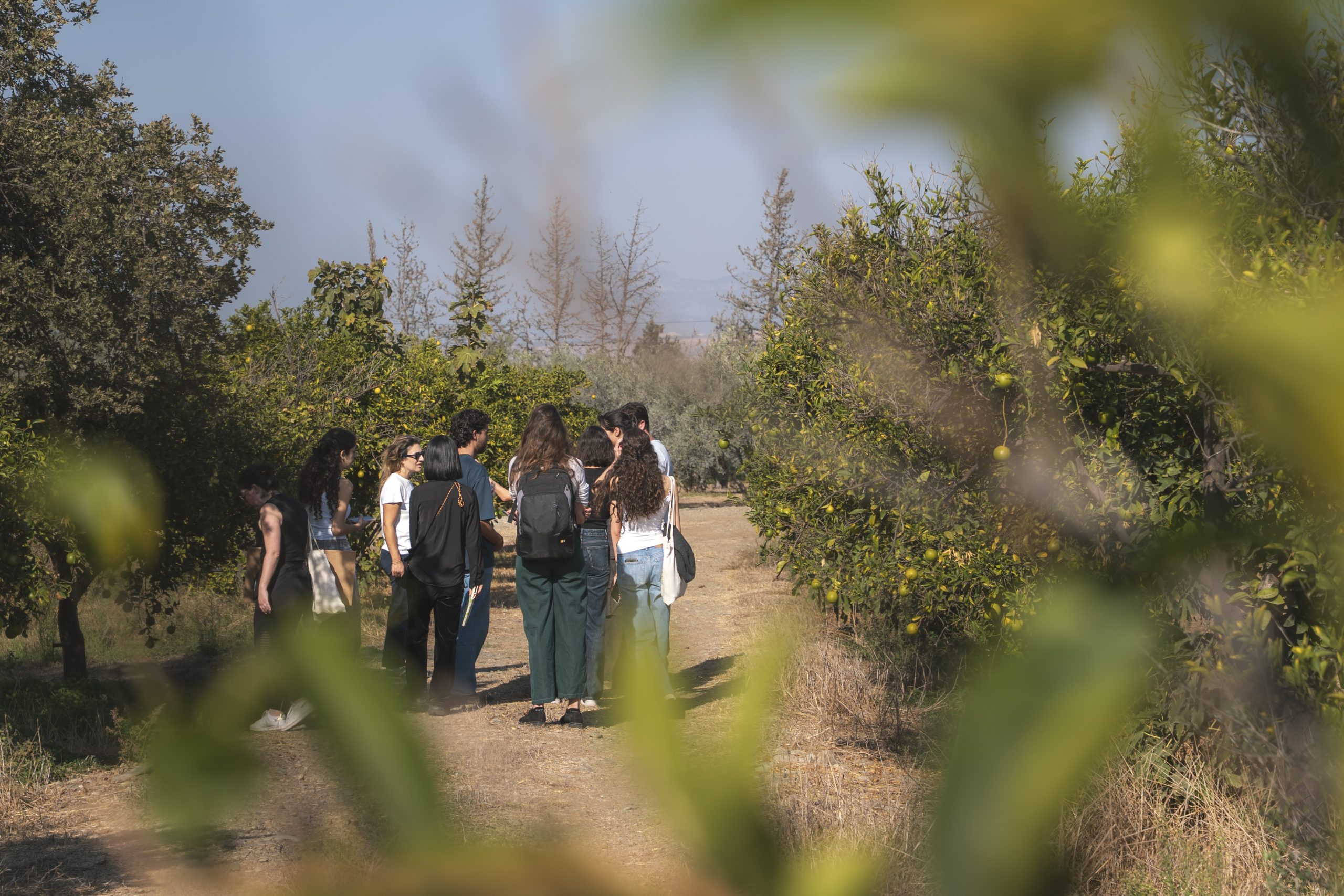
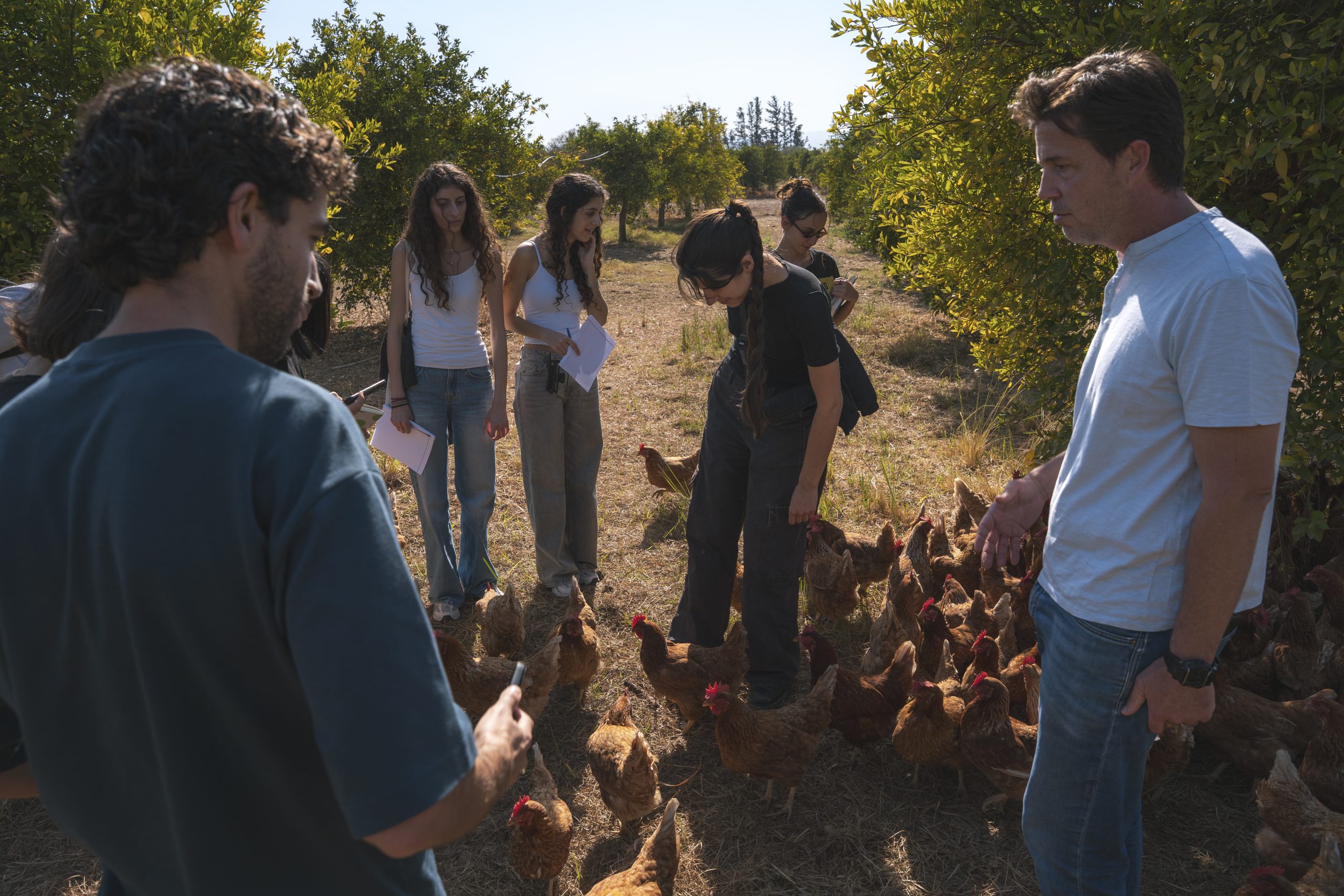
The workshop opened with a full‑day excursion to the Akaki Regenerative Farm. After departing from CYENS in Nicosia, students were welcomed by local practitioners who introduced current climate trends and the principles of agroecology and regenerative agriculture. A guided tour of the farm provided firsthand exposure to the environmental pressures affecting the region.
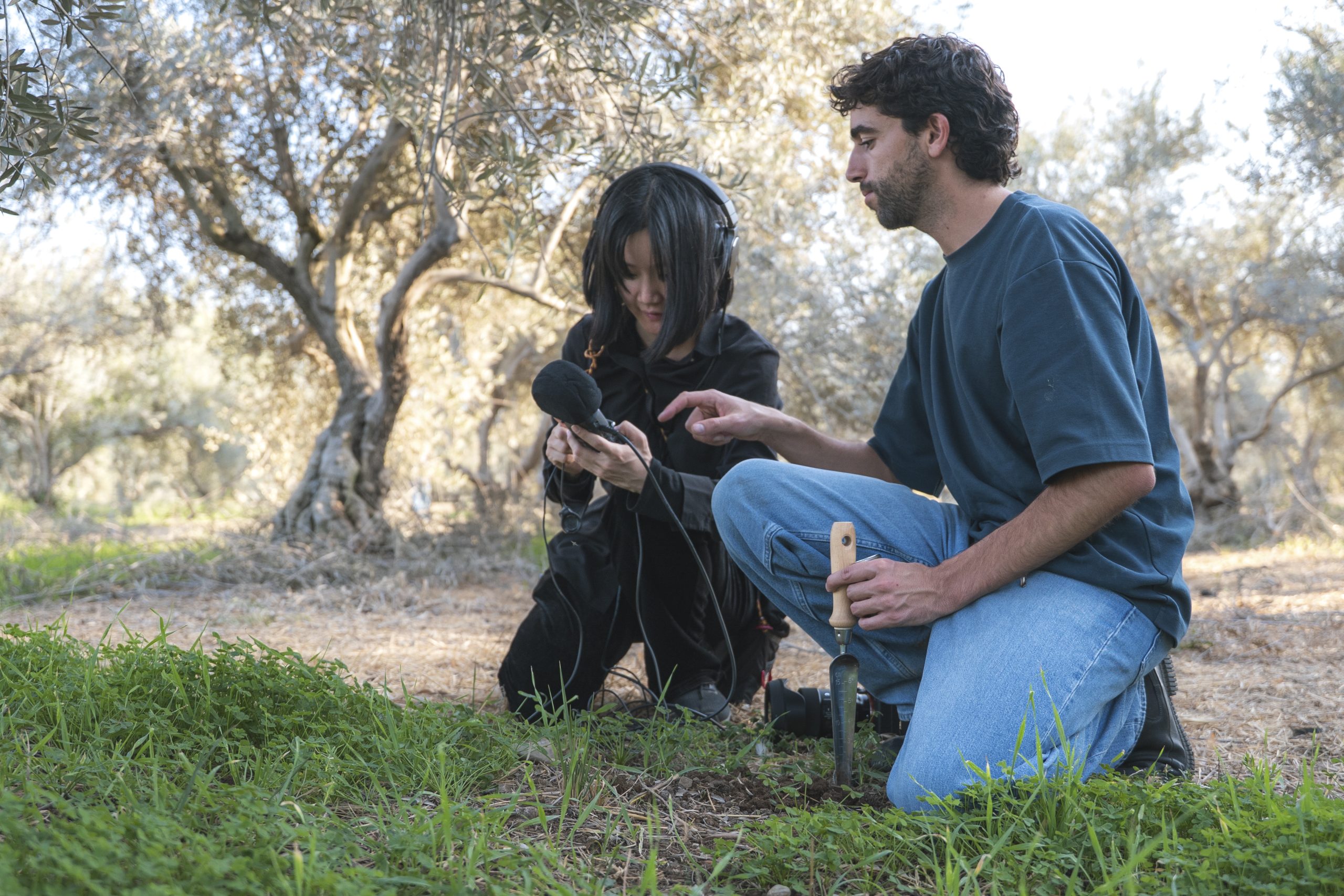
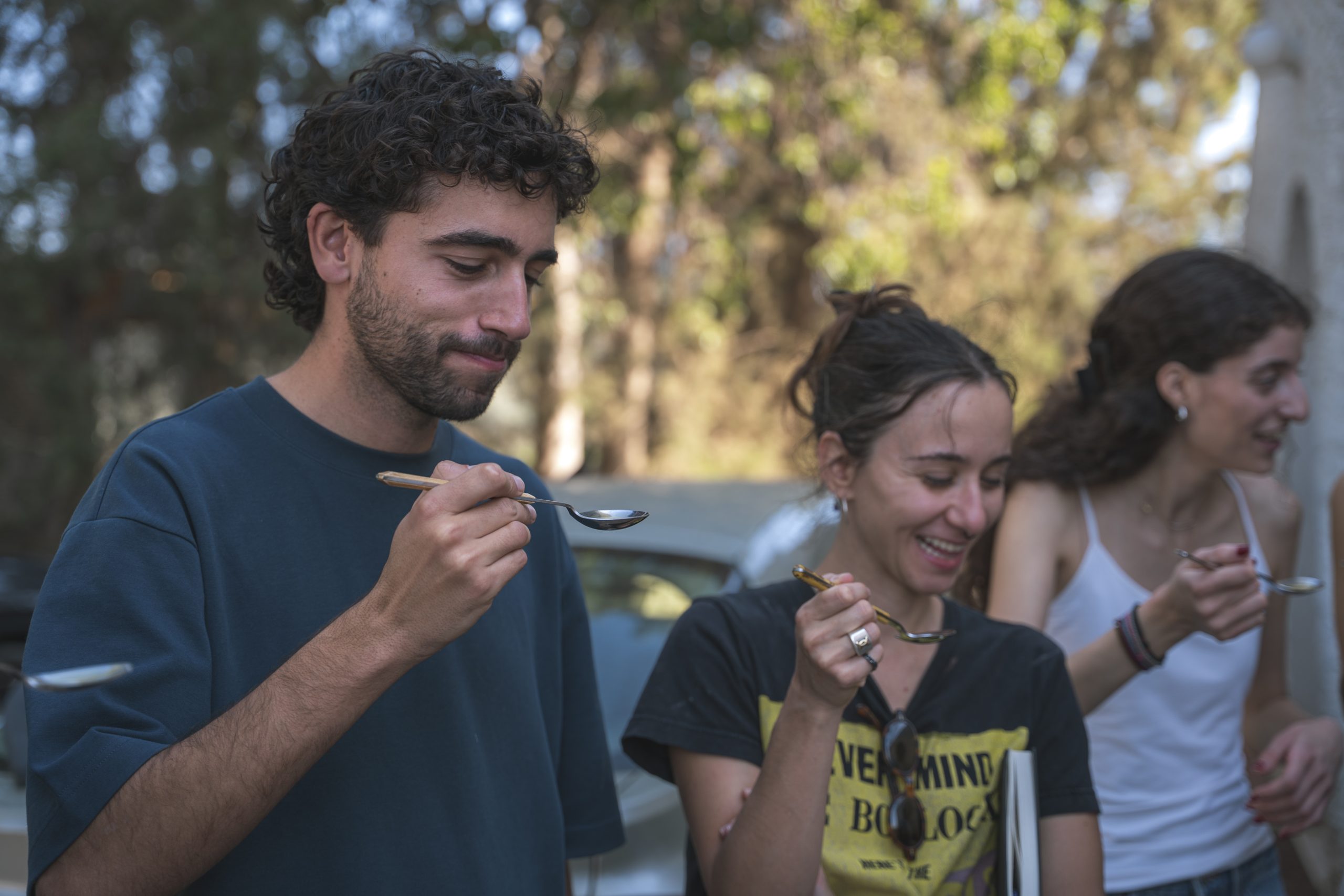
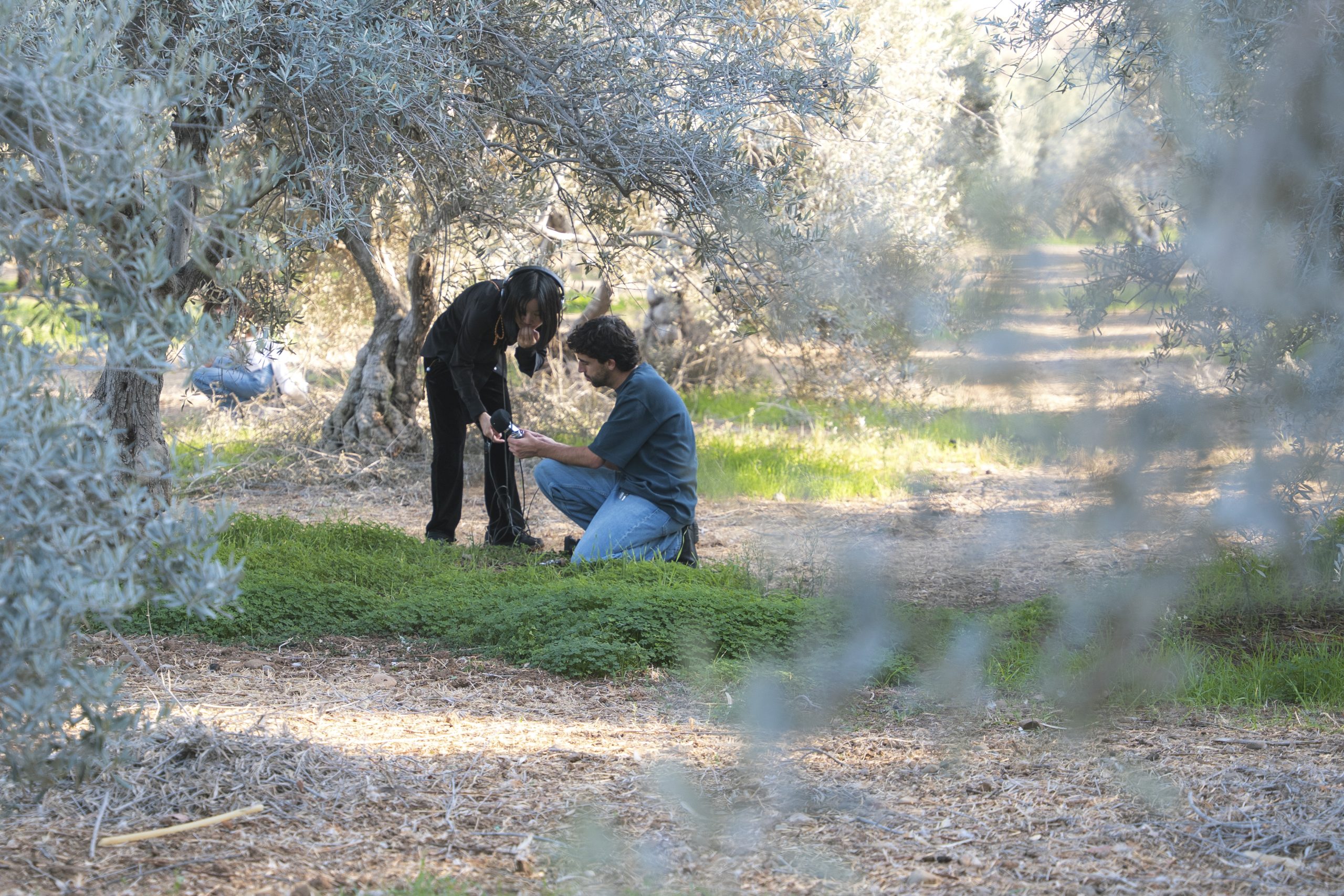
Participants then engaged in collective fieldwork, gathering soil and sediment samples, documenting ecological traces through photography, film, and drawing, and observing how drought conditions manifest in the landscape. The day concluded with a reflective session, where students translated their observations into visual notes and keywords that would guide the next phase of the workshop.
Creative Transformation at Thinker Maker Space
The second day shifted from field observation to creative interpretation. Meeting at CYENS Thinker Maker Space, participants revisited the materials collected in Akaki and explored them through group readings, discussions, and sensory mapping exercises.
Through collaborative drawing, writing, and conceptual development, students transformed raw ecological data into artistic frameworks that highlight patterns of drought, adaptation, and resilience. The session emphasized how artistic and scientific practices can intersect to articulate local experiences of environmental change.
Artist and STUDIOTOPIA resident Miguel Teodoro guided the workshop, encouraging participants to approach environmental issues through multisensory exploration and interdisciplinary thinking. His practice, which often bridges ecological research and creative expression, shaped the workshop’s focus on embodied learning and collaborative interpretation.
Pop‑Up Lab workshop was part of the broader WIP LAB 2025 Invisible Waters: Creative Talks & Open Play, which invites artists and researchers to share work‑in‑progress ideas through experimentation, dialogue, and public engagement.