The creative work of communicating science
We spend an extraordinary amount of time consuming information. We scroll past explanations of solar panels, climate systems and artificial intelligence, watch ninety-second videos about the human brain and save infographics on nutrition, sleep and energy. Scientific knowledge has never been more present in everyday life, nor more readily available. Access, however, is not the same as understanding and understanding something is still a long way from being able to explain it.
At a Studiotopia Pop-up Lab organised by the Cluj Cultural Centre at Qub in Cluj-Napoca, a group of pupils was given a single subject: energy. Broad enough to fill several libraries, familiar enough to seem deceptively simple. Their task, as part of the Lightbulb Challenge, was to move from that single word to a two-minute presentation capable of holding the attention of a general audience. In other words, they had to stop being consumers of information and become communicators of knowledge.
Before the science, a recipe
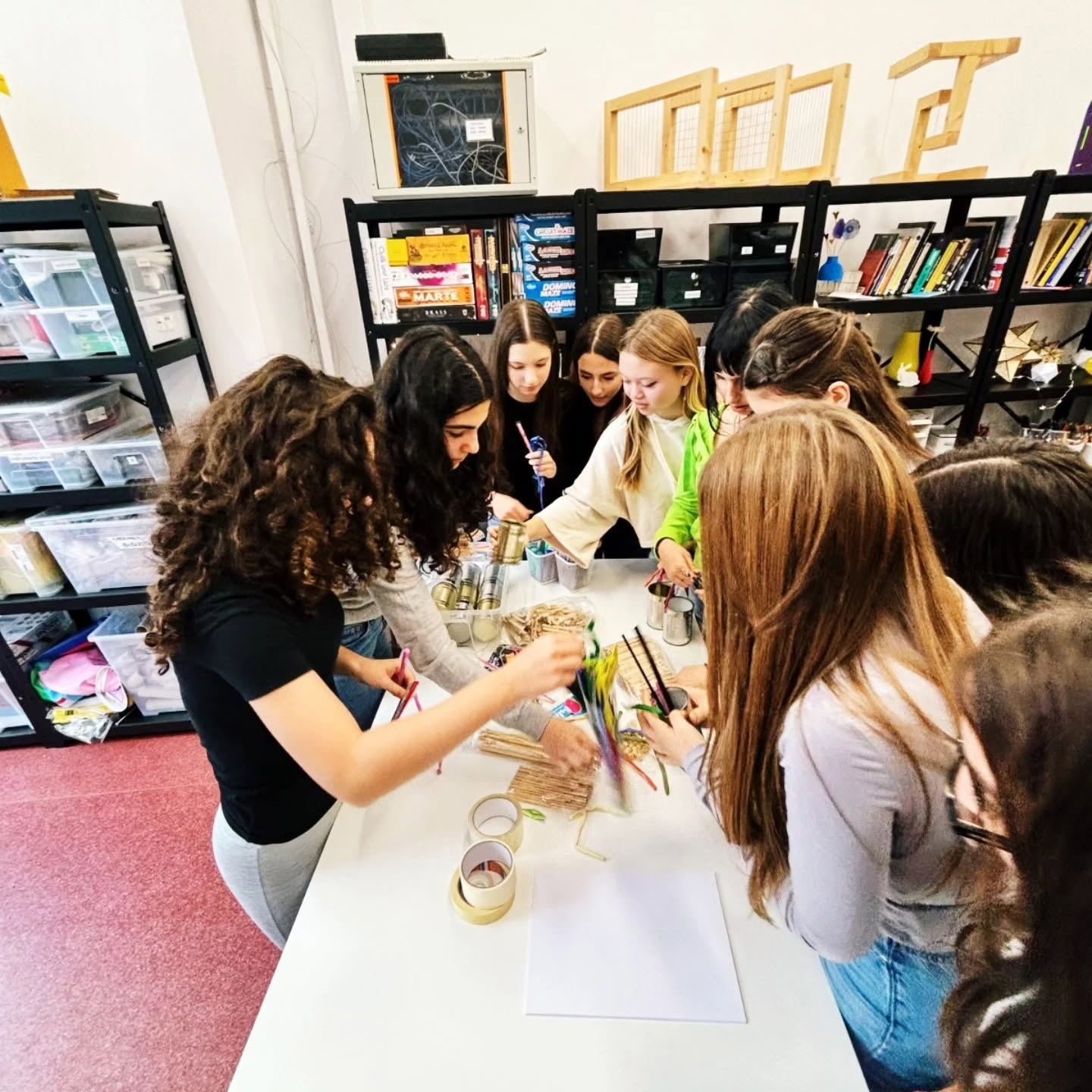
The workshop opened with a deliberately impractical task. Each pupil chose something from the kitchen, an ingredient or a utensil, without coordinating with the others. The newly formed teams then had five minutes to invent a recipe using everything their members had selected. The result was chaotic, slightly absurd and immediately revealing. A collection of ingredients does not automatically become a recipe, just as a collection of facts does not automatically become an argument. Someone needs to see connections, someone needs to keep the group moving, someone follows an unusual idea far enough to discover whether it works, someone gives the final result structure and a voice.
Before moving on to the scientific challenge, the pupils explored how teams can self-organise and were introduced to four possible roles: navigator, explorer, writer and storyteller. The Navigator organises and keeps track of time; the Explorer is driven by curiosity and moves across different fields of knowledge; the Writer takes notes and gives structure to the group’s ideas and the Storyteller thinks about the audience and is comfortable speaking in public. These offered a simple way of making the often invisible work of a team visible and of recognising that a strong presentation is rarely the work of one kind of thinker. Then came the scientific theme.
Twenty minutes, one subject, two minutes on stage
The subject was energy and the teams had twenty minutes to turn it into a presentation. The process was carefully timed. The first three minutes were dedicated to forming the team. From minute four to minute eight, pupils gathered resources. Between minutes nine and twelve, they assigned tasks. By minute sixteen, a first draft had to exist. The final four minutes were reserved for turning it into a presentation ready to be delivered. The time constraint was not incidental. With endless time, it is easy to keep reading, searching and collecting. Under pressure, another skill becomes necessary: judgement.
The pupils had to decide which information was essential, which detail distracted from the main idea and which perspective might make an audience care enough to keep listening. In other words, they had to edit. This is one of the points at which the boundary between scientific and artistic practice becomes remarkably porous. Scientific communication demands accuracy, but accuracy alone does not create understanding. A communicator also works with perspective, sequence, emphasis, analogy and rhythm. The same scientific subject can be approached through a process, an everyday object or a familiar human experience. Choosing the angle is both an intellectual and a creative act. And energy proved particularly generous in this respect.
From solar power to coffee, hugs and potatoes
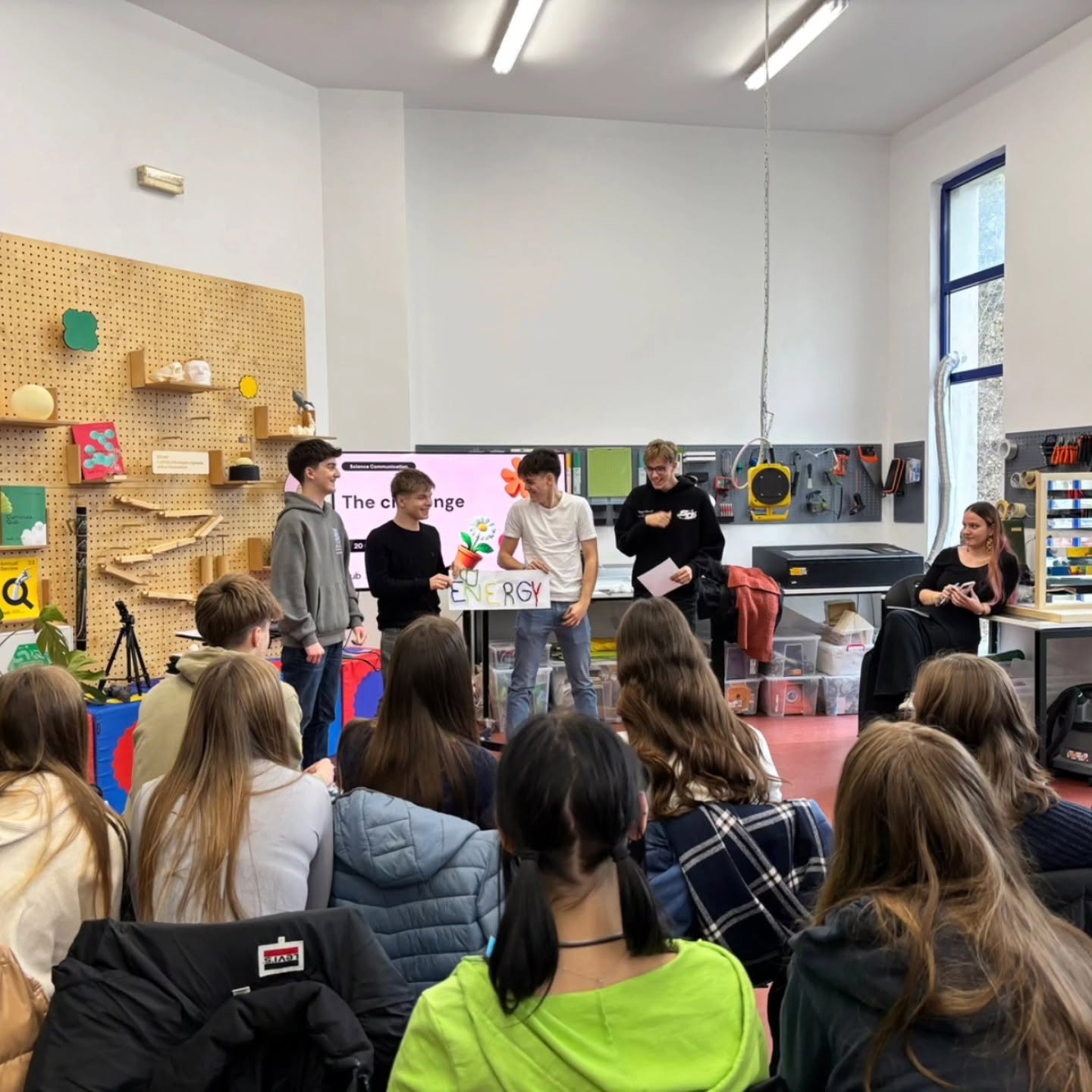
By the end of the challenge, energy had travelled in several unexpected directions. The pupils spoke about the processes behind solar energy, but also about the energy we get from coffee, from a hug and even from a potato. Some presentations began with scientific processes, while others found their starting point in everyday observations. Each team had to explore its chosen angle, investigate it and decide what was worth telling.
Behind these very different presentations was the same demanding process: finding information, identifying what was relevant, questioning claims and shaping the result into an argument that someone else would want to follow.
This journey from information to understanding and from understanding to communication was at the heart of the Lightbulb Challenge. Developed by writer Ada Roseti and brought to Qub together with Games of Science as part of the Studiotopia Pop-up Labs, the challenge responds to a reality that is easy to overlook. Young people consume an extraordinary amount of information, but rarely have the opportunity to practise turning that information into knowledge they can question, argue and communicate.
As the teams researched, the question of sources inevitably entered the room. Myths were debated and claims were questioned. The pupils also discussed how AI-based search tools could be used in functional ways when researching a subject, while still approaching the information they found with critical judgement. The goal was never simply to produce a polished speech. They had to negotiate a balance that professional communicators face constantly: simplifying without distorting, creating a compelling narrative without sacrificing the science and making an idea memorable without stripping it of its complexity.
When artistic thinking becomes a scientific tool
This was where artistic thinking became particularly useful. A story can establish a point of view, a metaphor can offer a bridge towards an unfamiliar concept, a drawing can make a relationship easier to see. Gesture, voice and timing influence what an audience notices and remembers. The tools available to the teams – from storytelling and visual elements to role-play and simple props – opened up different ways of giving scientific ideas a form.
Art, in this context, was not there to decorate science or make a presentation more entertaining, it became part of the thinking process: finding the right metaphor requires understanding what is essential about an idea; building a narrative means deciding how one piece of information leads to another, choosing an image or an example forces the communicator to consider what the audience already knows and where a bridge needs to be built.
Putting the ideas to the test
The presentations were the final stage of the challenge. Each team delivered its two-minute speech, answered questions and received feedback. The science behind the argument mattered, but so did its architecture. Was the central idea clear? Did the examples support it? Was the information convincing? Did the presentation have a direction? Could the audience follow it? For a while, Qub operated simultaneously as a study lab and a creative studio. Scientific ideas were researched, debated, edited and eventually spoken aloud. Knowledge did not remain on a screen or in a search result, it had to pass through a group of people, survive different perspectives, acquire structure and finally reach an audience. And sometimes, the idea that made science easier to understand came from the most unexpected place: the energy inside a potato.